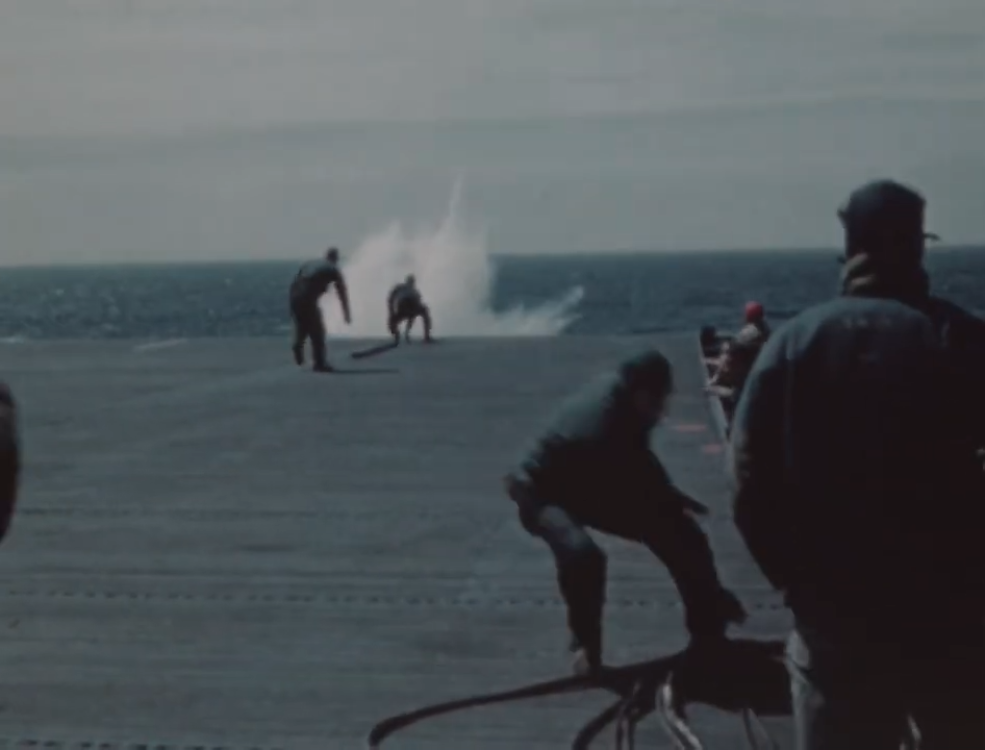
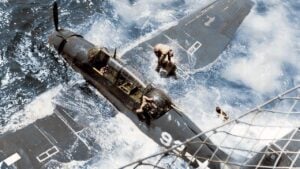
On May 12, 1945, a tragic training accident aboard USS Vella Gulf (CVE-111) was caught on film as Marine pilots prepared for carrier qualifications off the coast of California near Naval Air Station North Island.
YouTube / WW2 Marine Carrier Aviation
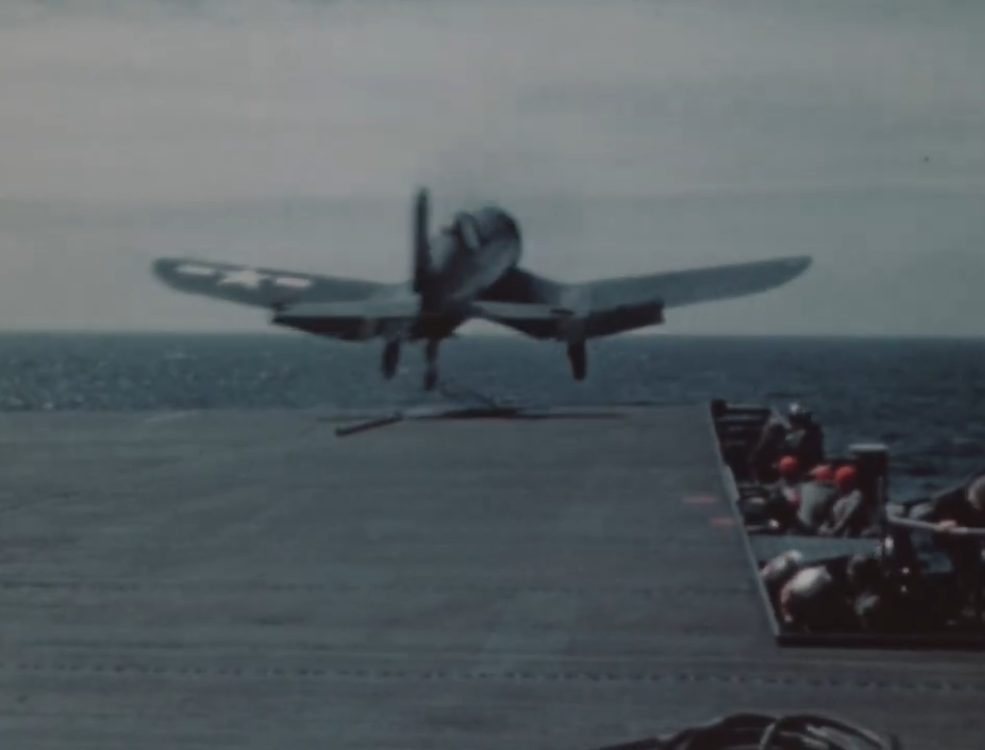
The footage shows pilots from VMF-513 receiving final takeoff instructions before launch. Instructors specifically emphasized proper trim settings and control inputs, a critical step when flying early variants of the Goodyear FG-1D Corsair.
That warning existed for a reason.
YouTube / WW2 Marine Carrier Aviation
Early Vought F4U Corsair variants were powered by the massive Pratt & Whitney R-2800 engine, which produced enormous torque through its giant propeller. If pilots failed to apply enough corrective input during takeoff, the aircraft could violently roll to one side.
Moments after launch, that exact scenario unfolded.
YouTube / WW2 Marine Carrier Aviation
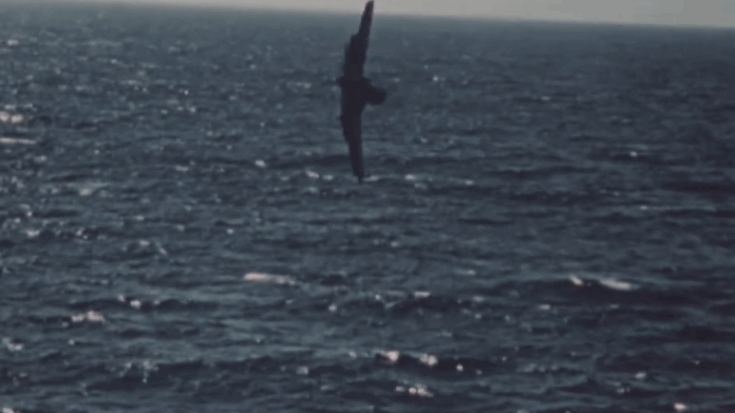
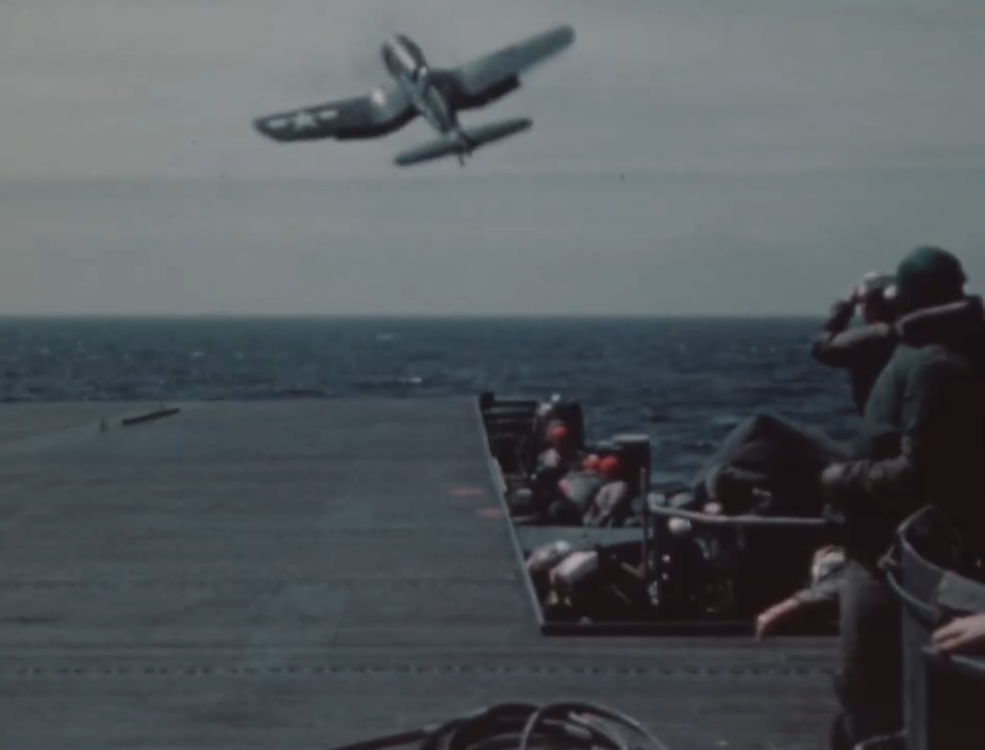
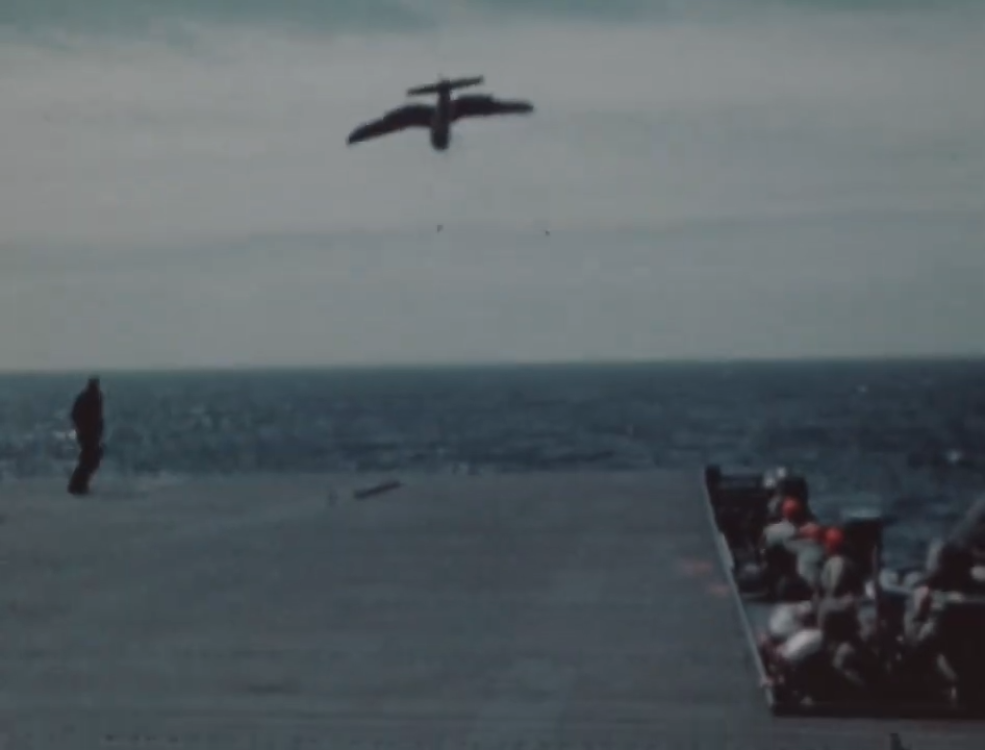
As the Corsair left the flight deck, it suddenly rolled sharply, likely overwhelmed by engine torque at low speed and low altitude. With almost no room to recover, the aircraft slammed into the ocean beside the carrier.
Two cameramen captured the event from different angles. One filmed from the flight deck while another recorded from higher in the carrier’s superstructure, preserving one of the most haunting examples of how dangerous carrier aviation remained even far from combat.
YouTube / WW2 Marine Carrier Aviation
VMF-513 was among the first Marine fighter squadrons preparing to operate from escort carriers in the Pacific. While the war was nearing its final months, training remained deadly.