The Button That Could Save a WWII Pilot or Destroy His Engine
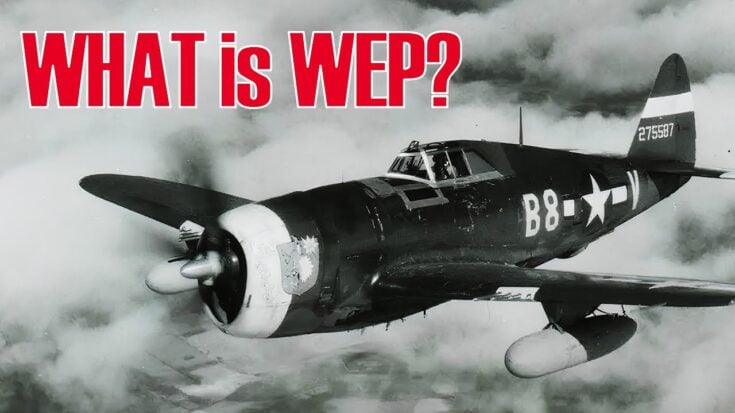
YouTube / FlakAlley
Power That Was Never Meant to Last
World War II fighter engines were capable of producing far more power than they were normally allowed to use. Pilots flew with their engines deliberately restricted to preserve reliability and service life.

Pushing an engine to its true limits meant accelerated wear, rising temperatures, and the real possibility of failure. War Emergency Power, known as WEP, existed for one purpose only: survival when no other option remained.
A Last Resort in the Air
Consider a late war encounter over Europe. A P-51H Mustang climbs hard with a German Bf 109 closing fast. Normal power is not enough. Military power, the highest safe setting, still fails to break contact. At this point, the pilot makes a decision that could end the fight or destroy the aircraft. He engages War Emergency Power.

The effect is immediate. Fuel flow surges and the supercharger forces extreme boost pressure into the engine. Cylinder pressures spike as more air and fuel are packed into the combustion chambers. Temperatures rise rapidly, sometimes by nearly one hundred degrees. The lubricating oil film begins to thin, exposing bearings and internal components to damage. The engine produces a sudden fifteen to twenty-five percent increase in horsepower, far beyond its intended limits.
Borrowing Time From the Engine
Some aircraft used water or water-methanol injection to cool the intake charge and suppress detonation. This system delayed catastrophic failure, but only briefly. WEP was measured in seconds or minutes, not hours.

Pilots understood the cost. Using it could result in a blown engine, seized components, or a forced landing if the aircraft survived the engagement at all.
Survival Over Machinery
For those few moments, a fighter became something it was never meant to be. It climbed harder, accelerated faster, and gained just enough performance to escape or gain an advantage.

Pilots accepted the consequences because engine life no longer mattered. In combat, survival was measured in seconds, and War Emergency Power existed to buy those seconds when nothing else could.