The Lost Potential of the Tomcat
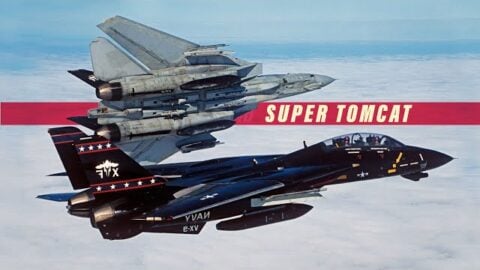
YouTube / Australian Military Aviation History
The Grumman F-14 Tomcat became one of the most formidable naval fighters of the Cold War. It was developed by Grumman to defend U.S. carrier battle groups from long-range Soviet bomber threats.
With its distinctive variable-sweep wings, powerful twin engines, and advanced radar system, the Tomcat was built to intercept enemy aircraft at extreme distances using the long-range AIM-54 Phoenix missile. It quickly became the backbone of the United States Navy fleet air defense strategy throughout the 1970s and 1980s.
Evolution Beyond Interception
While initially designed as a fleet defense interceptor, the Tomcat steadily evolved into a capable multirole fighter. Later variants, such as the F-14B and F-14D, were introduced. It featured improved avionics, more powerful engines, and precision strike capabilities.
By the 1990s, the aircraft was no longer limited to air-to-air combat- it could deliver laser-guided bombs with remarkable accuracy, giving it a secondary ground-attack role that extended its operational value well beyond its original mission.
Ambitious Upgrades That Never Came
Despite its success, the Tomcat had far greater potential that remained unrealized. Proposed modernization programs, such as the ST-21 (Super Tomcat 21) and AST-21 (Advanced Super Tomcat 21), aimed to dramatically improve performance through upgraded radar systems, digital cockpits, increased fuel capacity, and enhanced survivability.
Another concept, the ASF-14 (Advanced Strike Fighter-14), envisioned the Tomcat as a true multi-role platform capable of performing both air superiority and deep-strike missions with next-generation weapons systems.
Replaced Before Its Time
As defense priorities shifted in the post-Cold War era, the Navy ultimately chose to retire the F-14 rather than pursue these costly upgrades. The aircraft was gradually replaced by the more modern Boeing F/A-18E/F Super Hornet, which offered lower maintenance demands and greater operational flexibility. Though effective, many aviation enthusiasts and analysts argue that the decision marked the end of what could have been one of the most advanced carrier-based fighters ever fielded.
Had these modernization programs been implemented, the F-14 might have remained competitive well into the 21st century. Instead, it stands today not only as a symbol of Cold War air power but also as a reminder of untapped technological potential, an aircraft whose ultimate capabilities were never fully realized.