Why The F6F Hellcat Might Be The Greatest Fighter Of WWII
YouTube / WarsofTheWorld
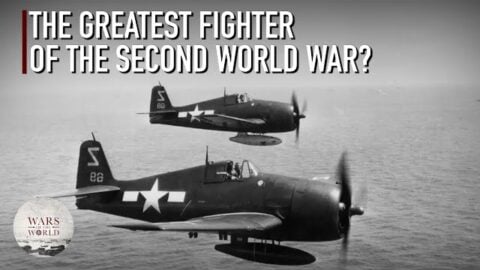
The Grumman F6F Hellcat is one of the most feared carrier-based fighters of World War II. It dominated the skies of the Pacific Theater with unmatched effectiveness. Developed by Grumman for the United States Navy, the Hellcat was specifically designed to counter the agile Mitsubishi A6M Zero. With superior armor, firepower, and rugged construction, it gave American pilots a decisive edge in aerial combat.
Entering service in 1943, the Hellcat was responsible for destroying over 5,000 enemy aircraft, earning a reputation as a true “ace maker.” Its six .50-caliber machine guns and powerful Pratt & Whitney R-2800 engine made it a lethal adversary in both dogfights and ground-attack missions.
By the war’s end, the Hellcat accounted for nearly 75% of all U.S. Navy aerial victories in the Pacific, securing its place as one of the most successful naval fighters in aviation history.
Built to Defeat the Zero
When the United States entered World War II, American pilots quickly realized they needed a fighter capable of countering the highly maneuverable Mitsubishi A6M Zero. In response, Grumman designed the F6F Hellcat with one goal in mind- air superiority in the Pacific Theater. Unlike earlier fighters, the Hellcat prioritized pilot survivability, armor protection, and firepower over lightweight agility, giving it a major advantage in combat durability.
At the heart of the Hellcat was the powerful Pratt & Whitney R-2800 Double Wasp radial engine, capable of producing over 2,000 horsepower. This allowed the aircraft to reach speeds exceeding 370 mph while carrying heavy armament and armor plating. Equipped with six .50 caliber machine guns, the Hellcat delivered devastating firepower during dogfights and strafing runs. Its rugged construction also meant it could absorb significant battle damage and still return safely to its carrier- something many enemy fighters could not match.
Dominating the Pacific Skies
Entering service with the United States Navy in 1943, the Hellcat quickly established aerial dominance. During major engagements such as the Battle of the Philippine Sea, Hellcat pilots overwhelmed Japanese air forces in what became known as the “Great Marianas Turkey Shoot.” The aircraft’s superior speed, climb rate, and firepower allowed American pilots to dictate the terms of combat.
An Ace Maker in the Air
The F6F Hellcat proved to be an extraordinary combat aircraft, credited with destroying more than 5,000 enemy aircraft during the war. It was responsible for nearly 75% of all U.S. Navy aerial victories in the Pacific Theater. Many American fighter aces achieved their status while flying the Hellcat, earning it the nickname “Ace Maker.” Its combat effectiveness and reliability made it a favorite among naval aviators operating from aircraft carriers across the vast Pacific Ocean.
By the end of World War II, the Hellcat had firmly established itself as one of the most successful carrier-based fighters ever built. Its ability to combine firepower, survivability, and performance ensured Allied air superiority during critical naval campaigns.