The Dramatic Rise and Fall of the Junkers Ju-87 Stuka
YouTube / TJ3 History
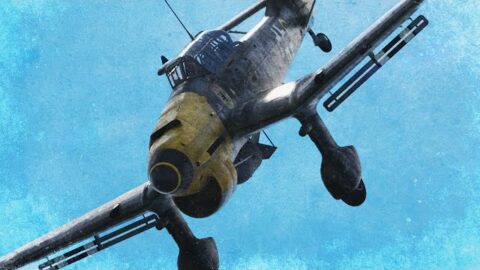
The Junkers Ju-87 Stuka became one of the most recognizable aircraft of the Second World War. Its inverted gull wings, fixed landing gear, and distinctive dive siren made it instantly identifiable. Yet its path to prominence was uncertain, and its downfall came as swiftly as its rise. The Stuka’s story reflects how air power evolved during the war and how quickly a specialized aircraft could become vulnerable.
An Unlikely Beginning
Dive bombing was not originally a German concept. The idea gained serious attention after Ernst Udet, a celebrated First World War ace, witnessed near vertical dives performed by American aircraft in the early 1930s. Convinced of their military value, Udet championed the tactic within the newly formed Luftwaffe. Junkers engineer Hermann Pohlmann began work on a dedicated dive bomber, focusing on strength and stability rather than speed.

Early prototypes suffered accidents and skepticism within the German Air Ministry. The design was briefly cancelled in 1936 before Udet, newly promoted to oversee aircraft development, reversed the decision. His influence ensured the Ju-87 reached production, despite concerns that it was slow and underpowered.
A Weapon Built for Precision
The production Ju-87B introduced features that defined the aircraft. Dive brakes allowed controlled steep dives, while an automatic pullout system recovered the aircraft if a pilot blacked out under high G forces. A two man crew handled navigation and rear defense, and a swing arm released the main bomb clear of the propeller. Sirens mounted on the landing gear produced the sound that would become associated with German air attacks.

The Stuka proved exceptionally stable and easy to fly, allowing accurate bombing even by less experienced pilots. This precision became its greatest strength.
Blitzkrieg Success
Combat debut came during the Spanish Civil War, but the Stuka’s reputation was forged in Poland in 1939. It delivered highly accurate strikes in direct coordination with ground forces. In Norway and France, the Ju-87 devastated shipping and fortified positions, often operating with minimal losses due to German air superiority. During these campaigns, it became a symbol of Blitzkrieg warfare.

The Turning Point
Cracks appeared during the Battle of Britain. When escorted poorly or intercepted by RAF fighters, the Stuka suffered heavy losses. Its slow speed and predictable dive recovery made it an easy target once enemy fighters arrived in force. By late 1940, the Luftwaffe withdrew the Ju-87 from frontline operations in the west.
Reinvention on the Eastern Front
The aircraft found renewed purpose in 1941 during the invasion of the Soviet Union. Early air superiority and open terrain allowed it to operate effectively against armor and supply lines. As Soviet air power recovered, losses increased again. The Stuka was adapted into the Ju-87G ground attack variant, armed with 37 mm cannons. Pilots like Hans-Ulrich Rudel used it with notable success against tanks.

End of an Era
By 1944, faster and more versatile aircraft replaced the Ju-87. A small number remained in service until the final months of the war. The Stuka thrived when the Luftwaffe controlled the skies and faltered when it did not. Its career stands as a clear example of how dominance in the air determined the usefulness of even the most feared weapons of the Second World War.