

February 16, 1945: Airborne Attack on Corregidor Sees 2,000 Troops Dropped From C-47s
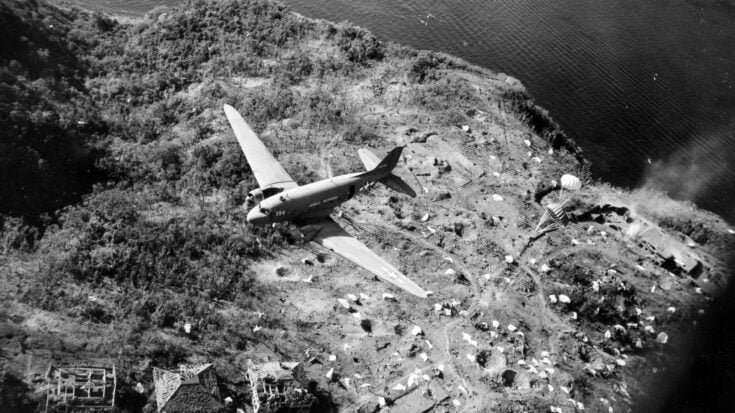
Signal Corps Archive from United States, Public domain, via Wikimedia Commons
In the last months of World War II, the Allies were focused on clearing the Philippines of enemy forces so that the Pacific campaign could continue toward Japan. One of the last remaining strongholds was Corregidor Island, a rocky outcrop at the entrance to Manila Bay. This island had previously fallen to Japanese forces early in the war, and its capture was seen as both a symbolic and strategic objective. On February 16, 1945, American airborne forces executed an attack that would become one of the most challenging air drops of the conflict.
Corregidor’s recapture involved both sea and air operations. Before the airborne troops were dropped, aircraft and ships bombarded the island to weaken defensive positions and soften enemy resistance. The plan called for paratroopers from the 503rd Parachute Regimental Combat Team to drop onto the island in order to seize and hold territory until ground forces could link up with them. This assault was coordinated with a shore‑to‑shore landing that was designed to surround the island’s defenders.
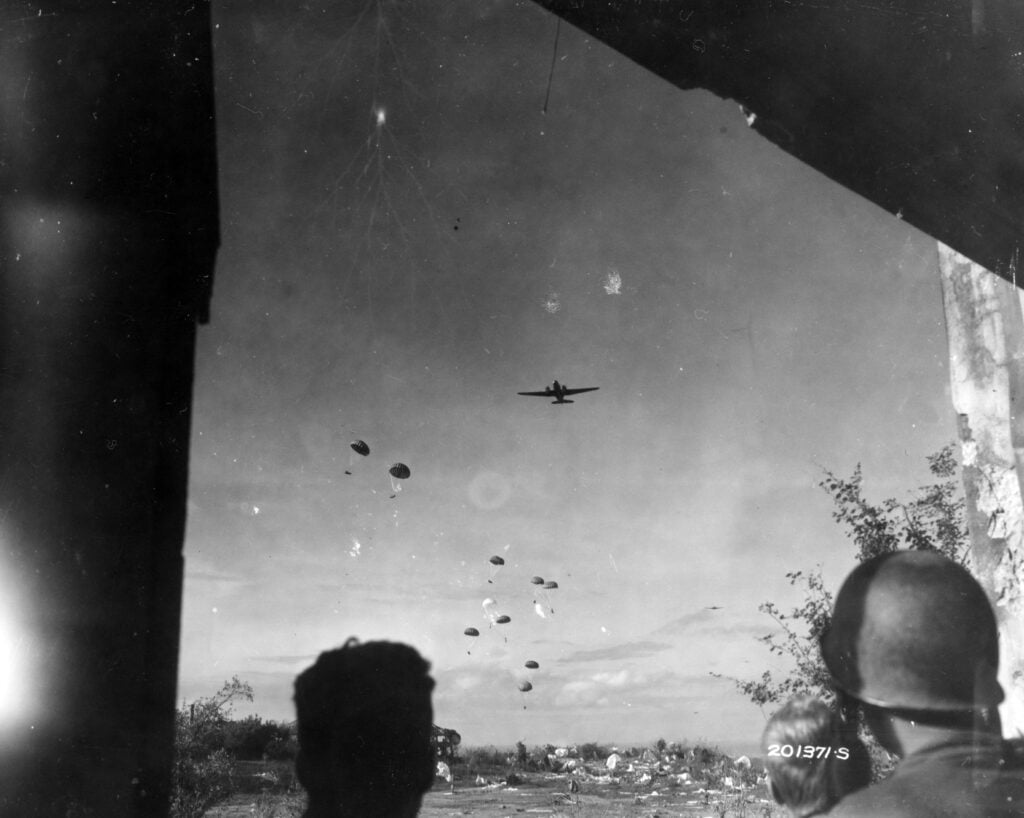
Preparing for the Drop
Planning for the airborne assault on Corregidor took place on nearby Mindoro Island, where the 503rd Parachute Regimental Combat Team had been training and preparing for several months. The assault required careful coordination between the airborne infantry, artillery, and engineer units. Commanders studied aerial photos and terrain models to understand the drop zones and the rugged landscape of Corregidor, which was marked by steep cliffs and narrow ridges. Each paratrooper was briefed on the island’s features and loaded with equipment that included weapons, water, and rations for the difficult fight ahead.
The assault was carefully timed to coincide with other operations. On February 15, naval gunfire and aerial bombardment targeted Japanese positions, and an infantry force moved toward Corregidor from the adjacent Bataan Peninsula. These preliminary actions were intended to reduce the risk for the paratroopers who would drop in the following morning. The planners knew that the terrain was unforgiving and that the drop zones were small and surrounded by steep slopes that would complicate landing and assembly on the ground.
The Airborne Assault Begins
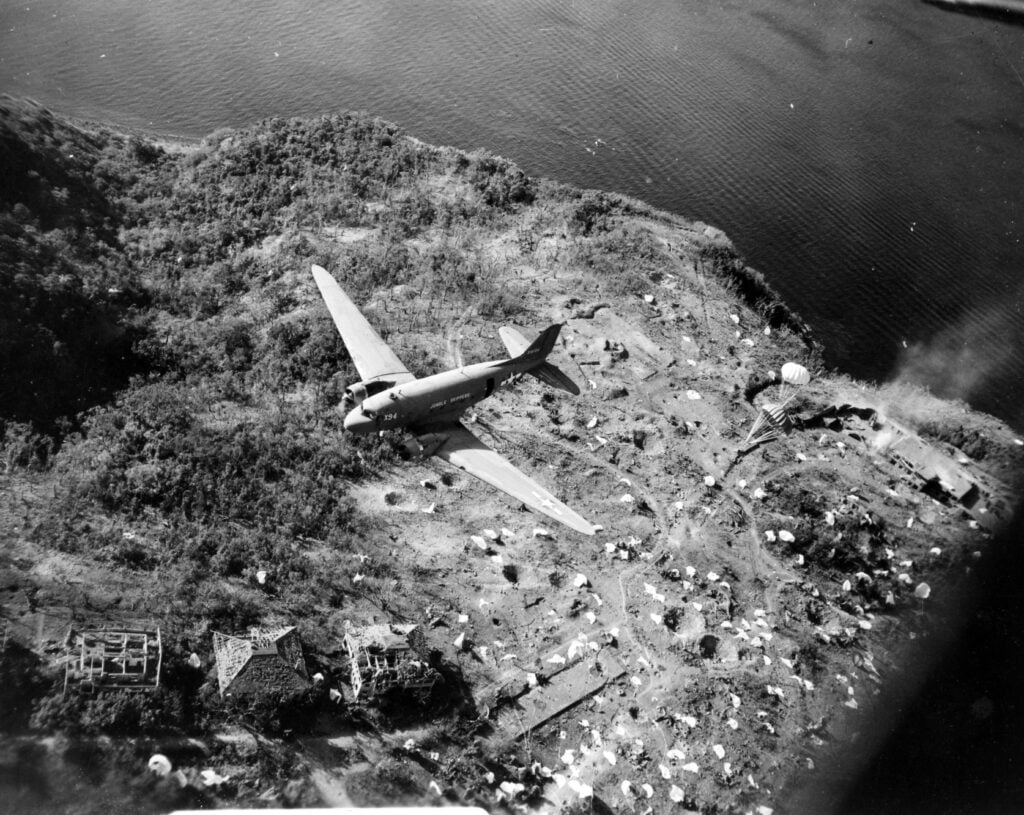
At first light on February 16, a fleet of transport aircraft began flying from Mindoro toward Corregidor. In total, more than eighty Douglas C‑47 Skytrains carried about 2,000 paratroopers of the 503rd over the island in several waves. These aircraft belonged to the 317th Troop Carrier Group, and their pilots had to make multiple passes over the drop zones to release their troops. To limit the distance that parachutes drifted in the wind, pilots lowered their altitude to around 500 feet before the men jumped.
The terrain and weather made the operation difficult. Corregidor’s narrow ridges and scattered rubble left only small areas suitable for landing. The wind over the island was often strong and unpredictable, and these conditions caused many paratroopers to be buffeted off course as they descended. Some landed near Japanese positions or were forced into hazardous terrain that slowed their link‑up with other units. Despite these dangers, the crews of the C‑47s and the airborne troops pressed on with the mission, following closely planned procedures for each pass over the drop zone.
Fighting on the Island
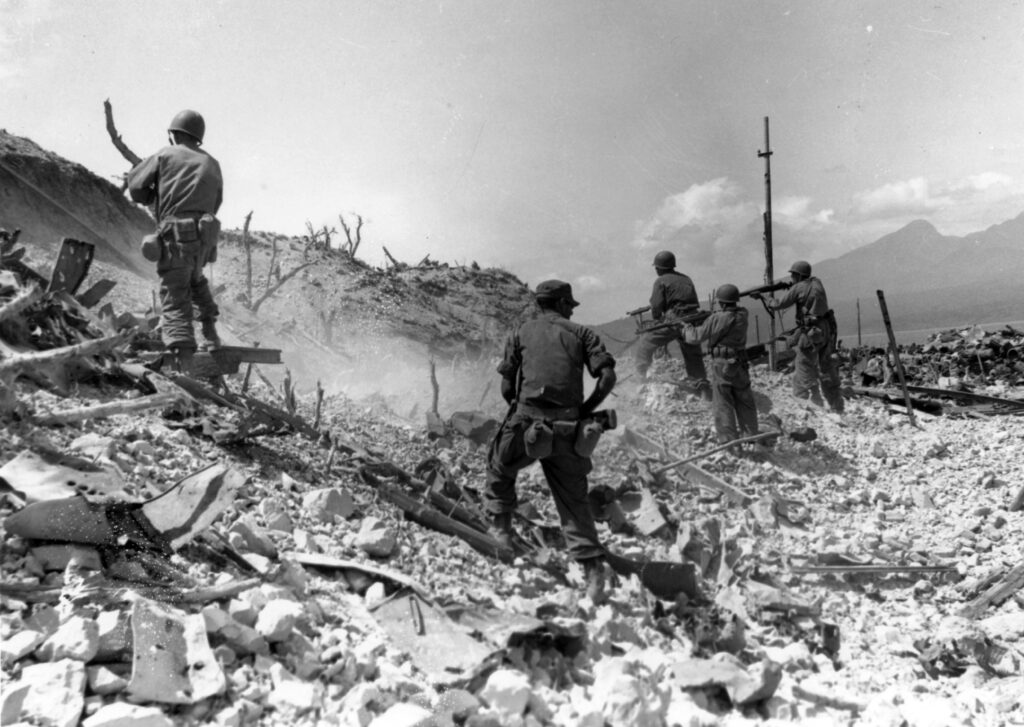
Almost immediately after landing, the paratroopers met resistance from defenders who had fortified Corregidor with bunkers, tunnels, and strongpoints. Intelligence estimates before the operation had suggested a modest number of defenders, but later assessments showed that many more soldiers were present than expected, hidden in caves and deep fortifications. The paratroopers began to organize defensive positions while also engaging enemy forces who sought to disrupt their hold on the island.
The airborne assault was not without cost. The low altitude and rugged terrain contributed to injuries as paratroopers landed, and some were killed either during descent or shortly after reaching the ground. In addition, enemy fire caused casualties among those descending or after landing, and equipment was lost when soldiers became entangled in trees or rubble. Accounts from the operation record dozens of wounded and several deaths in these early hours of the assault.
Link‑Up With Ground Forces
While airborne troops fought to secure their positions, amphibious forces were moving toward Corregidor’s beaches during the same morning. These ground forces brought additional men and equipment ashore to support the ongoing battle. Together with the paratroopers, they worked to expand the foothold on the island and push inland against defensive positions. The terrain continued to challenge both sides as they fought in and around steep hills and fortified caves.
In the days that followed, the combined assault pressed deeper into Corregidor’s interior. The airborne troops and ground units coordinated their efforts to clear the island of defenders and secure its key strategic points. Intense fighting continued beyond the initial drop, with supply missions flown in to provide ammunition and equipment to troops on the ground. These resupply flights helped sustain the operation until Corregidor was fully in Allied hands.
Thus, on February 16, 1945, the airborne assault on Corregidor marked a major episode in the Philippines campaign. It showed how airborne and ground forces could work together under challenging conditions to take a fortified position that had stood for years at the gateway to Manila Bay.
.jpg)
.jpg)
.jpg)