

On This Day in WWII (1944): Curtiss SC Seahawk Completes First Flight
Ted Huggins, U.S. Navy, Public domain, via Wikimedia Commons
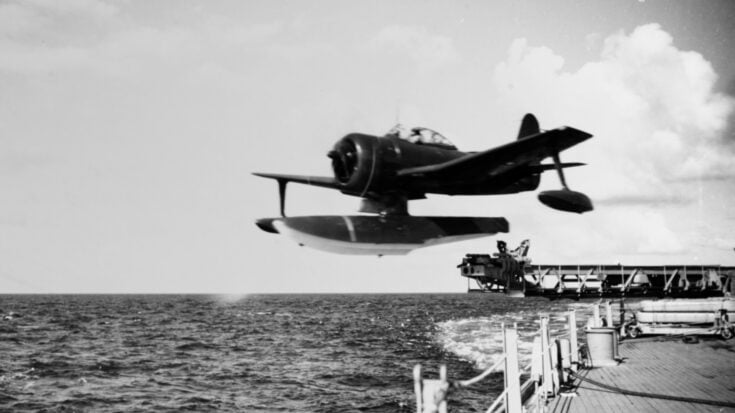
In the early months of 1944, the United States was deep in the middle of a global conflict that stretched across continents and oceans. Military planners in the U.S. Navy recognized a need for an aircraft that could scout ahead of the fleet, observe enemy movements, and operate from the decks of battleships and cruisers. Above all, they wanted a design that could work from both water and land, giving commanders flexibility in how they used it. This need led to the development of a new American scout seaplane known as the Curtiss SC Seahawk.
The prototype of this new seaplane, designated XSC‑1, made its first official flight on 16 February 1944. This event marked a significant moment in naval aviation, as the aircraft fulfilled a requirement that had been laid out more than a year earlier. The first flight took place at the Curtiss plant in Columbus, Ohio, where engineers and test pilots had worked through design challenges to bring the seaplane into the air.
Design Origins and Testing
Work on what would become the Seahawk began in mid‑1942, following a request from the U.S. Navy’s Bureau of Aeronautics for a modern scout plane. At that time, the Navy still relied on older aircraft that had been in service since before America entered the war. These earlier designs were slower and less capable than newer aircraft, and their performance limitations had become apparent as the conflict expanded across the Pacific. Curtiss responded with a proposal that set out to meet the Navy’s needs for speed, range, and flexibility.
By June 1943, the Navy had committed to producing the new aircraft, placing a large order for what would be designated SC‑1 production models. This order came before the prototype had even flown, showing the Navy’s confidence that the new design would meet its operational goals. Engineers then continued development and testing throughout late 1943 and into early 1944, refining the aircraft’s systems and preparing for its first flight.
First Flight and Features
When the XSC‑1 made its maiden flight in February 1944, pilots and engineers observed that many of the features planned for the Seahawk performed as hoped. The aircraft was a low‑wing monoplane with folding wings, a feature that helped it fit on the crowded decks of Navy ships. Its airframe was made of metal to withstand the rigors of shipboard life, and it was powered by a single Wright R‑1820 radial engine with enough power to give it speed and responsiveness.
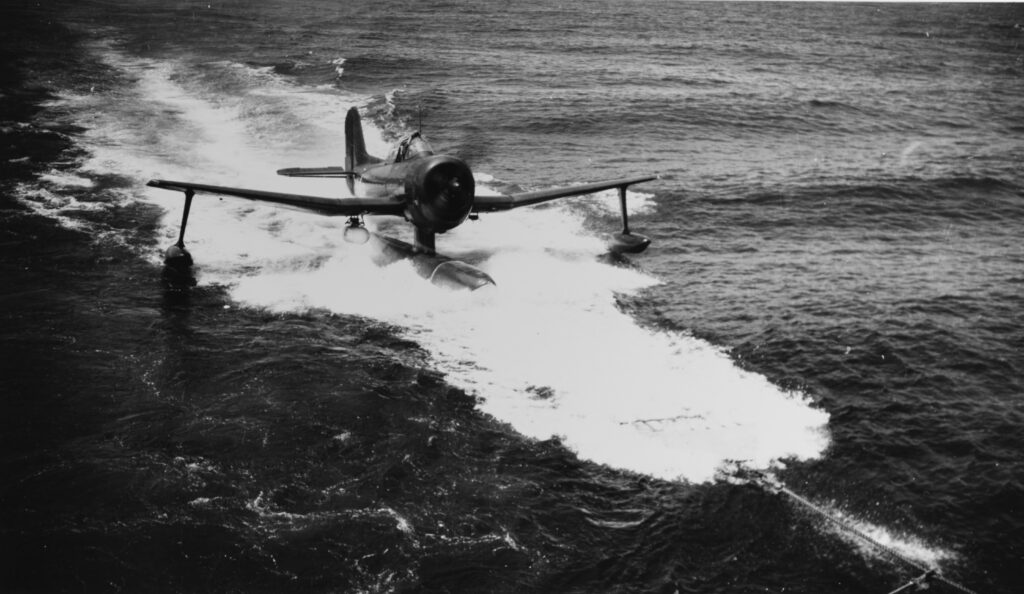
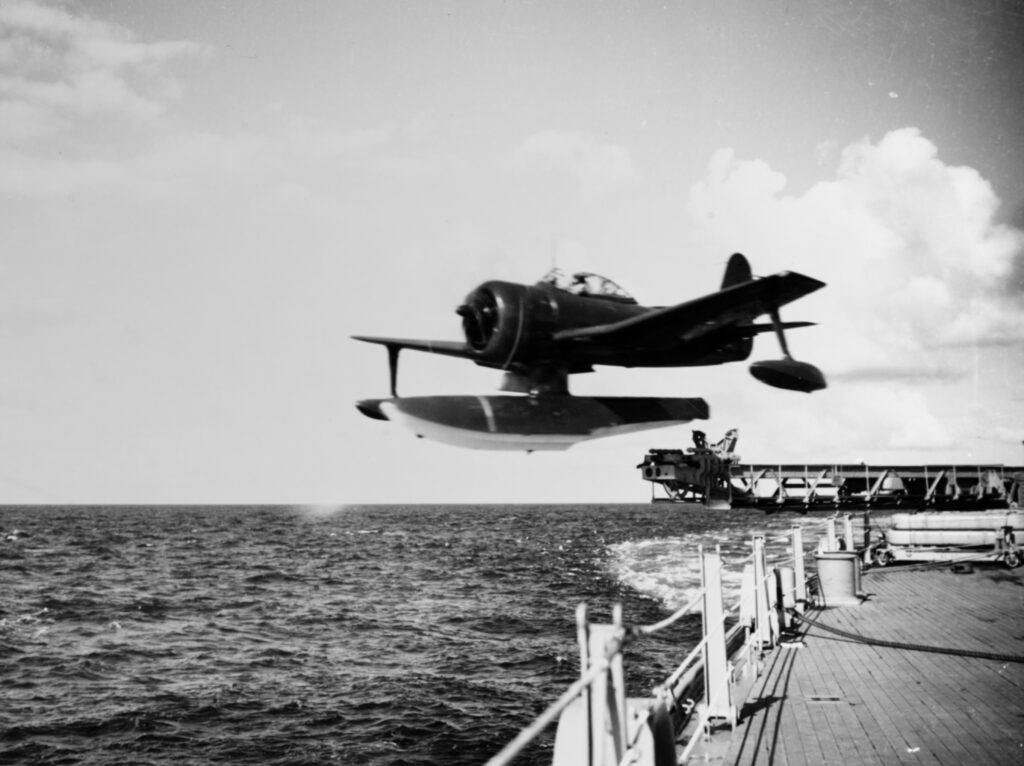
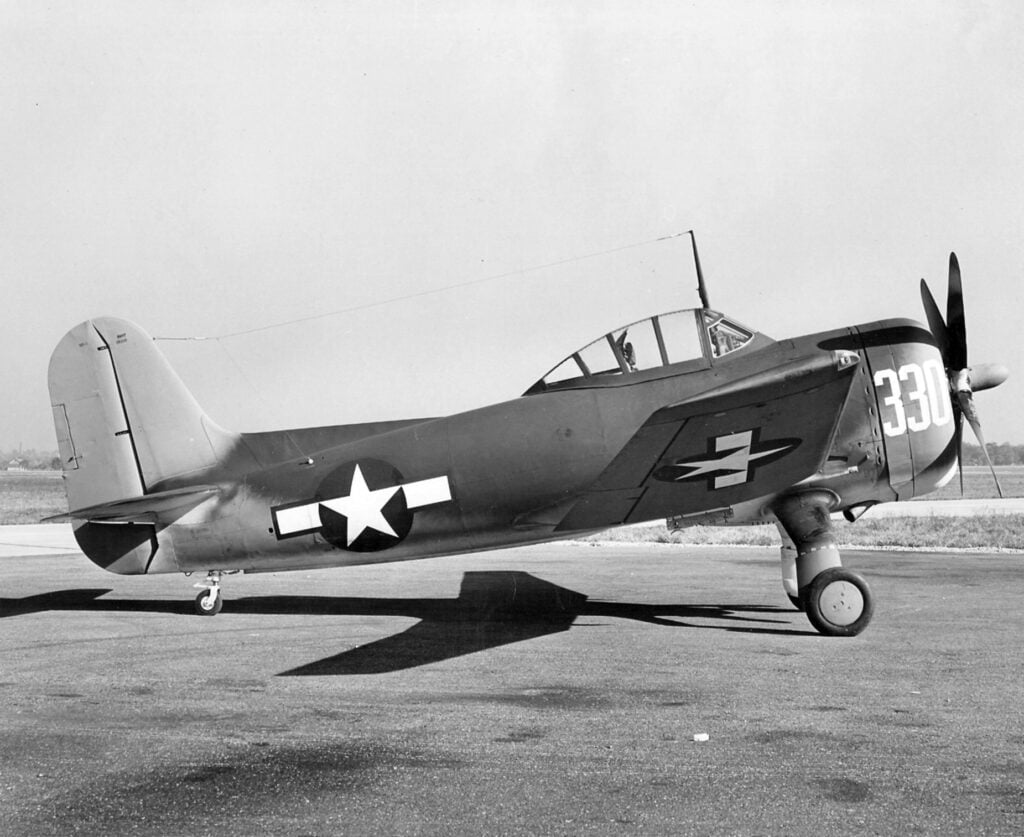
The Seahawk carried a single pilot and was armed with two forward‑firing .50‑caliber machine guns mounted in its wings. It could also carry small bombs beneath its wings when required for light attack roles. One of its distinct traits was the single central float that allowed it to operate from water, with smaller floats under each wing for balance. The float could be swapped for wheeled landing gear, allowing the aircraft to operate from runways when needed.
Production and Deployment
Following its successful first flight and ongoing tests, the Seahawk entered production later in 1944. The first production aircraft were delivered to the U.S. Navy in October of that year. These early Seahawks were sent to frontline naval units, where they began to replace older scout aircraft aboard battleships and cruisers. When not fitted with floats, some of the aircraft were flown to naval air stations to receive the float equipment before being assigned to their ships.
By the end of the war, a total of 577 Seahawks had been built for the U.S. Navy. Although the aircraft saw limited combat during the closing months of the conflict, it helped fulfill the role of fleet scouting and observation. Seahawk units operated from cruisers and battleships in the Pacific, and crews used them to spot enemy vessels, direct naval gunfire, and carry out other reconnaissance tasks in support of larger naval operations.
Operational Role and Legacy
The Seahawk arrived too late to take part in many of the major battles of the war, but its design and service reflected a shift in naval aviation toward faster, more capable aircraft. In the years after the war, technological advances such as helicopters and radar systems changed how navies gathered information about potential threats at sea. As these new systems became more widespread, the need for traditional scout seaplanes diminished, and Seahawks were gradually phased out of frontline service by the late 1940s.
Despite its limited combat record, the Curtiss SC Seahawk represented the final chapter in a long line of Navy scout floatplanes. Its first flight on 16 February 1944 was a moment when American naval aviation looked both back at the traditions of carrier and cruiser scouting and forward to new technologies that would shape the future of aerial operations at sea.







_launches_SC-1_Seahawk_in_July_1947.jpg)
_in_July_1947.jpg)
