

February 19, 1942: Darwin Hit by 242 Japanese Aircraft in Devastating Raid
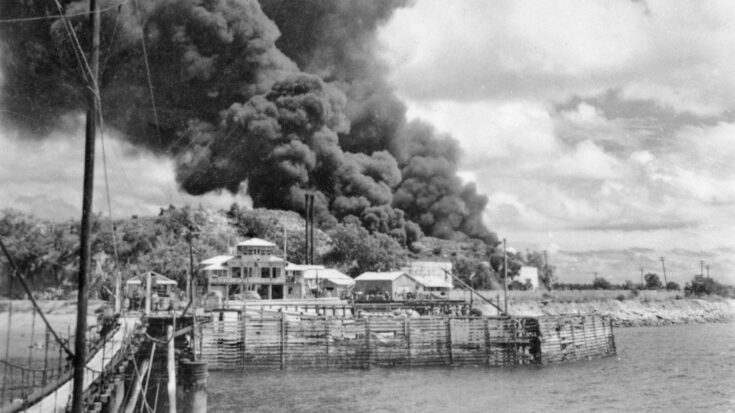
Morlet, Jack, Public domain, via Wikimedia Commons
On the morning of February 19, 1942, the northern Australian town of Darwin faced a sudden and massive assault from the air. As World War II spread across the Pacific, Japanese forces moved quickly southward after taking key territory in Southeast Asia. Allied commanders had hoped to use northern Australian bases, including Darwin, to support forces in Timor and Java. Japanese leaders decided to strike Darwin to weaken those plans and disrupt the Allies’ ability to resist further advances.
The attack on Darwin was the largest single strike ever carried out on Australian soil by a foreign military. In two waves of bombing and strafing, Japanese aircraft hammered the town’s harbour, military facilities, airfields, and civilian areas. The raids brought the war directly to the Australian mainland in an event that shocked the nation and marked a new stage in the conflict.
First Wave Approaches
Just before 10 a.m., a large formation of carrier aircraft appeared over the Timor Sea and headed toward Darwin. The first wave consisted of 188 planes launched from four Japanese aircraft carriers — Akagi, Kaga, Hiryū, and Sōryū — positioned to the northwest of Australia. These aircraft included dive bombers, torpedo bombers, and fighter escorts. The attack was led by Commander Mitsuo Fuchida, the same officer who had commanded the first wave at Pearl Harbor months earlier.
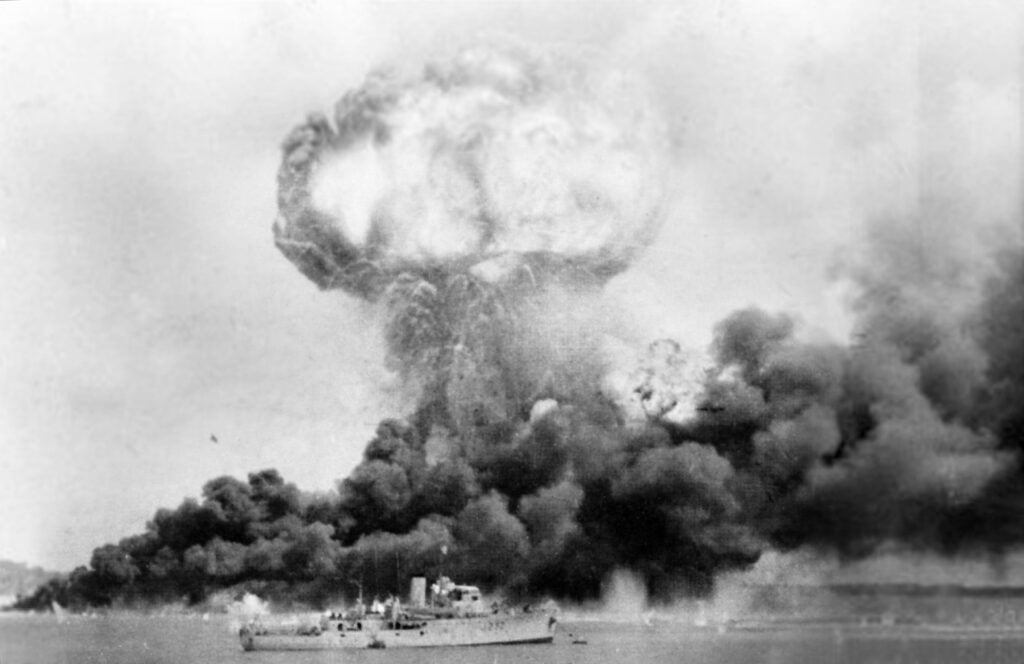
Almost without warning, the first bombs and machine‑gun fire descended on Darwin Harbour, its wharves, and the town’s two airfields. The harbour, crowded with Allied ships and transport vessels, became a prime target. Dive bombers and level bombers hit ships, causing explosions and fires that lit up the sky. Anti‑aircraft gunners on the ground and aboard ships returned fire, but they were outnumbered and overwhelmed by the sheer size of the assault.
Second Wave and Wider Damage
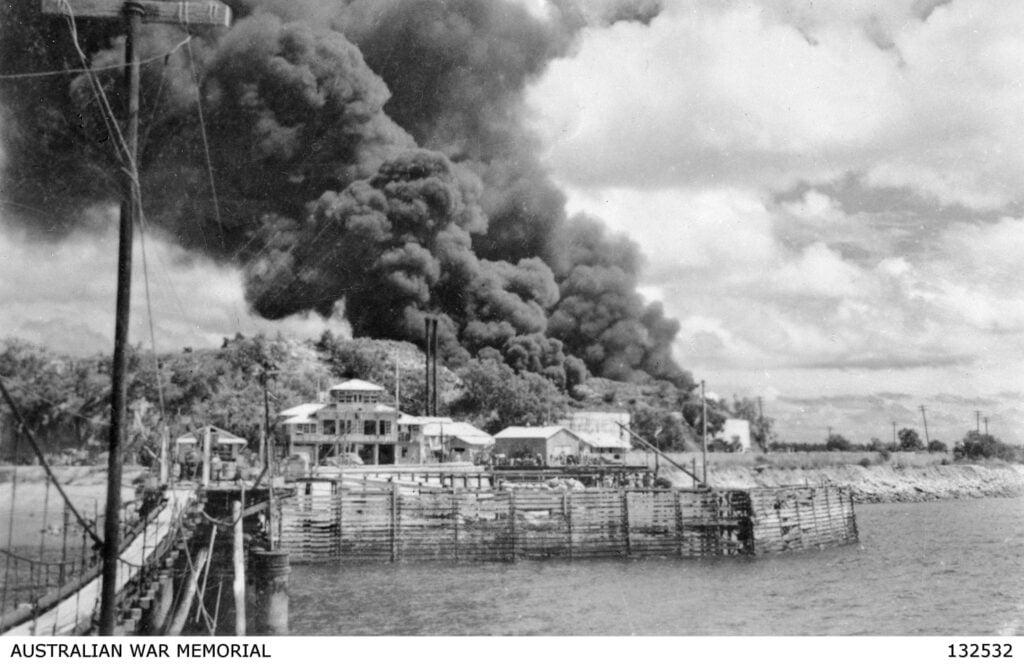
After a brief pause, a second wave struck around midday. This group of 54 land‑based bombers came from airfields in nearby occupied islands and dropped bombs on military targets and parts of the town that had not yet been hit. The combined raids lasted only a few hours, but they caused widespread destruction. Buildings, runways, and support facilities were damaged or destroyed. The town’s main post office took a direct hit, and many homes and businesses were left in ruins.
The attacks sank or damaged dozens of ships in Darwin Harbour. Eight vessels were sunk outright, including the American destroyer USS Peary, which was hit by multiple bombs and suffered heavy casualties. Allied losses also included at least 30 aircraft destroyed at the nearby Royal Australian Air Force base or in the town’s civilian airfield. Some aircraft and aircrew losses were the result of strafing attacks that caught planes on the ground.
Casualties and Aftermath
The human cost of the raids was heavy. Estimates from official records place the number of people killed at around 235, with hundreds more wounded. Casualties included Australian servicemen, civilians, and Allied personnel, with many injured by flying debris, collapsing structures, and secondary explosions in the harbour. Within hours of the attack, parts of Darwin had become a scene of confusion as survivors sought shelter and help for the wounded.
For the town’s residents and the Allied forces stationed there, the raid was a stark reminder of how close the war had come. News of the attack spread across the country, prompting increased efforts to strengthen defenses in the north. In the weeks and months that followed, additional air raids were carried out on Darwin and other parts of northern Australia, but none matched the scale of the assault on February 19, 1942.
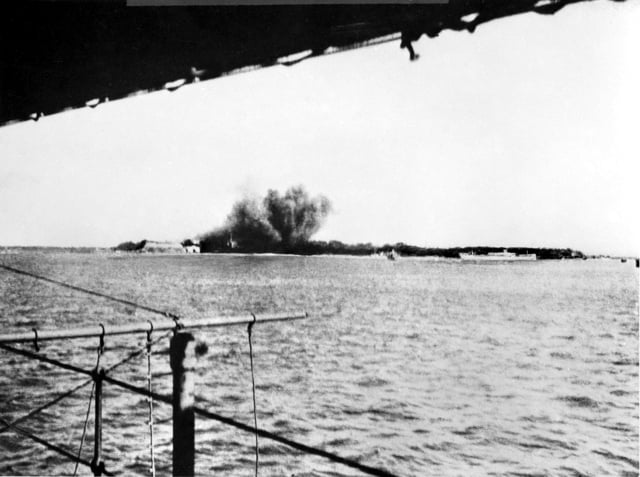









_explodes_at_Darwing_1942.jpg)