The WWII Pilot Who Flew America’s First Jet Wearing a Gorilla Mask
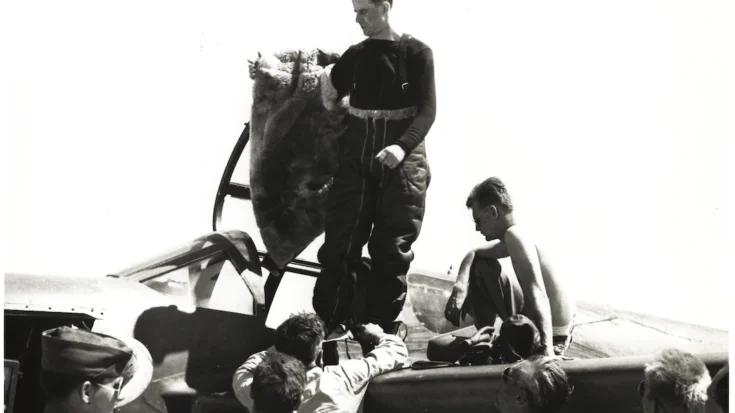
YouTube / @Howmuchthough
In the fall of 1943, a P-38 Lightning pilot flying over the Mojave Desert looked to his left and found an unexpected wingman. The aircraft had no propeller. The pilot was a gorilla in a bowler hat, waving a cigar. The P-38 pilot almost lost control of his aircraft. He was not losing his mind. He had just encountered Jack Woolams and America’s most closely guarded aviation secret.

How America Got Its First Jet
While Britain and Germany had already begun testing jet designs, the US worked on its first operational jet, the Bell P-59 Airacomet. The program relied on British jet engine technology shared with the US during the war, which made secrecy critical from the beginning.

The jet program was so secret that when the P-59 was taxiing, airmen placed a fake wooden propeller on its nose so onlookers wouldn’t notice anything unusual about the aircraft. In the air, however, the propeller-less aircraft was impossible to disguise. Pilot trainees flying over the Mojave began reporting sightings of a strange propeller-less aircraft that trailed smoke and moved faster than anything they knew. Something more creative was needed.
The Man Behind the Mask
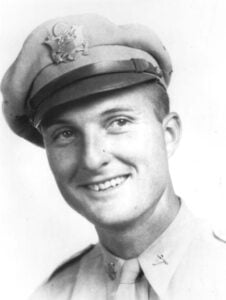
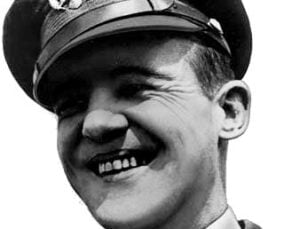
During a test mission in the fall of 1943, Jack Woolams noticed a P-38 from a nearby training unit maneuvering in the same area. He removed his flight helmet, slipped a gorilla mask over his head, donned a round-topped derby hat, and eased the XP-59A into a line-abreast position beside the P-38.

Other test pilots who were exposed to Woolams’ prank were convinced by Air Force psychologists that they hadn’t really seen the gorilla flying the plane, because everyone knows you can’t fly without a propeller. The deception worked because it combined two unbelievable elements simultaneously. Thereafter, no Muroc-based P-38 pilot dared report a propeller-less fighter screaming over the desert, preserving the XP-59A’s secret until its public debut in January 1944.
What Woolams Left Behind
Despite its limited impact in WWII, the technological advancements showcased by the P-59 Airacomet set the stage for the dominance of jet engines in subsequent conflicts.

Woolams was also the first test pilot to fly a fighter aircraft coast-to-coast nonstop and set an altitude record in 1943. He died preparing for an air show in 1946. He was 29 years old. The sound barrier he had been positioned to break was broken the following year by Chuck Yeager in the Bell X-1, an aircraft Woolams had been the first to fly in unpowered glide tests.