Boeing’s WWII Hidden Bomber Factory
YouTube / History Unleashed
A Factory Concealed in Plain Sight
During the early years of World War II, Boeing faced the possibility of long range Japanese strikes on the American West Coast. The company’s B-17 production line in Seattle was one of the most valuable industrial sites in the country. Protecting it became a priority.

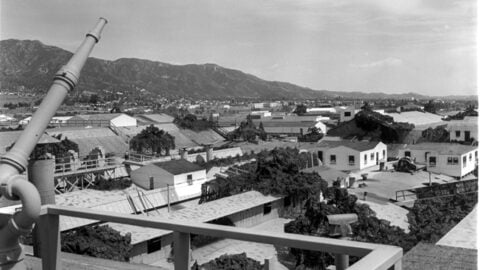
Engineers and camouflage specialists created an unexpected solution. They covered the roof of the factory with an entire artificial neighborhood that blended into the surrounding city.
Building a City on a Roof
Workers installed lightweight structures shaped like houses and small buildings. Painted streets crossed the surface, and crews added shrubs and artificial trees to complete the illusion. From above, the plant looked like a quiet residential area rather than a major bomber factory.

The project relied on simple materials and careful placement. Camouflage teams studied aerial photographs to match the appearance of nearby blocks. The United States hoped that any enemy reconnaissance flight would see nothing unusual in the terrain below.

Protecting Production of the B-17
The factory beneath this disguise produced the B-17 Flying Fortress, an aircraft central to the daylight bombing campaign over Europe. Maintaining uninterrupted output mattered to the Army Air Forces.

The hidden neighborhood improved the odds that production would continue without interference. The project became one of the most distinctive examples of wartime deception within American industry.