Why US Pilots Are Forced to Eject Only at the Very Last Second
YouTube / Fluctus
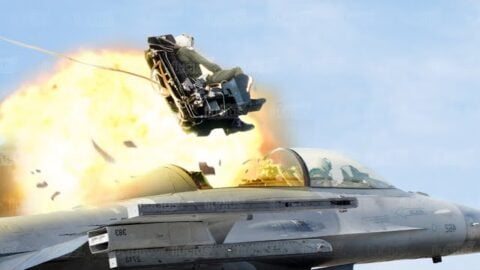
Ejecting from a fighter jet is one of the most violent and dangerous actions a pilot can take. Despite the Hollywood image of pilots pulling the handles at the first sign of trouble, real-life U.S. aviators are trained to do the opposite: stay with the aircraft until the final possible moment. This isn’t about heroics- it’s about survival, mission success, and protecting lives on the ground.
The Aircraft Comes First and Here’s Why
Modern U.S. military aircraft cost enormous sums to build and maintain, but cost alone isn’t what keeps pilots in the cockpit. In reality, many emergencies are recoverable. A jet that suddenly loses thrust might restart. A fire may burn out. Hydraulics can sometimes be restored. Pilots are trained to diagnose problems quickly, run emergency checklists, and wrestle with the aircraft until they’re certain it cannot be saved. When a pilot brings a damaged jet home, the aircraft can be repaired and flown again, preserving combat power for future missions.
Ejecting is not an escape to safety- it is a last-ditch act of survival. The process blasts the pilot upward with forces equivalent to a high-speed crash. Even with modern ejection seats, pilots risk spinal compression, broken bones, neck injuries, and the dangers that come afterward while descending or landing in an uncontrolled environment. There is no such thing as a safe or comfortable ejection. For many pilots, staying in the cockpit and trying to recover the jet may still offer a better chance of survival than ejecting too early.
Protecting People on the Ground
Pilots also have to consider where their aircraft might crash. If they eject too soon, the jet may dive into neighborhoods, roads, or crowded areas. Staying with the aircraft a little longer allows the pilot to steer it toward an empty field, open terrain, or the ocean. This mindset, prioritizing civilian lives, is ingrained in U.S. flight training and often encourages pilots to remain in their aircraft longer than they would otherwise.
From the earliest stages of flight school, aviators are taught how to handle engine failures, fires, stalls, and system malfunctions. They learn to judge exactly when a situation becomes unrecoverable, and at what altitude and speed ejection is still survivable. This depth of training encourages them to exhaust every recovery option before pulling the handles. They know what the aircraft can take, what they can take, and how quickly everything can go wrong.
“Eject Early, Eject Often” But Only When It’s Truly Over
A famous aviation saying urges pilots to eject as soon as their jet becomes unrecoverable, but deciding when that moment arrives is the challenge. Pilots must weigh their training, the condition of the aircraft, and what lies below them on the ground, all in a matter of seconds. They often stay with the aircraft until altitude is nearly gone, control is lost, or there is no other choice. That is why so many real-world ejections occur just one or two seconds before impact- they are true last-second escapes.
Staying with a failing jet has led to countless dramatic recoveries. Pilots have landed aircraft with no hydraulics, limped home on a single engine, and guided burning jets away from cities before ejecting at the last possible instant. Sometimes the aircraft is saved. Sometimes the pilot survives by only a fraction of a second. In every case, the decision to delay ejection is rooted in training, discipline, and a deep understanding of the risks involved.
Conclusion
U.S. pilots don’t wait until the very last second because they’re reckless. They do so because ejection is dangerous, many emergencies can be corrected, and the safety of people on the ground depends on their judgment. When a pilot finally pulls the ejection handle, it’s because every other option has vanished. That is why American aviators are trained to stay with the aircraft until the final moment, and why their escapes often resemble scenes from an action movie.