

How a WWII Fighter That Endangered Its Own Pilots Became a Tank Hunter Over Normandy
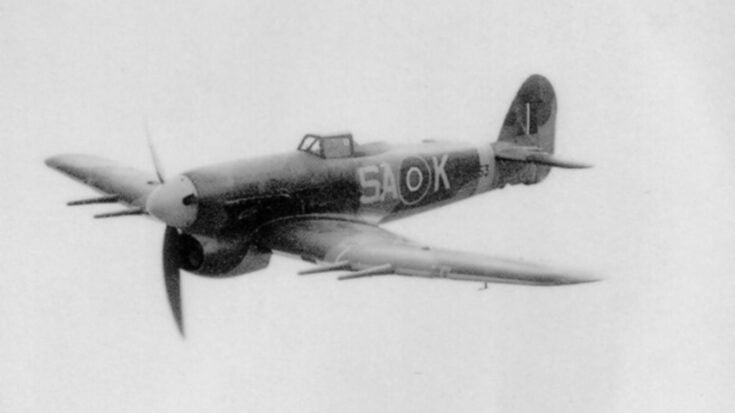
( Photograph taken in the course of duties by RAF serviceman in 1942, so above applies. Licence tag may be inaccurate due to inadquacies of available options;- copyright and free use status of the image are not altered, if you have a prob), Public domain, via Wikimedia Commons
In 1943, the RAF faced a difficult problem in the skies over Britain. A new fighter, the Hawker Typhoon, promised heavy firepower for low level attacks, yet early service revealed serious dangers. Pilots reported engine fumes in cockpits, structural weakness in high speed dives, and sudden mid air breakups. Despite these risks, the aircraft would soon become one of the most important weapons in the liberation of Western Europe during 1944.
In the middle of this development stood Flight Lieutenant Roland Beamont, who often flew the aircraft during its most unstable period. His experiences reflected a wider struggle inside the Royal Air Force: how to turn a flawed design into a usable battlefield weapon while losses continued in training and operational sorties.
Engine Troubles and Early Flight Risks
One of the most dangerous machines in RAF service was powered by the Napier Sabre engine, a complex H configuration design producing over two thousand horsepower. The engine delivered exceptional speed and climb performance, but its sleeve valve system ran hot and unreliable. Exhaust leaks sometimes filled cockpits with carbon monoxide, while coolant failures risked fire and engine seizure. Pilots often flew with cracked canopies or emergency procedures to survive long enough to return to base. These issues made early operational deployment highly risky for both training and combat ferry flights during 1943 in combat conditions.
At the same time, RAF planners needed a strong ground attack aircraft. German armored formations and fortified positions across occupied Europe required heavy firepower from the air. Existing aircraft struggled to meet this demand, creating pressure to keep the Typhoon in service despite its dangers.
Structural Weakness and Flight Failures
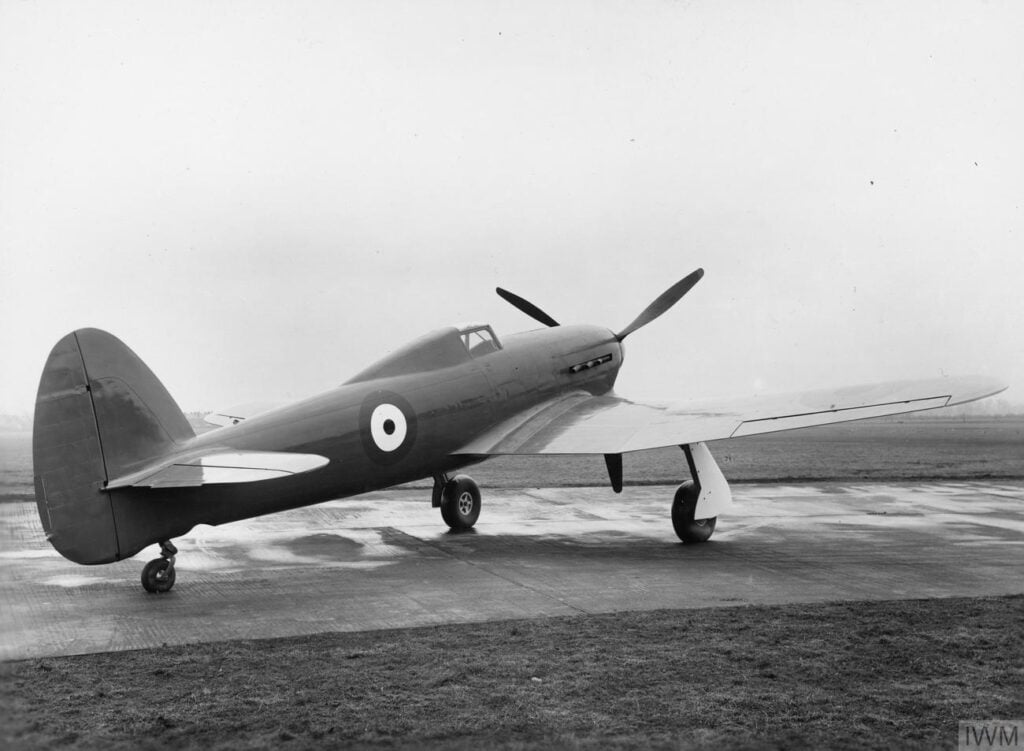
Engineers discovered that the Typhoon’s airframe could become unstable in high speed dives. At certain speeds, vibrations built up in the tail section until metal fatigue caused sudden structural failure. Early reports showed multiple aircraft breaking apart during routine missions, often without warning. These accidents were not caused by enemy fire but by aerodynamic stress that exceeded design limits.
Ground crews and engineers responded with urgent modifications. Reinforced tail assemblies, stronger control balances, and fuselage strengthening were introduced in field kits that required significant maintenance time. Squadron commanders struggled with losses, as entire units experienced repeated accidents. Despite the danger, the aircraft remained in service because no other available fighter could deliver equivalent low level firepower. Pilots also had to adapt quickly to changing cockpit conditions and inconsistent engine behavior across different production batches in service.
Preparing for the Normandy Battlefield
As preparations for the Allied invasion of France increased, the need for a reliable ground attack aircraft became urgent. German armored units were strengthening defenses along the coast, requiring aircraft capable of destroying tanks and fortified positions. The RAF began experimenting with rocket projectiles and heavier cannon armament to meet this demand.
The Hawker Typhoon eventually carried four Hispano cannons and later RP-3 rockets, giving it significant striking power against armored targets. Its speed at low altitude allowed it to strike and withdraw quickly, though early versions still suffered from mechanical reliability issues. German fighter-bombers like the FW 190 could still match it in some conditions, making combat highly dangerous. Operational use in Normandy demonstrated both the strengths and limitations of rocket armament, particularly when accuracy depended heavily on pilot skill and weather conditions variability.
From Fragile Aircraft to Battlefield Weapon
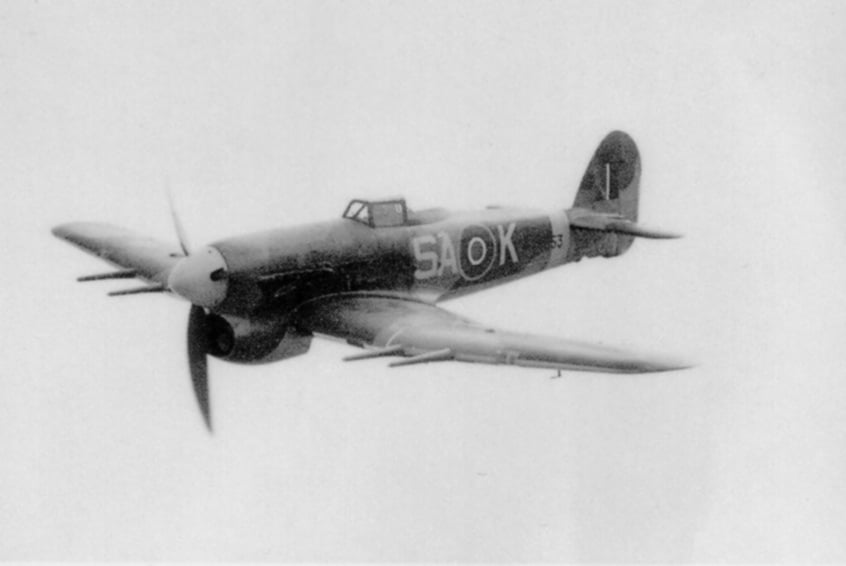
By mid 1944, improvements to the Typhoon had transformed it into a powerful battlefield support aircraft. Structural problems were largely reduced, and the introduction of rockets gave it the ability to destroy armored vehicles across Normandy. Operational analysis later showed that claimed destruction rates were often higher than confirmed losses, but the aircraft still had a strong psychological and tactical impact on ground forces.
Despite its early dangers, the Typhoon became a key part of RAF Second Tactical Air Force operations. Thousands of sorties were flown during 1944 and 1945, disrupting enemy movement and forcing armored units to disperse. Although losses remained significant, the aircraft proved essential in supporting ground operations during the final phase of the war in Western Europe. Its legacy remained tied to rapid evolution and combined operations demands during war Europe.








