The WWII Pilot Who Flew a Burning B-17 Home Using Just One Hand
Public domain, via Wikimedia Commons
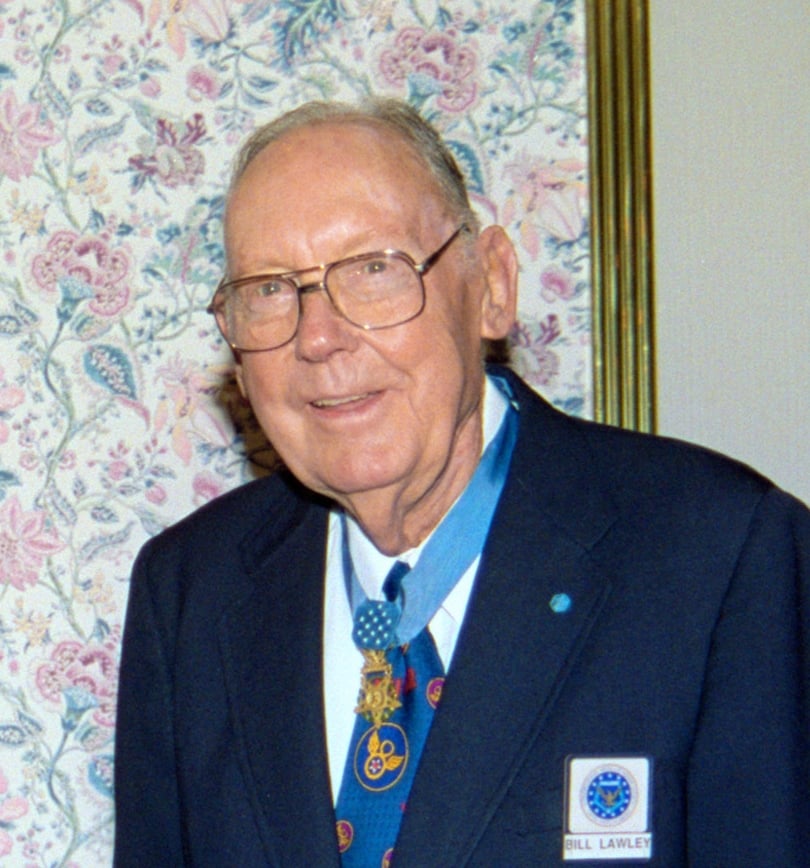
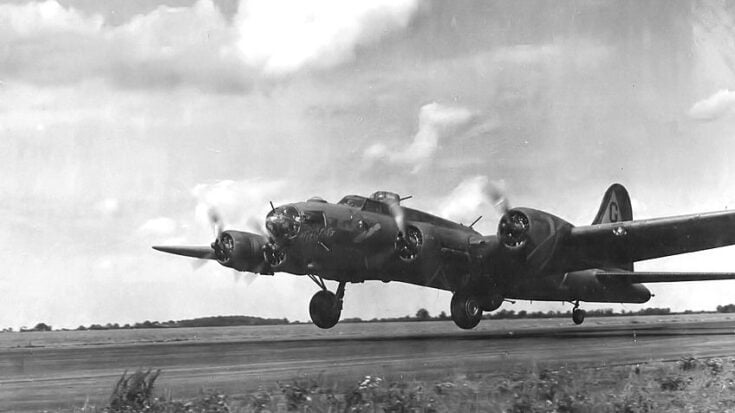
In early 1944, Allied air forces intensified daylight bombing over occupied Europe as part of a wider effort to weaken German air power before the planned invasion of France. One of the most difficult missions of this phase involved heavy bomber formations striking industrial targets deep inside Germany. Among the aircraft taking part was a B-17 Flying Fortress known as Cabin in the Sky, flown by First Lieutenant William R. Lawley Jr. of the 364th Bomb Squadron, 305th Bomb Group. The aircraft was new to combat and still being tested under operational pressure, a common situation for American crews during the expansion of the Eighth Air Force in Britain.
In the winter of the Second World War, the United States Army Air Forces relied on large daylight raids to hit factories, rail hubs, and fuel sites inside German-controlled territory. These operations were part of a wider strategic effort to reduce the Luftwaffe’s ability to resist the planned Allied invasion of Western Europe. Aircrews understood that each mission was tied directly to the coming land campaign, where air superiority would be essential for survival on the ground.

Big Week and the Weight of the Offensive
On February 20, 1944, the mission formed part of Operation Argument, also called Big Week, a coordinated Allied offensive aimed at crippling German fighter production and drawing the Luftwaffe into large-scale combat. Over a thousand American heavy bombers, supported by fighter escorts, entered hostile airspace during the first wave. Across six days, nearly four thousand bomber sorties were flown and millions of pounds of bombs dropped on aircraft factories, rail yards, and related industrial sites. The objective was to reduce Germany’s ability to defend against the upcoming invasion of Western Europe by destroying aircraft manufacturing capacity and exhausting experienced fighter units.
Within this massive air effort, Cabin in the Sky carried a full ten-man crew into formation over Germany. The aircraft was part of a larger bomber stream stretching across the sky, each formation relying on tight spacing for mutual protection against fighter attack. At altitude, crews constantly monitored engine readings, fuel flow, and formation position, knowing that small mechanical issues could quickly become fatal under combat conditions.
During the approach to Leipzig, the bomber maintained position within a dense formation of B-17 aircraft. However, a mechanical fault prevented its bomb racks from releasing their payload, leaving the aircraft heavier and less maneuverable during the withdrawal phase. This additional weight made it harder to maintain formation discipline, increasing exposure to defensive fire from German fighter units, which frequently targeted stragglers breaking formation.
Shortly after the bombing run, enemy fighters attacked in coordinated passes using cannon fire and machine guns. The aircraft was struck repeatedly, killing the co-pilot and injuring most of the crew. The pilot, also wounded in the face, struggled to maintain visibility as blood covered his instruments. Compounding the crisis, the co-pilot’s body fell against the controls, forcing the aircraft into a steep dive before control was partially regained.
A Decision in the Sky
Lt. Lawley, despite severe injuries and partial blindness, managed to regain control of the damaged B-17 using only one functioning hand. With the aircraft still carrying its bomb load and suffering engine damage, standard procedure would have been to order abandonment. However, several crew members were too badly wounded to bail out safely. Recognizing this, he chose to continue flying toward Allied territory rather than abandon the aircraft. The decision meant accepting extreme risk for the entire crew, as the bomber remained unstable, vulnerable, and difficult to control. Every mile west required constant correction as systems failed and power became uneven, while the crew worked to keep the pilot conscious and responsive.
After reaching the North Sea, the bomber still faced a long flight back to England with failing systems and worsening injuries among the crew. Fuel consumption, drag from battle damage, and reduced engine performance placed increasing strain on the aircraft. Hydraulic systems weakened, and control inputs became heavier, making precise flight difficult. Despite these conditions, the pilot continued westward, relying on intermittent assistance from crew members. The aircraft gradually lost efficiency as each damaged system reduced its remaining capability, turning a four-engine bomber into a fragile, barely controlled platform over cold water.
Lt. Lawley guided the aircraft to a small RAF field in England where he executed a rough but successful landing. The B-17 came down heavily yet remained intact, saving the surviving crew. For his actions during the mission, he was later awarded the Medal of Honor, recognizing extraordinary leadership under extreme conditions there.