The Genius Who Destroyed Germany’s Air Superiority
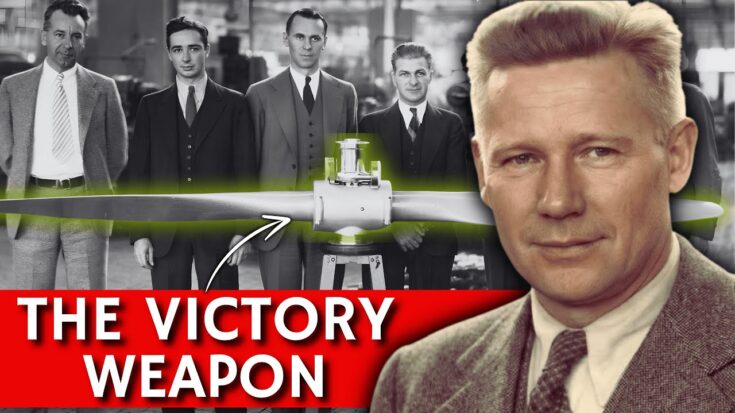
YouTube / The Engine Archives
In the spring of 1940, German fighters held a clear advantage over Allied aircraft. They climbed faster, accelerated quicker, and controlled the fight at altitude. British pilots struggled to meet them, while American aviators preparing for war questioned how the gap could be closed. The solution did not come from a new engine or airframe. It came from a propeller.

An Engineer Focused on the Forgotten Component
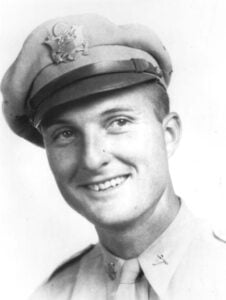
Frank Walker Caldwell was born in 1889 in Tennessee and trained as a mechanical engineer at MIT. At a time when aviation engineers focused on engines and wings, Caldwell concentrated on propellers. He recognized that the propeller was the sole link between engine power and aircraft performance, yet it was treated as a fixed, secondary component. Most aircraft used fixed pitch propellers that worked well only at one speed and altitude.

Caldwell identified the core problem early. An aircraft optimized for takeoff suffered at cruise, while one optimized for speed struggled to climb. Pilots were effectively locked into a single gear. Caldwell believed propeller efficiency could unlock major gains in performance, but his ideas were dismissed for years as unnecessary and impractical.
Turning Theory Into Hardware
After World War I, Caldwell continued testing propeller designs and refining his calculations. In 1929, he joined Hamilton Standard as chief engineer, where he finally had the resources to build working systems. His early controllable pitch propeller allowed pilots to select different blade angles for climb and cruise. In 1933, the design proved its value on the Boeing 247, dramatically improving climb performance and high altitude cruise over the Rocky Mountains.

That success led to widespread adoption and earned Caldwell the Collier Trophy. Yet he continued pushing forward. His goal was a fully automatic constant speed propeller that adjusted blade angle continuously to maintain optimal engine RPM. By 1938, Hamilton Standard introduced the Hydromatic propeller, combining hydraulic actuation, RPM governors, and feathering capability into a reliable system.
A Decisive Wartime Advantage
As war approached, British aircraft adopted constant speed propellers licensed from Hamilton Standard. During the Battle of Britain, Hurricanes and Spitfires climbed faster and fought more effectively at altitude than German intelligence had predicted. The engines were unchanged. The propellers were not.

When the United States entered the war, Hydromatic propellers became standard equipment on nearly every frontline aircraft. Fighters and bombers benefited from shorter takeoff distances, higher climb rates, improved cruise efficiency, and enhanced safety. Feathering capability allowed damaged multi engine bombers to return home instead of being lost.

By the end of the war, more than half a million Hydromatic propellers had been produced. They equipped aircraft that secured Allied air superiority across Europe and beyond.
Lasting Impact
Frank Caldwell remained largely unknown outside engineering circles, but his work reshaped aviation. Constant speed and variable pitch systems became standard across propeller driven aircraft, from wartime bombers to modern turboprops.
Germany did not lose air superiority in a single battle. It lost it to engineering discipline, persistence, and a refined understanding of blade angle and hydraulic pressure.