

Why the DC-3 Continues to Fly Decades After WWII
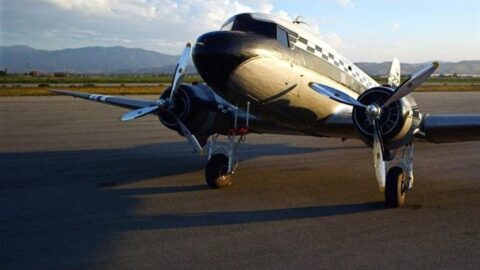
YouTube / Smithsonian Channel
The Douglas DC-3 first flew in the mid-1930s, and the last airframe rolled off the production line in 1946. Yet decades after World War II ended, hundreds of DC-3s remain active around the world. No other pre-war aircraft continues to operate commercially on the same scale. Its survival is tied directly to design choices that prioritized durability, simplicity, and adaptability.

Built for Reliability, Not Obsolescence
The DC-3 was engineered to operate from rough airstrips, handle heavy loads, and fly reliably in poor weather. Its tailwheel configuration, strong landing gear, and forgiving flight characteristics made it controllable in crosswinds and challenging conditions. Pilots often note that the aircraft communicates clearly through the controls, providing constant feedback during takeoff and landing. These traits remain valuable for cargo operators flying short routes into constrained or undeveloped airfields.

That reliability is not theoretical. Operators like Rob Balling, who flies a DC-3 hauling cargo to Catalina Island off the coast of California, move millions of pounds of freight every year. The aircraft continues to perform daily work without requiring modern infrastructure or specialized support equipment.
From Wartime Workhorse to Civil Backbone
At the end of World War II, thousands of military aircraft were scrapped. The C-47, the military variant of the DC-3, followed a different path. Its speed, range, and rugged construction made it ideal for postwar civilian use. Demobilized C-47s returned to civil service and became the foundation for global air transport expansion.

Airlines across the United States, Europe, and beyond could purchase these aircraft at low cost while gaining access to a proven, first-rate airliner. By 1946, more than 1,500 DC-3s were flying worldwide, primarily on short-haul routes. The aircraft entered a second generation of service, no longer leading major airline fleets but excelling in regional and local operations.
Enabling a New Aviation Economy
The DC-3 also reshaped who could operate an airline. Thousands of returning military pilots came home with flight experience and limited civilian job prospects. With DC-3s available at minimal cost, small operators could launch airlines with modest capital. Many succeeded, introducing affordable air travel to towns that had never seen scheduled service before.

This combination of low operating costs, mechanical simplicity, and operational flexibility explains why the DC-3 remains in the air today. It was built to work, and it continues to do exactly that.







