Inside the A-10 Warthog
YouTube / Blue Paw Print
Few combat aircraft have earned the loyalty of ground troops quite like the A-10 Thunderbolt II. The A-10, nicknamed the Warthog, was designed not for speed or elegance, but for survivability, firepower, and endurance. Every rivet, panel, and system reflects a single mission: protect soldiers on the ground.
Airframe and Wings
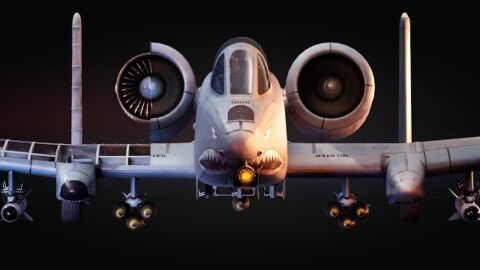
The A-10’s airframe is purpose-built for low-altitude combat. Its straight, high-mounted wings provide exceptional lift and maneuverability at slow speeds, allowing pilots to loiter over battlefields for extended periods. Unlike swept-wing fighters designed for supersonic flight, the Warthog’s wing design prioritizes stability and tight turning capability at low altitude.
Durability is a key component of the aircraft’s structure. The fuselage includes a titanium “bathtub” that shields the cockpit from ground fire. Critical systems are duplicated and separated to minimize the risk of total failure in the event of an attack. Even the landing gear is partially exposed when retracted, enabling belly landings if necessary. The aircraft can sustain significant structural damage and still return home- something proven repeatedly in combat.
Engines and Fuel Systems
Mounted high and far apart on the rear fuselage are two turbofan engines. Their elevated placement reduces vulnerability to foreign object damage from debris on rough airstrips and helps shield them from ground fire. The spacing between the engines also improves survivability; damage to one does not necessarily affect the other.
The aircraft’s fuel system is equally redundant. Self-sealing fuel tanks help prevent fires after being hit, and foam filling minimizes the risk of explosion. Manual flight control backups ensure the aircraft can still be flown even if hydraulic systems are lost. These design choices make the A-10 remarkably resilient compared to many high-performance jets.
Armament
At the heart of the Warthog lies its defining feature: the massive 30mm GAU-8/A Avenger rotary cannon. The aircraft was literally built around this weapon. The cannon’s seven barrels can fire thousands of rounds per minute, designed originally to destroy Soviet tanks during the Cold War. Its armor-piercing depleted uranium rounds are capable of shredding armored vehicles with devastating precision.
In addition to the cannon, the A-10 carries a wide range of ordnance on its eleven hardpoints. These include precision-guided bombs, laser-guided munitions, air-to-ground missiles such as AGM-65 Mavericks, rockets, and conventional bombs. This versatility allows the aircraft to adapt to changing battlefield needs, from anti-armor missions to close support in urban environments.
Cockpit
The cockpit reflects the aircraft’s mission focus: protection and visibility. The titanium armor surrounding the pilot can withstand heavy machine-gun fire. The canopy is designed to provide exceptional visibility, critical for identifying friendly forces and enemy positions during close air support missions.
Controls are intentionally straightforward and rugged. The A-10 was designed to operate from forward bases with limited support, so ease of maintenance and operational simplicity were priorities. Over time, avionics upgrades have modernized the cockpit with digital displays and precision targeting systems, allowing the aircraft to integrate advanced guided weapons while retaining its original combat philosophy.
Combat Record
Though conceived as a Cold War tank killer, the A-10 proved its value in real-world conflicts. During Operation Desert Storm in 1991, it destroyed thousands of Iraqi armored vehicles and artillery pieces. In the wars in Iraq and Afghanistan, it became a symbol of reassurance for troops under fire. Its ability to loiter for hours, absorb damage, and deliver precise firepower made it indispensable in counterinsurgency operations.
Despite recurring debates over the A-10’s retirement, its combat performance has sustained its reputation. For many soldiers, the sound of its cannon firing overhead is synonymous with survival. The Warthog remains not just an aircraft, but a battlefield guardian, engineered for grit, endurance, and the unwavering defense of those on the ground.