The Man Who Stole a Nazi Plane to Escape the Cam
YouTube/ Lume
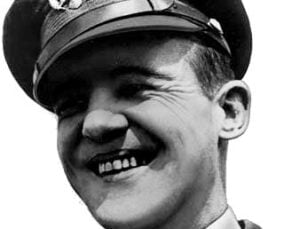
During the final, desperate years of the Second World War, escape from a Nazi concentration camp was nearly impossible. Starvation, brutality, and relentless surveillance ensured that few prisoners ever made it beyond the barbed wire alive. Yet in February 1945, a starving prisoner weighing just 38 kilograms accomplished something that seemed beyond belief: he stole a German bomber from one of the most secret military installations in the Third Reich and flew it straight through enemy defenses toward freedom. This is the extraordinary true story of Mikhail Devyataev, a Soviet fighter pilot who refused to accept captivity as his fate.
A Secret Base and a Dangerous Idea
Before the war, Devyataev had served in the Soviet Air Force as a skilled combat pilot. But in 1944, his aircraft was shot down during a mission, and he was captured by German forces. What followed was a brutal journey through the Nazi prison system that eventually led him to a concentration camp on Usedom Island, home to the heavily guarded Peenemünde Army Research Center was no ordinary military installation. It was the birthplace of Germany’s secret weapons program, where engineers developed advanced rockets such as the V-2 that would later rain destruction on Allied cities.
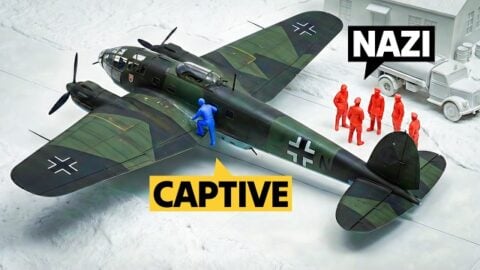
Prisoners at the facility were forced into backbreaking labor under constant threat of execution. Malnutrition and exhaustion reduced Devyataev to a mere shadow of his former self. But amid the suffering, he noticed something that would ignite a dangerous idea: German aircraft stationed nearby on a military airfield. Among them was the twin-engine Heinkel He 111, a medium bomber used extensively by the Luftwaffe.
Planning the Impossible Escape
Despite having no training on German aircraft and lacking any weapons, Devyataev began quietly assembling a group of fellow prisoners who were willing to risk everything for a chance at escape. With nine other inmates, he devised a daring and almost suicidal plan: seize one of the bombers and fly it out of Nazi-controlled territory.
On February 8, 1945, the group put their plan into action. After overpowering a guard and making their way onto the airfield, Devyataev climbed into the cockpit of the Heinkel He 111. He had never flown this type of aircraft before. Its controls, instrumentation, and engine systems were entirely unfamiliar. Yet time was against them. Discovery meant certain death.
Flight Through Enemy Fire
As German forces realized what was happening, anti-aircraft guns roared to life. The stolen bomber came under immediate fire as Devyataev struggled to get the aircraft airborne. Somehow, against overwhelming odds, he managed to lift off the runway and head east toward Soviet lines.
But the danger was far from over. Approaching friendly territory, the escapees were met with yet another deadly threat: Soviet anti-aircraft batteries that mistook the German bomber for an enemy aircraft. Shells burst around them as Devyataev fought to maintain control. Only by sheer determination and luck did the battered aircraft survive long enough to land behind Soviet lines.
From Suspect to Hero
Freedom, however, did not bring immediate recognition. Instead of being celebrated as heroes, Devyataev and his fellow escapees were interrogated by Soviet authorities who suspected them of collaboration with the enemy. His astonishing act of courage remained largely unacknowledged for twelve long years.
It was not until 1957 that the truth of his escape was officially recognized.
Devyataev was finally awarded the title of Hero of the Soviet Union, an honor that came more than a decade after he had risked everything for freedom.His story remains one of the most daring and improbable escapes of the Second World War, a testament to courage, ingenuity, and the unbreakable human will to survive.