Japan Flew a Bizarre Fleet of American B-17s in WW2
YouTube / Dark Skies
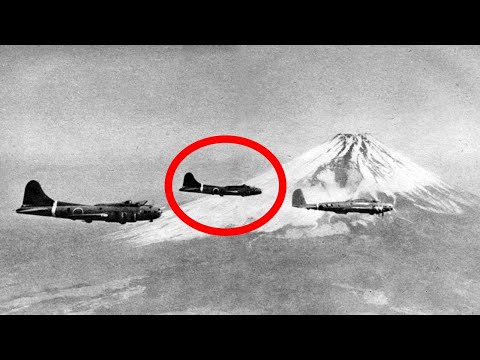
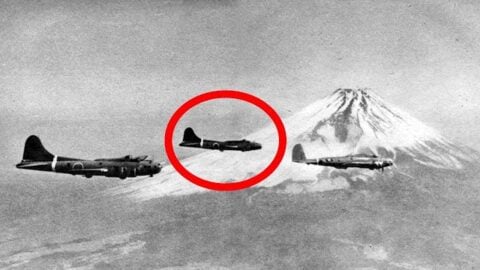
In the spring of 1945, intelligence officers from the United States Army Air Forces were puzzled by a series of reconnaissance photographs taken over Japan. At a time when the country’s aviation industry was struggling to keep up with wartime losses, the images revealed something entirely unexpected. Parked at Tachikawa airfield was a large, four-engine aircraft that did not match any known Japanese design. Its silhouette was unmistakable to trained eyes, yet completely out of place in the skies of Japan.
The mystery deepened as analysts studied the photos more closely. The aircraft bore a striking resemblance to the Boeing B-17 Flying Fortress, one of America’s most iconic heavy bombers. But how could such an aircraft end up in Japanese hands?
Captured Aircraft Turned Assets
During World War II, it was not uncommon for opposing forces to capture and repurpose enemy equipment. In several instances across the Pacific theater, Japanese forces managed to seize damaged or intact B-17 bombers following crashes or forced landings. Instead of scrapping these aircraft, they chose a more strategic approach.
Recovered B-17s were repaired and restored to flying condition, forming a small but highly unusual fleet within Japan’s aviation inventory. These aircraft were never numerous, but their value lay not in numbers, but in knowledge. Each captured bomber offered engineers and researchers a rare opportunity to study American technology up close.
Research at the Army Aviation Technical Institute
One of the key locations associated with these captured bombers was Tachikawa, home to the Army Aviation Technical Research Institute. Here, Japanese engineers carefully examined the B-17’s design, systems, and construction techniques.
‘
The Flying Fortress was renowned for its durability, advanced defensive armament, and long-range capabilities. By analyzing these features, Japanese researchers hoped to uncover strengths they could replicate and weaknesses they could exploit. The aircraft’s engines, armor layout, and gun positions were of particular interest.
Some reports suggest that at least a few of these captured bombers were made airworthy and flown for testing purposes. These flights would have allowed engineers to evaluate performance characteristics firsthand, giving them insights that could never be obtained from wreckage alone.
Tactical and Psychological Value
Beyond research, the presence of B-17s in Japanese hands may have offered limited tactical and psychological advantages. In theory, a captured bomber could be used for training, familiarization, or even deception. However, there is little evidence that Japan deployed these aircraft in combat roles.
Still, the idea of American crews potentially encountering one of their own aircraft in enemy markings highlights the unusual nature of the situation. It was a rare example of technological reversal in a war otherwise defined by industrial might and mass production.
A Little-Known Chapter of the Air War
The discovery of B-17s at Tachikawa serves as a reminder that innovation in wartime often extends beyond building new weapons. Sometimes, it involves learning from the enemy. Japan’s use of captured Flying Fortresses illustrates a quieter, more analytical side of the conflict – one focused on understanding rather than direct confrontation.
Though small in scale, this bizarre fleet represents a fascinating footnote in the history of aerial warfare. It underscores how even the most recognizable symbols of one nation’s power could, under the right circumstances, be turned into tools for another.