Why KC-135 Crews Don’t Have Parachutes
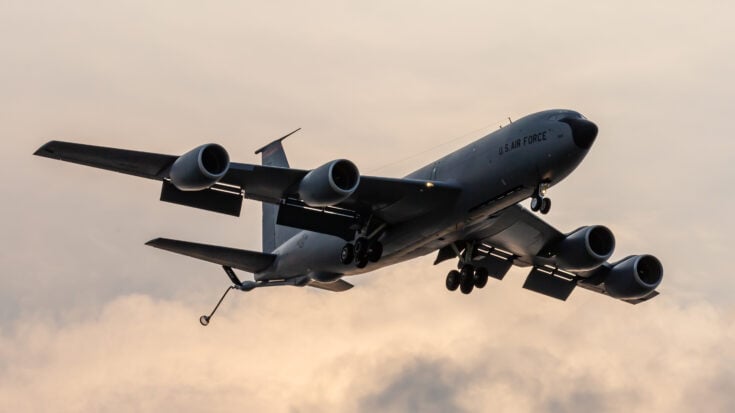
When the KC-135 Stratotanker crashed in western Iraq earlier this month, killing all six crew members, one question surfaced quickly in public discussion: why didn’t the crew bail out? The answer involves a 2008 Air Force decision, the physics of exiting a large aircraft in flight, and a fundamental difference in how tankers and fighter jets approach crew survival.
No Parachutes on Any Major Tanker
None of the major tanker aircraft currently in global service carry parachutes for their crews. That includes the KC-135, which represents 47 percent of the world’s active tanker fleet, as well as C-130 tanker variants, Boeing 767 tankers, the Airbus A330 MRTT, and every other large refueling platform operating today. All of them carry crews of three or more. None of them provide a parachute escape option.

Fighter aircraft solve the crew escape problem with ejection seats, explosive systems that propel pilots clear of the aircraft in fractions of a second. Large transport-based aircraft have no equivalent. The interior layout, narrow access routes, and limited exit points make a rapid parachute exit during an emergency practically impossible.
Why Jumping Wouldn’t Work Anyway
Even if crew members could reach an exit, the conditions outside a cruising tanker make a successful bailout extremely unlikely. Tankers operate above 30,000 feet at speeds of several hundred miles per hour. Exiting an aircraft in those conditions without specialized high-altitude equipment produces predictable results. The US Air Force examined this question in detail and reached a clear conclusion.

The KC-135 did carry parachutes earlier in its service life. The aircraft entered service during the Cold War when bailout procedures were still standard on many large military aircraft derived from bomber operations. Crews were trained to use them and the aircraft was equipped accordingly. In 2008 the Air Force removed parachutes from KC-135 operations entirely after determining that the probability of a successful bailout was extremely low. The maintenance burden of keeping parachute equipment inspected and current, along with the specialized training required, was determined to provide negligible practical safety benefit against that probability.
Staying With the Aircraft Is the Actual Safety Plan
The design philosophy behind large military transports reflects a different approach to emergency survival than fighter aviation uses. Most emergencies in large aircraft are not instantaneous catastrophic failures. They develop over time, giving crews the opportunity to assess the situation, run emergency procedures, communicate with controllers, and attempt a controlled landing at an alternate airfield.

Large multi-engine aircraft are built to remain stable and controllable through significant damage and system failures. That structural resilience combined with the time available during most emergency scenarios means that landing the aircraft is generally a more survivable outcome than attempting to exit it at altitude and speed.