THE LAST BATTLE of F-51D Mustangs In Korea
YouTube / Not A Pound For Air To Ground
From World War II Icon to Emergency Solution
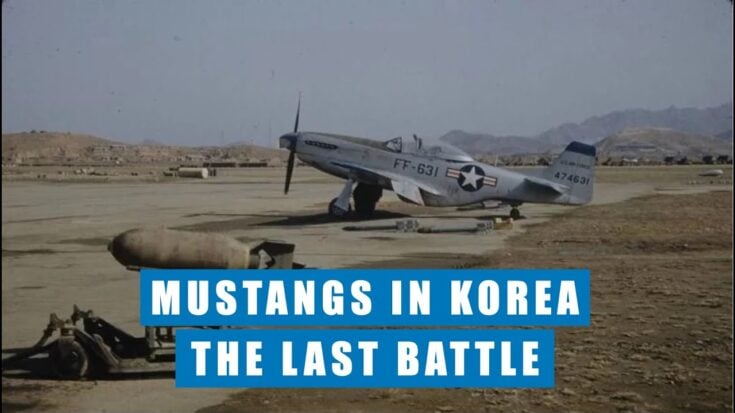
The P-51 Mustang entered history as one of the most effective piston engine fighters of the Second World War. By 1950, however, its era appeared to be over. Jets such as the F-80 Shooting Star were taking center stage, and Mustangs had been relegated to training, target towing, and Air National Guard units. That changed abruptly on June 25, 1950, when North Korean forces crossed the border and triggered a crisis the U.S. Air Force was unprepared to meet.

Early jet fighters lacked the range and endurance needed to operate from Japan and remain over the battlefield. South Korean airfields were primitive and unsuitable for jets. Faced with an advancing enemy and limited options, the Air Force turned back to the F-51D Mustang.
Rushed Back Into Combat
Stored aircraft were pulled from depots in Japan, training airframes were reclaimed, and Air National Guard Mustangs were shipped across the Pacific. Within weeks, squadrons converted back from jets to piston fighters and deployed to forward bases such as Taegu and Pohang. By early August 1950, six Mustang squadrons were operating in Korea after just 46 days of conversion and preparation.

Operations were relentless. Mustang pilots flew dozens of sorties per day, attacking columns of tanks, trucks, and infantry at low altitude. In their first weeks alone, they fired thousands of rockets, dropped hundreds of tons of bombs, and expended vast quantities of .50 caliber ammunition. Losses were steady, but the impact on North Korean ground forces was immediate and severe.

Fighting Prop Fighters and Jet Adversaries
While ground attack consumed most missions, air combat still occurred. Mustangs scored several victories against Yak-9 fighters and IL-10 attack aircraft, particularly during the chaotic fighting near the Yalu River. These engagements marked some of the final piston versus piston fighter combats in U.S. service.

Encounters with MiG-15 jets told a different story. Although skilled Mustang pilots could evade early jet attacks through sharp turns and situational awareness, the MiG’s speed and cannon armament were decisive when mistakes were made. Only a handful of Mustangs were lost to jets, but the encounters underscored that the piston fighter age was ending.
Attrition and Endurance
The Mustang’s greatest enemy proved to be ground fire. Its liquid cooled Merlin engine was vulnerable to even minor hits, and low level attack missions exposed pilots to intense anti aircraft fire. Over the course of the war, 344 F-51s were lost, most to ground fire or mechanical damage. One hundred twenty nine pilots were killed, with dozens more captured or listed as missing.

Reconnaissance units flying RF-51Ds faced even higher risks, operating deep behind enemy lines to locate camouflaged vehicles and troop movements. Their work shaped targeting across the front but came at a heavy cost.
A Final Contribution
By 1952, jets such as the F-84 and F-86 increasingly took over the workload. Mustang operations wound down, with final combat sorties flown in January 1953. In total, F-51s flew tens of thousands of missions and destroyed thousands of enemy vehicles and installations.

The Korean War did not redefine the Mustang. Instead, it confirmed what history already knew. Even as an aging design, the F-51D remained effective when placed in capable hands. Its final battles over Korea closed the chapter on piston engine fighters in U.S. combat service, ending with sacrifice, endurance, and a contribution that shaped the course of the war.