Inside the Ship That Changed WWII
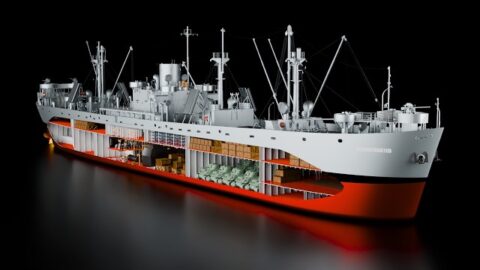
YouTube / Deconstructed
Built for speed, simplicity, and sheer necessity, the Liberty Ship became one of the most important weapons of World War II without ever firing a shot. These rugged cargo vessels formed the lifeline of the Allied war effort, carrying troops, food, fuel, and weapons across dangerous oceans.
Mass-produced in record time and launched by the thousands, Liberty Ships ensured that factories, armies, and front lines never went without supplies- helping turn the tide of the war through logistics, endurance, and industrial power.
A Ship Born From Urgent Need
When World War II broke out, the Allies faced a critical problem: they were losing cargo ships at a rate faster than they could replace them. German U-boats prowled the Atlantic, sinking vital supply vessels and threatening to starve Britain and cripple the Allied war effort. In response, the United States launched an ambitious emergency shipbuilding program that gave birth to the Liberty Ship- a simple, rugged cargo vessel designed not for beauty or longevity, but for speed of construction and reliability at sea.
Liberty Ships were deliberately uncomplicated. Their design favored straight lines, prefabricated sections, and welded construction instead of traditional rivets. This allowed shipyards to assemble them at unprecedented speeds, sometimes in just weeks. While they lacked elegance and had limited lifespans, Liberty Ships were never meant to be permanent. They were built to survive the war and do so in overwhelming numbers.
Mass Production on an Unmatched Scale
More than 2,700 Liberty Ships were built during the war, an industrial achievement without precedent. Shipyards across the United States operated around the clock, employing hundreds of thousands of workers, many of whom had never worked in heavy industry before. Women, minorities, and older workers filled the yards, symbolizing the total mobilization of American society for the war effort.
Liberty Ships carried everything the Allies needed to fight: tanks, aircraft, ammunition, fuel, food, medical supplies, and even entire railroad systems. They crossed some of the most dangerous waters in the world, often sailing in convoys under constant threat of submarine and air attack. Though many were sunk, far more reached their destinations, ensuring that Allied forces remained supplied on every front.
Turning the Tide Through Logistics
Wars are not won by weapons alone, but by the ability to sustain armies over time. Liberty Ships made this possible. By flooding the seas with cargo vessels faster than the enemy could destroy them, the Allies broke the back of the Axis submarine campaign. The steady flow of supplies enabled major operations such as the invasion of Normandy and the island-hopping campaigns in the Pacific.
After World War II, many Liberty Ships continued to serve as commercial cargo vessels, relief ships, and even floating storage platforms. Some were converted for new purposes, while others were scrapped as newer designs emerged. A handful survive today as museum ships, standing as reminders of how industrial power and logistics helped shape the outcome of history.
The Liberty Ship rarely appears in dramatic war stories, yet its impact was profound. These humble cargo vessels proved that winning a global conflict depended not only on soldiers and firepower, but on factories, shipyards, and the relentless movement of supplies. In doing so, the Liberty Ship played a crucial role in turning the tide of World War II and ultimately securing victory through its endurance.