Archeologists Excavate The WW2 Crash Site Of A Rare Mk1 Spitfire
YouTube / Timeline - World History Documentaries
In May 1940, a young Royal Air Force pilot took off in a rare Mk1 Spitfire for his first combat mission. The aircraft was among the earliest versions of Britain’s most iconic fighter, built at a time when the outcome of the war was far from certain.
He never returned. His aircraft disappeared during the chaotic air battles of the Battle of France, becoming one of many losses in those desperate early weeks of World War II. For decades, the crash site lay hidden beneath farmland in northern France, its story buried with it.
The Search Begins
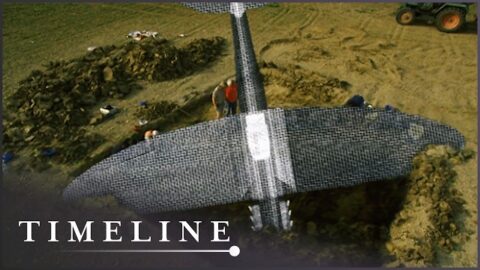
Sixty years later, archaeologists teamed up with aviation historians and air crash investigators to locate the missing aircraft. Using wartime records, eyewitness accounts, and modern survey equipment, they narrowed down the suspected crash location.
The project was documented by Time Team, whose specialists brought their archaeological expertise to what was both a historical investigation and a recovery mission. Careful excavation was essential. A World War II crash site is not just debris. It is a protected military grave and a powerful historical record.
Unearthing a Rare Mk1 Spitfire
The Supermarine Spitfire Mk. 1 was one of the earliest production models of the legendary fighter. Built before the Battle of Britain, these aircraft featured early wing designs and engine configurations that would later evolve as the war progressed.
As the dig progressed, fragments of aluminum skin, twisted structural components, and ammunition were uncovered. The most dramatic discovery was the buried remains of the aircraft’s engine, a powerful Rolls-Royce Merlin that had driven the Spitfire into combat. Even after being underground for decades, parts of the engine were remarkably well-preserved. Each artifact helped confirm the identity of the aircraft and revealed how it struck the ground.
Personal Effects and Human Stories
Beyond the machinery, the most moving discoveries were the pilot’s personal items. Small belongings, such as pieces of uniform, equipment, and other personal effects, transformed the excavation from a technical investigation into a human story.
These items served as quiet reminders that this was not just an aircraft, but a young man’s final flight. For historians, the site offered insight into the intense air battles over France in 1940. For families and researchers, it provided long-awaited answers about what had happened on that mission.
Preserving History
Excavating a World War II crash site requires sensitivity and respect. The remains were carefully documented and recovered in cooperation with authorities. Any human remains would be handled according to military protocol and with full honors.
The project highlighted how modern archaeology can illuminate even relatively recent history. By combining forensic science, historical research, and careful excavation, the team reconstructed the final moments of a rare Mk1 Spitfire. More than eighty years after it fell from the sky, the aircraft’s story was finally brought back to light, a powerful reminder of the cost of war and the importance of remembering those who served.