Up Close to the AVRO LANCASTER — Legendary WW2 Aircraft
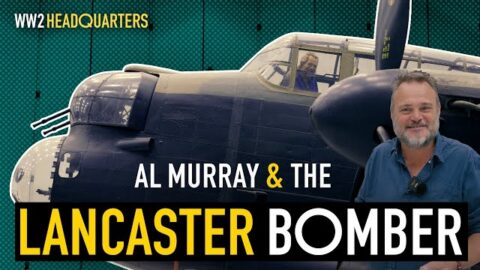
YouTube / WW2 Headquarters
Few aircraft of the Second World War are as iconic as the Avro Lancaster. Known simply as the “Lanc,” this British heavy bomber became the backbone of the Royal Air Force’s night bombing campaign over Europe. Powerful, rugged, and capable of carrying enormous bomb loads, the Lancaster earned a reputation as one of the most effective bombers of the war.
Designed for War
The Lancaster was developed by the British company A.V. Roe and Company, better known as Avro. It evolved from the earlier twin-engine Manchester, which suffered from engine reliability issues. By redesigning the aircraft with four engines, Avro created a bomber that would become legendary.
The prototype first flew in 1941, and it quickly proved superior in performance and payload capacity. Its long wingspan, distinctive twin vertical tail fins, and spacious bomb bay gave it both range and striking power.
Power and Performance
The Lancaster was powered by four Rolls-Royce Merlin engines, the same engine used in the famous Supermarine Spitfire. These engines gave the bomber a top speed of around 280 mph (450 km/h) and a range of over 2,500 miles (4,000 km), depending on the mission.
With a crew of seven, the pilot, flight engineer, navigator, bomb aimer, wireless operator, mid-upper gunner, and rear gunner, the Lancaster required teamwork and coordination to operate effectively, especially during dangerous night raids over heavily defended targets.
The Massive Bomb Load
What truly set the Lancaster apart was its ability to carry bombs. It could carry up to 14,000 pounds of bombs in standard configuration. Modified versions carried even more. The aircraft famously delivered the 12,000-pound “Tallboy” and the massive 22,000-pound “Grand Slam” earthquake bombs designed by Barnes Wallis. These weapons were used to destroy hardened targets such as bridges, bunkers, and submarine pens.
The Lancaster also played a central role in the daring 1943 Dambusters raid, officially known as Operation Chastise, in which specially modified Lancasters dropped bouncing bombs to breach German dams.
Life On Board
Inside the Lancaster, conditions were cramped, cold, and dangerous. There was no pressurization, meaning crews flew at high altitudes in freezing temperatures. The narrow fuselage forced crew members to move carefully between stations, and the rear gunner sat isolated in a small turret at the tail of the aircraft.
Despite the risks, Lancaster crews developed a strong sense of camaraderie. Survival rates were low, and missions were long and exhausting. Every takeoff carried the uncertainty of whether the aircraft would return.
Legacy and Survival
More than 7,300 Lancasters were built during the war. Today, only two remain airworthy: one in the United Kingdom operated by the Royal Air Force’s Battle of Britain Memorial Flight, and one in Canada flown by the Canadian Warplane Heritage Museum.
The Avro Lancaster remains a powerful symbol of Allied air power and sacrifice. Up close, its size is striking, but even more impressive is the history it carries. This aircraft was not just a machine of war; it was a lifeline for the crews who flew it and a decisive force in the fight for victory.