

More A-10 Warthogs Deploying to the Middle East as U.S. Boosts Airpower Presence
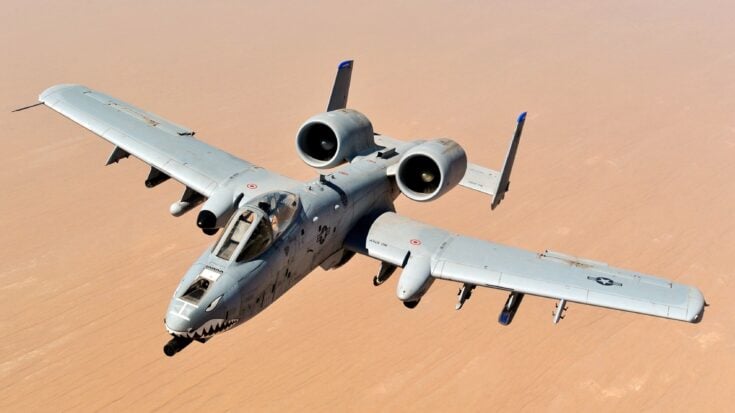
Master Sgt. William Greer, U.S. Air Force, Public domain, via Wikimedia Commons
The United States is expanding its airpower presence in the Middle East with the deployment of additional A-10C Thunderbolt II aircraft, a move that reflects the continued operational value of an aircraft first introduced during the Cold War. Known informally as the Warthog, the A-10 has long been associated with close air support missions, flying low and slow to assist forces on the ground.
Recent movements of these aircraft show how military planners are adapting older platforms to modern conflicts. As Operation Epic Fury continues, the arrival of more A-10s signals a focus on flexibility, persistence, and sustained aerial coverage across several operational environments, including coastal waters, desert terrain, and areas affected by drone activity.
Transatlantic Flights and Reinforcement Efforts
The first wave of additional aircraft reached RAF Lakenheath in the United Kingdom on March 30, arriving in two groups after departing Pease Air National Guard Base in New Hampshire. The flights crossed the Atlantic with support from KC-135 Stratotanker refueling aircraft, which met the formation mid-ocean to allow uninterrupted travel toward Europe.
These jets belong primarily to Air National Guard units, including aircraft from Michigan’s Selfridge Air National Guard Base. Spare aircraft accompanied the deployment but later returned home, while more A-10s remained staged in the United States awaiting further movement. Reports indicate that several dozen aircraft may ultimately rotate through Europe before continuing toward operational bases in the Middle East.
Why the A-10 Still Matters
For years, analysts questioned whether the A-10 could survive in modern combat environments dominated by advanced air defenses. Yet its performance during Operation Epic Fury has renewed debate about its usefulness. Built around survivability and endurance, the aircraft can remain over a target area for extended periods, ready to respond quickly when needed.
The aircraft’s design supports this role. Its armored cockpit protects pilots from ground fire, while redundant flight systems allow continued operation even after sustaining damage. Armed with a 30-millimeter GAU-8 cannon and guided weapons, the A-10 can strike vehicles, small vessels, and fortified positions with high accuracy while maintaining visual awareness of the battlefield.
Operations Over Land and Sea
During Operation Epic Fury, A-10s have expanded beyond traditional ground support duties. Pentagon briefings confirmed their use against fast attack watercraft operating in the Strait of Hormuz, a vital maritime corridor through which a large portion of global oil shipments passes.
This maritime role draws on exercises conducted in earlier years, when the aircraft trained alongside naval forces to counter small, fast-moving threats. The A-10’s ability to fly at low speeds and maintain tight maneuvering control allows pilots to track small targets that might challenge faster aircraft. Its long loiter time also enables continuous monitoring of shipping lanes and naval formations.
Counter-Drone Missions and Modern Weapons
Another major task for the aircraft has been counter-drone operations. Images released by military officials showed A-10s carrying mixed weapon loads, including AGM-65 Maverick missiles, laser-guided rockets, and AIM-9 Sidewinder missiles. This combination allows crews to engage both aerial and surface threats during a single mission.
A key development has been the use of laser-guided AGR-20 rockets fitted with precision guidance kits. These weapons cost far less than traditional air-to-air missiles, making them suitable for intercepting low-cost drones without creating large financial imbalance. The approach reflects a wider shift toward matching weapon cost with target value, especially as unmanned systems become more common on the battlefield.
Regional Strategy and Expanding Presence
The deployment of A-10 aircraft forms part of a broader buildup that includes additional naval forces, ground troops, and electronic warfare aircraft. Thousands of personnel and multiple units have entered the region as the United States strengthens its military posture amid ongoing fighting tied to Operation Epic Fury.
Military planners appear to be using the A-10 in roles that emphasize persistence rather than speed or stealth. Videos released online have shown the aircraft conducting strafing runs over Iraq against militia targets, highlighting its continued role in direct fire support. The aircraft’s ability to operate from forward bases and remain airborne for long periods provides commanders with a constant presence over contested areas.
An Aircraft Near Retirement Finds New Purpose
The renewed deployment comes at a time when the future of the A-10 fleet remains uncertain. Lawmakers previously intervened to slow retirement plans, requiring the Air Force to maintain a minimum number of aircraft while transition strategies are evaluated. Combat operations have added weight to arguments that specialized close air support platforms still serve a distinct role.
Despite being decades old, the A-10 continues to adapt through upgraded targeting systems, improved weapons integration, and expanded mission profiles. Its current deployment demonstrates how military technology often evolves through changing needs rather than replacement alone, as commanders balance modern threats with proven capabilities already in service.







