Watch Rare Color WWII Footage of RAF Spitfires Brought to Life With Restoration and Pilot Testimonies
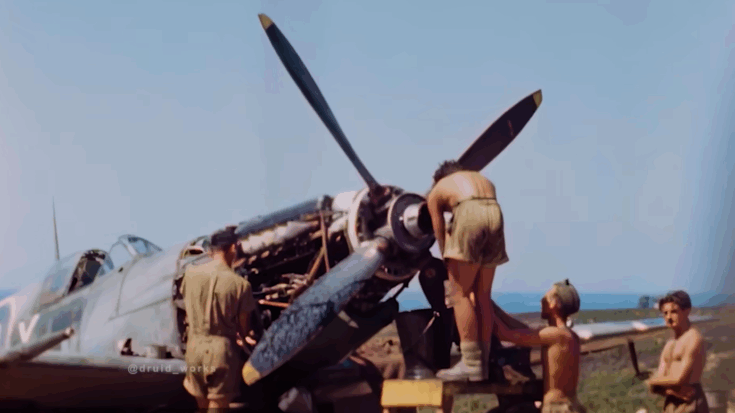
Druid Works / YouTube
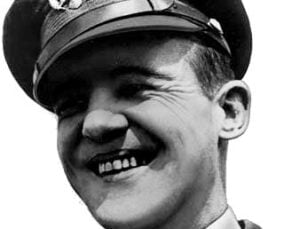
Color footage from the Second World War offers a rare chance to see history beyond black-and-white images. Restored film showing Royal Air Force Spitfires combines visual records with interviews from pilots who flew the aircraft during combat. Together, the restored scenes and spoken memories help modern viewers understand how these machines felt in real life, not just how they appeared in official photographs.
The Supermarine Spitfire became one of Britain’s most recognized fighter aircraft after entering service in 1938. Designed by engineer R.J. Mitchell, it was built for speed and maneuverability, powered by the Rolls-Royce Merlin engine. During the Battle of Britain in 1940, Spitfires worked alongside Hawker Hurricanes to defend the country from German air attacks, establishing a reputation that remained strong throughout the war.
Flying the Spitfire: Pilot Experiences
Pilots interviewed in the restored footage describe the aircraft as balanced and forgiving, qualities that mattered greatly for young airmen transitioning from older biplanes. Many had previously flown aircraft such as the Gloster Gladiator, making the move to a fast monoplane a dramatic change. According to their recollections, the Spitfire responded smoothly to control inputs and allowed pilots to recover even after mistakes, which helped build confidence during training and combat.
Life inside fighter squadrons also reflected a different era of aviation. Pilots recalled fewer regulations compared with modern air forces. Flights between nearby airfields could sometimes be carried out informally as training, and aerobatic practice was common. Flying relied heavily on instinct and visual awareness rather than complex electronic systems, since radar integration and advanced cockpit technology were still developing at the time.
First Flights and Learning Alone
One striking memory shared in the interviews involves a pilot’s first solo flight. Unlike modern training programs, there were no dual-control versions available for instruction. New pilots studied manuals carefully, learned cockpit procedures on the ground, and then flew alone for the first time. Several described the experience as both frightening and exciting, especially when adjusting to the aircraft’s speed and powerful engine.
Pilots also compared the Spitfire to the Hurricane, noting how its streamlined design allowed it to accelerate faster and maintain speed even when power was reduced. This aerodynamic efficiency changed landing techniques, requiring careful planning rather than simple throttle control. Early mistakes were common, and some pilots admitted to rough landings while learning the aircraft’s behavior.

Inside the Cockpit and Handling Challenges
The cockpit itself was tight, built around performance rather than comfort. Instruments were basic, including compass systems and essential flight gauges, with little extra equipment. Pilots explained that once the canopy closed, they felt closely connected to the aircraft, almost as if movement and machine became linked through direct control.
Operating the Spitfire required adapting to limited forward visibility caused by its long nose and engine placement. Pilots taxied in a zigzag pattern to see ahead and used curved approaches during landing on grass airfields. Despite its narrow undercarriage, which demanded care during crosswind landings, veterans remembered the aircraft as durable and reliable under wartime conditions.