The New Year’s Day Air Raid That Marked the End of the Luftwaffe
YouTube / TJ3 History
New Year’s Morning Over the Western Front
Dawn on January 1, 1945 broke quietly over Allied airfields in Belgium, the Netherlands, and northern France. Many ground crews and controllers were reporting for duty after modest New Year’s celebrations, expecting another routine day supporting the air war over Germany. Instead, they witnessed the last large scale offensive ever launched by the Luftwaffe.

Operation Bodenplatte was designed to cripple Allied tactical air power supporting the Battle of the Bulge. More than 900 German aircraft took off before sunrise, flying at treetop height to avoid radar detection. Their targets were frontline fighter bases packed with aircraft preparing for the day’s sorties.
A Carefully Planned Surprise
German pilots were ordered to maintain radio silence and fly in tight formations through winter fog and darkness. Ju 88 and Ju 188 night fighters dropped flares to guide the attackers as they crossed the front lines. The strike was timed to coincide with first light, when Allied aircraft were most vulnerable on the ground.

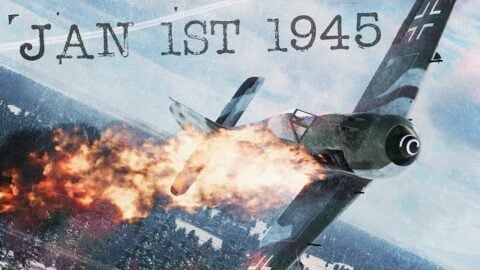
For a few minutes, the plan worked. Focke Wulf 190s and Messerschmitt Bf 109s burst over airfields at Ursel, Melsbroek, Asch, Eindhoven, and Metz, strafing parked fighters and fuel dumps. P-47 Thunderbolts, Spitfires, and transport aircraft burned along runways as crews scrambled for cover.
Friendly Fire and Fatal Errors
The same low altitude that enabled surprise also proved disastrous. Many German flak units had not been informed of the operation. Dozens of Luftwaffe aircraft were hit by their own air defenses while crossing friendly territory. Navigation errors scattered formations, and some pilots attacked the wrong airfields or empty bases.

Worse still, inexperienced German pilots lingered over their targets, making repeated passes instead of striking once and escaping. This exposed them to ground fire and to Allied fighters that managed to get airborne. At Asch, American P-47 pilots took off through strafing fire and shot down dozens of attackers in minutes.
Heavy Losses on Both Sides
Allied forces lost roughly 250 aircraft destroyed and another 150 damaged, most on the ground. Several air units were temporarily knocked out of action, and casualties among ground crews were significant. Yet the Luftwaffe paid a far higher price.

Around 300 German aircraft were lost, along with more than 200 pilots killed or captured. Many of those losses were experienced airmen Germany could no longer replace.
Why Bodenplatte Failed
By midday, the surviving German pilots limped home in small groups. Allied ground crews immediately began repairs, cannibalizing wrecks and returning squadrons to combat readiness within hours. Replacement aircraft flowed in within days.

The raid became known among Allied personnel as the Hangover Raid, a bitter irony given that German pilots flew sober and disciplined, while many of their opponents were caught off guard. In the end, Bodenplatte demonstrated the reality of late war air power. Industrial strength, trained manpower, and rapid recovery mattered more than surprise. Germany had none of those advantages left.