

NORAD Runs Air Defense Exercises With F-16s at Isolated Airstrip
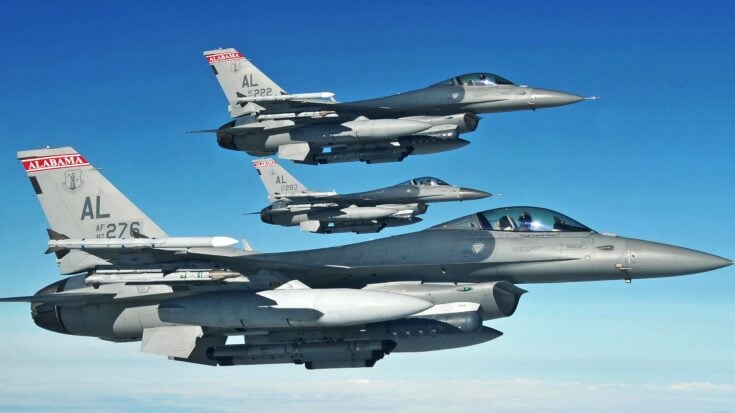
US Air Force from USA, Public domain, via Wikimedia Commons
In early April 2026, a quiet airfield along Alaska’s southwestern coast became the setting for a demonstration of modern air defense readiness. Fighter aircraft from the United States Air Force deployed to King Salmon Airport, a remote location far from major bases, to carry out a training exercise under the direction of the North American Aerospace Defense Command. Though limited in scale, the operation reflected a long-standing emphasis on rapid response across the vast and often challenging environment of the Alaskan region.
The aircraft involved belonged to the 18th Fighter Interceptor Squadron, based at Eielson Air Force Base in central Alaska. On April 2, two F-16 Fighting Falcons flew more than 750 kilometers to King Salmon, where they conducted a practice alert mission. Such drills simulate real-world scenarios in which fighters must launch quickly to identify and, if necessary, intercept unknown aircraft approaching North American airspace.
Training Across Remote Terrain
Alaska has long held strategic importance due to its proximity to polar routes linking North America and Eurasia. During the Cold War, the region formed a critical line of early warning and interception against potential threats crossing the Arctic. Today, that role continues under NORAD, a joint United States and Canadian command responsible for monitoring and defending the continent’s airspace.
Operating from locations like King Salmon allows crews to practice missions under realistic conditions. Unlike major air bases, remote airstrips offer limited infrastructure and require careful planning for fuel, maintenance, and communications. By deploying aircraft to such areas, units test their ability to respond from multiple points rather than relying solely on established bases. This flexibility is considered essential for maintaining coverage over Alaska’s wide and often sparsely populated territory.
Intercepts and Aerial Refueling
During the exercise, the F-16s conducted an intercept against a friendly KC-135 Stratotanker, supported by additional aircraft in the area. These simulated engagements help pilots refine procedures for approaching and identifying other aircraft, a task that demands precision and clear communication. In real situations, such intercepts are used to determine whether an approaching aircraft poses any risk or requires assistance.
After completing the intercept phase, the fighters received fuel from the KC-135 before returning to Eielson Air Force Base. Aerial refueling extends the range and endurance of fighter aircraft, allowing them to patrol large areas without landing. This capability has been a central element of air defense strategy since the mid-twentieth century, especially in regions where distances between bases are significant.
Aircraft and Squadron Evolution
Photographs from the exercise show several F-16s, including aircraft with markings linked to both interceptor and aggressor roles. The 18th Fighter Interceptor Squadron itself has undergone changes in recent years, transitioning from an aggressor unit to one focused on air defense missions. This shift reflects broader adjustments in military planning, with increased attention on homeland defense and rapid response.
Some aircraft retain distinctive camouflage patterns originally developed for training purposes, including designs intended to replicate potential adversaries. These markings, while visually striking, also serve practical functions during exercises by helping pilots distinguish between friendly and opposing forces. The continued use of such aircraft highlights how training traditions remain connected to operational requirements.
NORAD regularly conducts similar exercises across Alaska to ensure readiness at all times. Intercepts of foreign military aircraft near the region have occurred in recent years, underscoring the importance of maintaining trained crews and reliable equipment. By practicing from remote locations, units strengthen their ability to respond quickly, reinforcing a system designed to monitor and protect North American airspace under a wide range of conditions.







.jpg)