

Watch: Iconic Spitfire Leads Commemorative Flypast With F-35 Escort
bbclincs / Instagram
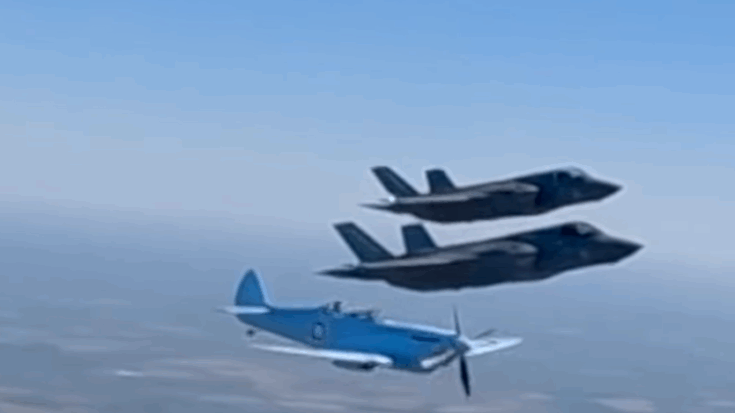
In April 2026, a rare formation in British skies brought together one of the most recognized aircraft of the Second World War and one of the most advanced fighters of the present day. A restored Supermarine Spitfire flew alongside Royal Air Force F-35 Lightning II jets as part of events marking ninety years since the Spitfire’s first flight in 1936. The moment linked two very different eras of aviation in a single, carefully planned display.
The flypast formed part of a nationwide commemorative tour that retraced key locations connected to the aircraft’s origins and service history. Beginning at Southampton, where the prototype first took to the air, the route extended across England, Scotland, and Wales before returning to its starting point.
Remembering an Aircraft That Shaped History
The Spitfire first entered service before the outbreak of the Second World War and became widely known during the Battle of Britain in 1940. Its speed and maneuverability allowed Royal Air Force pilots to challenge German aircraft during sustained air attacks over southern England. While it operated alongside the Hawker Hurricane, the Spitfire’s design made it especially effective in air-to-air combat.
Today, surviving examples are preserved and flown by the Battle of Britain Memorial Flight, a Royal Air Force unit established in 1957. Based at RAF Coningsby, the unit maintains several Spitfires along with Hurricanes and a Lancaster bomber, keeping them airworthy for commemorative duties. These aircraft regularly appear at national events and public ceremonies, often performing hundreds of flypasts each year to honor those who served.
View this post on Instagram
Modern Escort and Careful Coordination
During the anniversary flights, the Spitfire was joined by F-35 Lightning II jets, representing the current frontline of British air defense. The F-35, designed with advanced sensors and reduced radar visibility, operates in a very different environment from its wartime predecessor. Bringing the two aircraft together requires precise planning, as their speeds and handling characteristics differ greatly.
Pilots must adjust carefully to maintain formation. The Spitfire cruises at much lower speeds, while the F-35 is capable of supersonic flight. To match the older aircraft, the jets fly at reduced speed and higher control settings, ensuring safe spacing throughout the display. Such coordination reflects both technical skill and an understanding of the historical importance of the event.
These combined formations have become a familiar feature in major anniversaries, including earlier commemorations where Spitfires and Hurricanes were joined by modern jets such as Typhoons. The 2026 flights, however, carried added meaning by marking nine decades since the aircraft’s first appearance in the air.
For many observers, the sight of these aircraft together serves as a reminder of continuity within the Royal Air Force. While technology has advanced from piston engines to stealth systems, the role of protecting national airspace has remained consistent, linking past and present through shared purpose.






