America’s Scariest Flying Killer That No One Was Prepared to Face
YouTube / Dark Skies
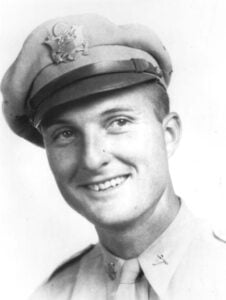
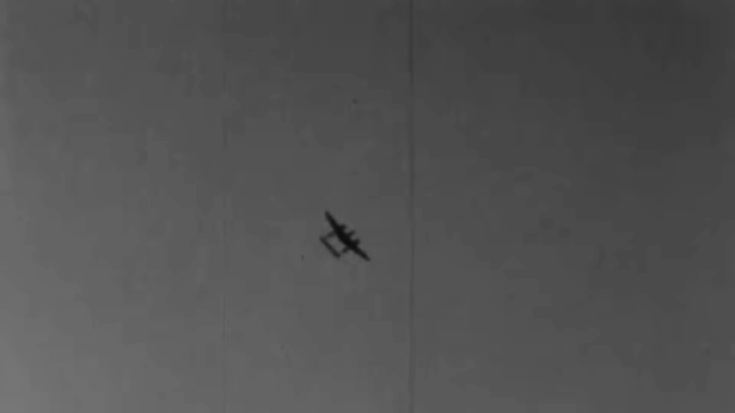
The Lockheed P-38 Lightning entered World War II with a presence that stunned both friend and foe. On August 14, 1942, a Lightning dove through the clouds near Iceland in pursuit of a German FW 200 Condor. The German crew watched a fast twin engine aircraft with a narrow central pod and two long booms closing the distance. Second Lieutenant Elza Shahan opened fire with nose mounted guns that delivered a concentrated stream of bullets. The Condor fell within seconds, marking the first successful American air to air victory against the Luftwaffe in the war.
A Radical New Fighter Concept
The United States sought an interceptor that could climb rapidly, fight at high altitude, and carry heavy armament. Lockheed engineers met those requirements by building the airframe around two liquid cooled Allison engines paired with turbo superchargers.

A twin boom layout housed the engines and tail surfaces, while a central pod placed the pilot in a compact cockpit with clear visibility. The design eliminated torque effects through counter-rotating propellers. It also placed all guns in the nose, which allowed precise fire at long distance. The tricycle landing gear and flush riveted aluminum skin created a clean and modern aircraft for its time.
Development and Early Challenges
The prototype XP-38 flew in early 1939 and achieved impressive speed during a cross-country record attempt. Production moved forward with the YP-38 series, which introduced refinements in engine fit and propeller rotation. Even so, the Air Corps placed greater emphasis on the P-39 and P-40 during the early war period.

As a result, fewer than 100 Lightnings were available when the United States entered the conflict. The aircraft reached combat in North Africa, where low altitude fighting limited its strengths and contributed to mixed early impressions.
Dominance in the Pacific
The Lightning reached its full potential in the Pacific theater. Its turbo superchargers produced strong power at altitude, and the long range capability allowed patrols across wide stretches of ocean. Many of the highest scoring American aces flew the Lightning, including Richard Bong and Thomas McGuire.

Reconnaissance units also relied on the aircraft. Its ceiling and stability allowed clear photography, and it produced most of the aerial imagery collected over Europe.
Versatility and Production
The P-38 evolved into multiple specialized models, including night fighter variants, fighter bombers, and pathfinder aircraft with bombardier stations. Later versions reached speeds above 400 miles per hour and operated above 40,000 feet.

Roughly ten thousand examples were built, a smaller total than the P-47 or P-51 but sufficient for widespread service across every major theater. Lightning pilots flew over one hundred thousand missions and destroyed more Japanese aircraft than any other U.S. fighter type.