

On This Day: 8th Air Force Launches Another Devastating Berlin Assault — 100th Bomb Group Sends 38 Crews
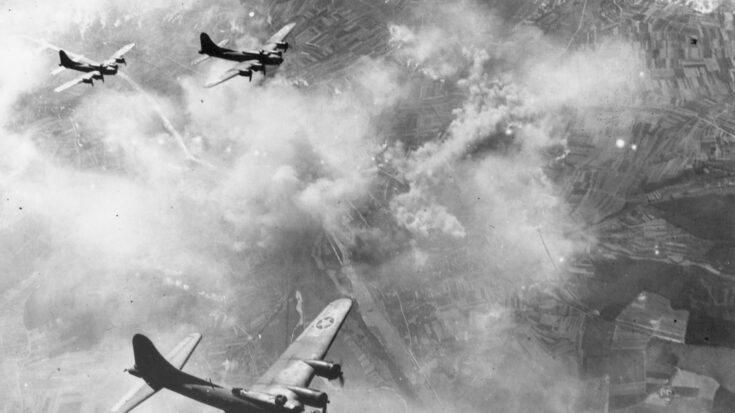
U.S. Army Air Force, Public domain, via Wikimedia Commons
In the final months of World War II in Europe, Allied air forces continued their heavy attacks on the German capital. While the February 3, 1945 raid is often remembered as the largest and most destructive strike on Berlin, it was not the last. On February 26, 1945, the U.S. Army Air Forces returned once again. That day, more than 1,100 bombers were dispatched toward Berlin in one of the last major assaults on the city.
The mission was carried out by the Eighth Air Force, which had been conducting strategic bombing campaigns over German territory since 1942. By early 1945, Allied ground forces were advancing from both the west and the east. Air attacks were meant to disrupt transportation, weaken supply lines, and hasten the end of the war.
Heavy Clouds Over Berlin
On February 26, weather conditions over Berlin were extremely poor. Reports described complete cloud cover, rated 10/10, meaning crews could not see their targets visually. Under such conditions, bomber formations relied on radar technology known as H2X. This system allowed navigators to identify large urban features, rivers, and rail yards through cloud cover using radar imaging.
The main targets that day were the North Station and the Alexanderplatz rail complex in central Berlin. These rail hubs were critical to German troop movements and supply distribution. Damaging them would limit the ability of German forces to move men and material as Allied armies closed in. Even in the closing weeks of the conflict, rail centers remained high-priority targets.
The 100th Bomb Group’s Role
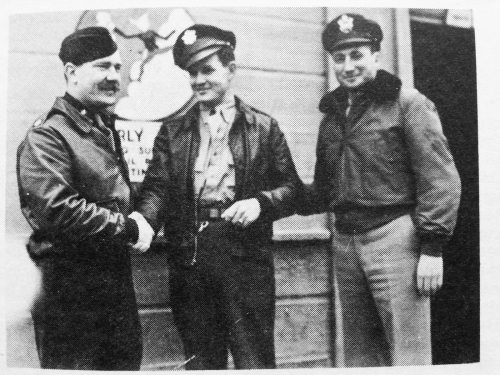
Among the units taking part was the 100th Bomb Group, often called the “Bloody Hundredth” because of the heavy losses it had suffered earlier in the war. On this mission, the group sent 38 crews into the skies over Germany. By this stage of the conflict, the unit had rebuilt after earlier setbacks and continued flying deep-penetration missions.
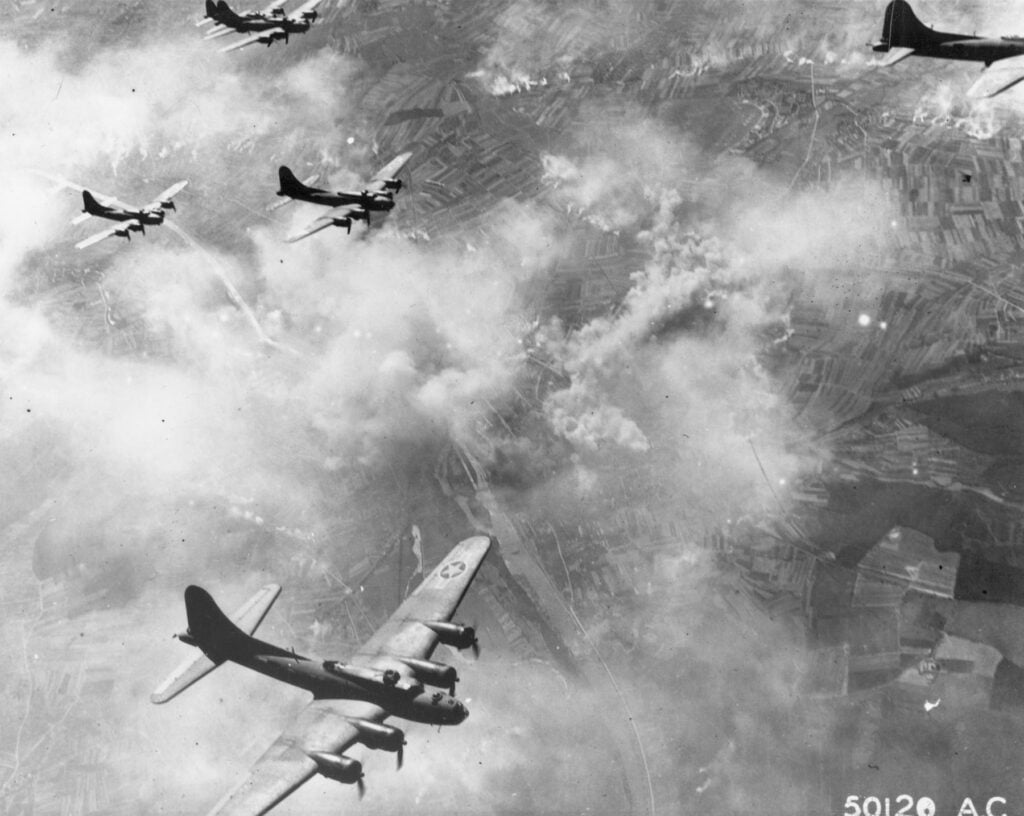
Flying B-17 Flying Fortress bombers, the 100th joined other groups in forming massive combat boxes designed for mutual protection. Fighter escorts, including long-range P-51 Mustangs, accompanied the bomber streams to defend against remaining German aircraft. Although enemy fighter resistance had declined compared to earlier years, anti-aircraft fire over Berlin was still a threat.
Strategic Context of the Late-War Raids
The February 26 raid came during a broader period of intense bombing across German cities. Earlier that month, Berlin had already endured large-scale destruction. The February 3 attack, sometimes linked in public memory to the name “Thunderclap,” caused widespread damage and civilian casualties. However, operations continued afterward as part of sustained pressure on transportation and communication networks.
By late February 1945, Soviet forces were approaching Berlin from the east, while American and British troops pushed from the west. The continued bombing campaign aimed to isolate the capital and weaken its ability to function as a command center. The attack on rail stations such as Alexanderplatz reflected this strategy. Today, Alexanderplatz remains a major public square in Berlin, but in 1945 it was also a key rail junction.
As the bombers returned to their bases in England, they left behind further damage to an already battered city. The February 26 assault stands as one of the final large-scale operations carried out by the Eighth Air Force against Berlin before the war in Europe ended just over two months later.








