On This Day a WWII Tragedy Struck (1945): Seven Airmen Killed as Two Lancasters Collide Before Dresden Mission
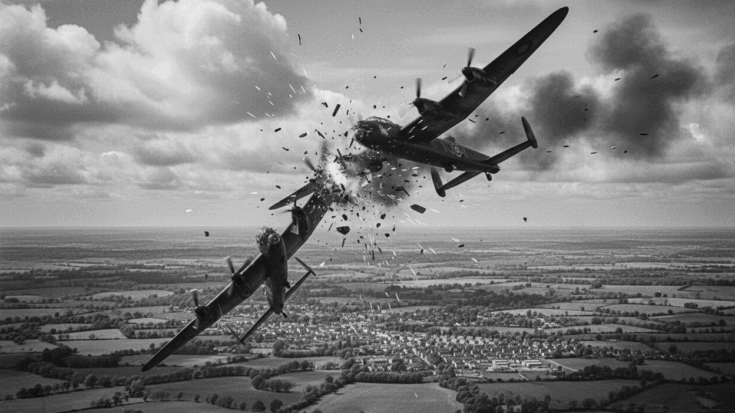
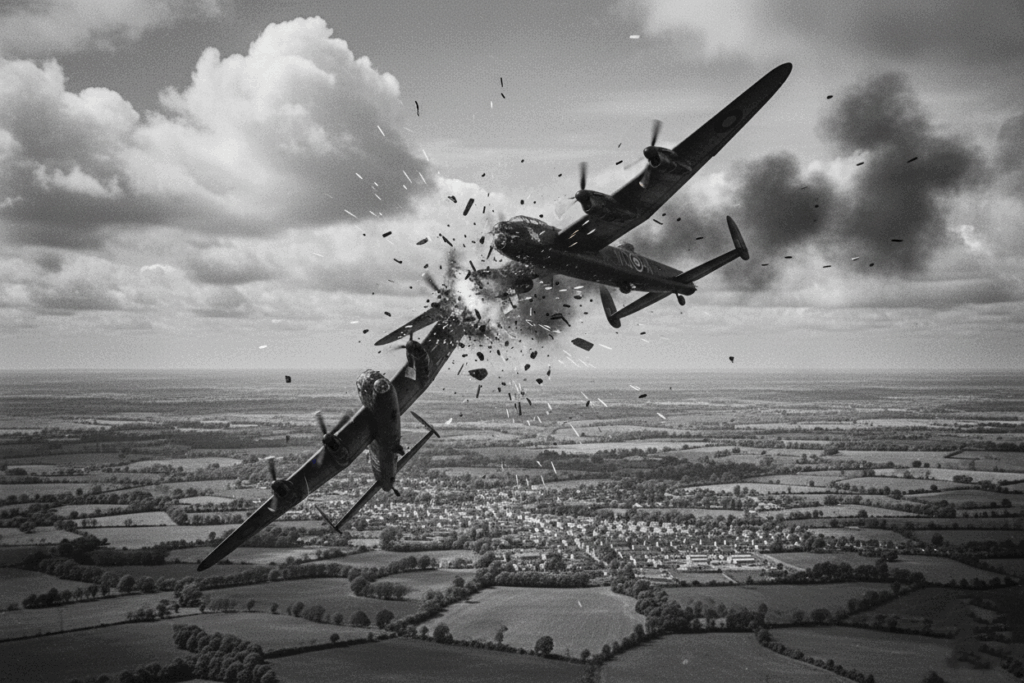
In the winter of 1945, as a major air raid was being prepared, a tragic accident occurred over Lincolnshire, England. Two British heavy bombers collided in mid-air while preparing to take part in a large raid on the German city of Dresden. Both aircraft were destroyed and all seven crew members aboard each were killed. This event stands out in history not for combat loss, but for the human cost of a peacetime accident during a time of intense military activity.
Aircrew and Aircraft in Formation
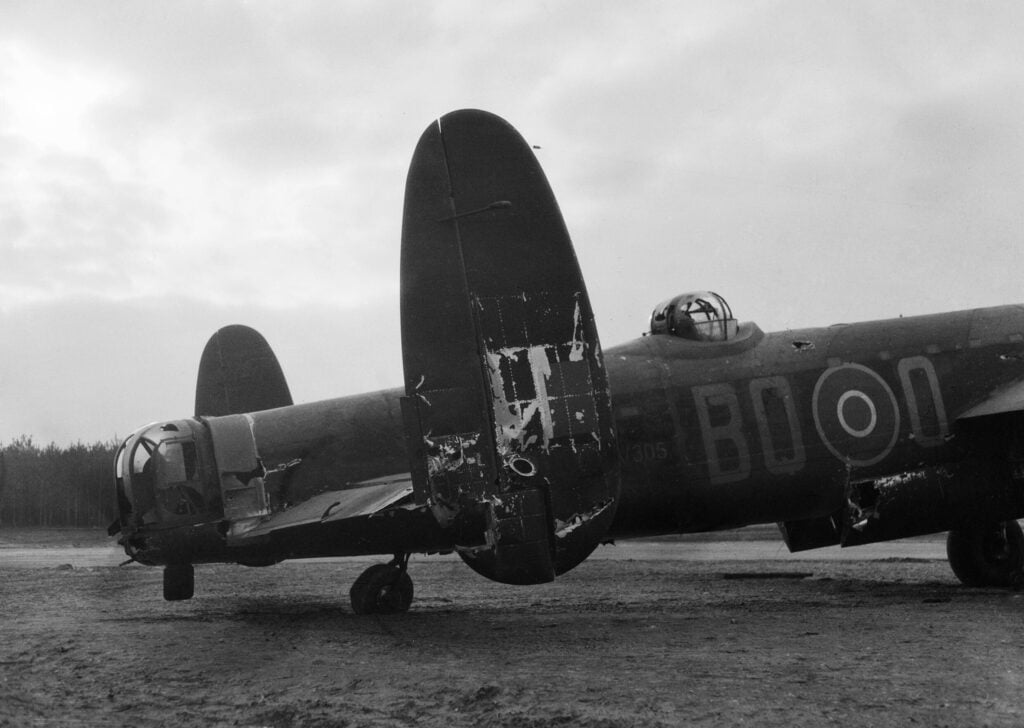
On the night of 13 February 1945, one of the bombers, an Avro Lancaster B Mark I with the identification NF932, belonged to No. 550 Squadron of the Royal Air Force. This aircraft took off from RAF North Killingholme at 21:39 hours for what was to be a long night flight as part of the formation building up for what was then a major bombing raid on Dresden. Its crew consisted of an experienced pilot, navigator, and gunners who had been trained to work together in tight coordination.
In the same operation, another Lancaster, serial PA185 of No. 300 Squadron, took off from RAF Faldingworth at 21:47 hours. This aircraft was crewed by airmen including members of the Polish Air Force serving with the RAF, reflecting the multinational force assembled to carry out missions at that stage of the war. Both Lancasters were climbing to reach the assembly height of around 8,000 feet when the collision took place.
The Fatal Mid‑Air Collision
Shortly after 22:00 hours, just twenty minutes after the first Lancaster had left its base, the two aircraft collided at about the assembly height. The impact was violent, and both aircraft exploded in flames before crashing near Stotts Farm, close to the hamlet of Apley, three miles southwest of Wragby in Lincolnshire. All fourteen men aboard the two aircraft were killed instantly or in the immediate aftermath of the crash.
The collision occurred at a time when crews were concentrating intensely to form up with other aircraft in the group for the long flight over Europe. Heavy bombers at that period were flying in ever‑larger numbers, and the skies above Britain’s airfields were filled with aircraft in the process of climbing to operational height. In the darkness, with navigation lights off to avoid detection, the risks of such close flying were very real.
Crew Losses and Remembrance
The names of the crew on NF932 are recorded in wartime casualty records, which list the ranks and identities of those who died. They included F/Lt Eric Sidney Allen, P/O John Riley Byrne, Sgt Reginald George Crump, F/Sgt Alexander Beveridge Dennison, F/Sgt George Albert Maginley, F/O James Edward Murray‑Shirreff, and Sgt Edward Thomas Smith. Smith, aged 42, was noted in records as being older than most of the other crew members lost, as aircrew were often in their early twenties.
The seven men aboard PA185 also lost their lives. Among them were Warrant Officer Marian Mykietyn, Sergeant Aleksander Jameliniec, Warrant Officer Jozef Placzek, Flight Sergeant Mieczyslaw Franciszek Ogorzal, Sergeant Antoni Kacmarz, Flight Sergeant Bronislaw Nizinski, and Sergeant Leon Stanislaw Goldowski. These airmen were serving with a squadron with strong ties to the Polish forces in exile, and their names appear on memorials honoring those who fell while serving under British command.
Aftermath and Historical Context
At the time of this accident, Bomber Command was engaged in major bombing operations over German territory. The raid on Dresden was planned as one of the large assaults from bases in England to weaken German industrial and military capability. To assemble hundreds of heavy bombers, crews had to fly out at scheduled times and meet up in the dark, often in difficult weather, to form the bomber stream. Incidents like this collision highlight the hazards faced before aircraft even reached enemy territory.
The site at Stotts Farm became a place of immediate tragedy on that winter night. Local farmers and villagers would have been among the first on scene to witness the smoking wreckage and the devastation below. Records from the period note the difficulty in identifying many of the remains, with some airmen buried in cemeteries abroad or commemorated on memorials to those missing in flight.
Memory and Memorials
The loss of these fourteen airmen is recorded in military histories and in the pages of casualty lists that detail the names and ages of those who did not return. Those whose remains could not be identified were commemorated on memorials such as the one at Runnymede, dedicated to airmen with no known grave. Others were laid to rest in burial plots, including those at Newark for the Polish crewmen.
Though not as widely known as losses over enemy territory, this mid‑air collision remains part of the historic record of the cost borne by aircrews during the final months of Europe’s conflict. Records and archives preserve the names and service details of those aboard NF932 and PA185, ensuring their sacrifice in service is not forgotten.