On This Day in WWII (1943): F4U Corsair Makes Combat Debut with Marine Squadron 124 in Solomon Islands
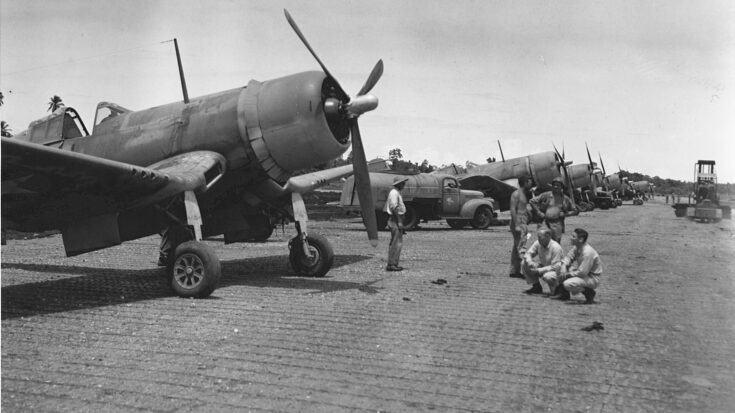
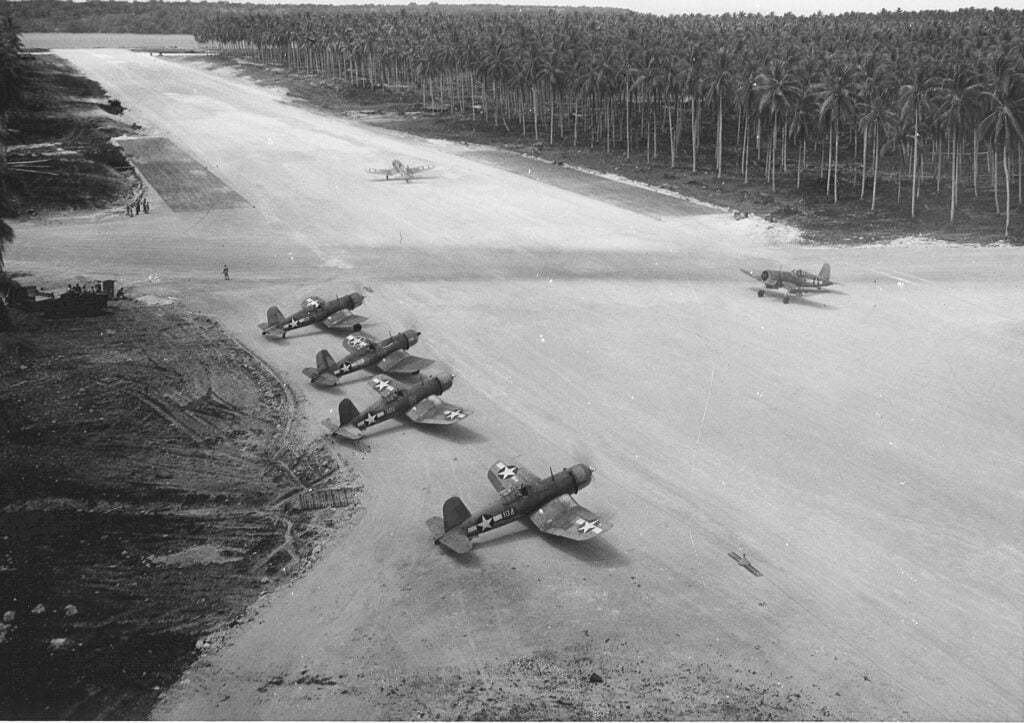
USMC (photo 179-WP-765), Public domain, via Wikimedia Commons
In early 1943, the war in the South Pacific was shifting. Allied forces had gained key positions, including the airfields around Guadalcanal, and American commanders were eager to introduce new aircraft into combat. One of the newest fighters was the Vought F4U Corsair, a powerful aircraft with strong speed, long range, and heavy firepower. On February 13, 1943, Marine Fighter Squadron 124 (VMF‑124) flew the Corsair’s first operational combat mission in the Solomon Islands, beginning a long and influential role for the aircraft in the Pacific theatre.
VMF‑124 was the first United States Marine Corps squadron to receive the Corsair. The unit had trained with the aircraft in the United States and then moved across the ocean to join other Allied units based on Guadalcanal. Its pilots were relatively new to the type, with limited flight hours in the F4U, but their first mission soon brought them into active service against enemy forces in the region.
Deployment to Guadalcanal
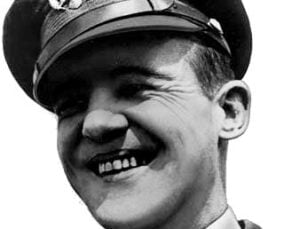
The Corsairs of VMF‑124 arrived at Henderson Field on Guadalcanal on February 12, 1943, led by their commanding officer, Major William Gise. Guadalcanal had already been secured after months of bitter fighting, but Japanese forces still controlled nearby airfields and bases. The location gave Allied aircraft a forward base from which to cover long‑range missions.
The morning after their arrival, the squadron flew its first operational mission, escorting a PBY Catalina flying boat on a search and rescue flight to pick up downed airmen in the waters near Vella Lavella. This flight was important for testing the Corsair in the field and giving the pilots valuable experience. The aircraft logged many flight hours that day, preparing the squadron for larger combat missions to come.
First Combat Mission – Escorting Liberators
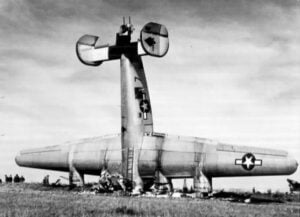
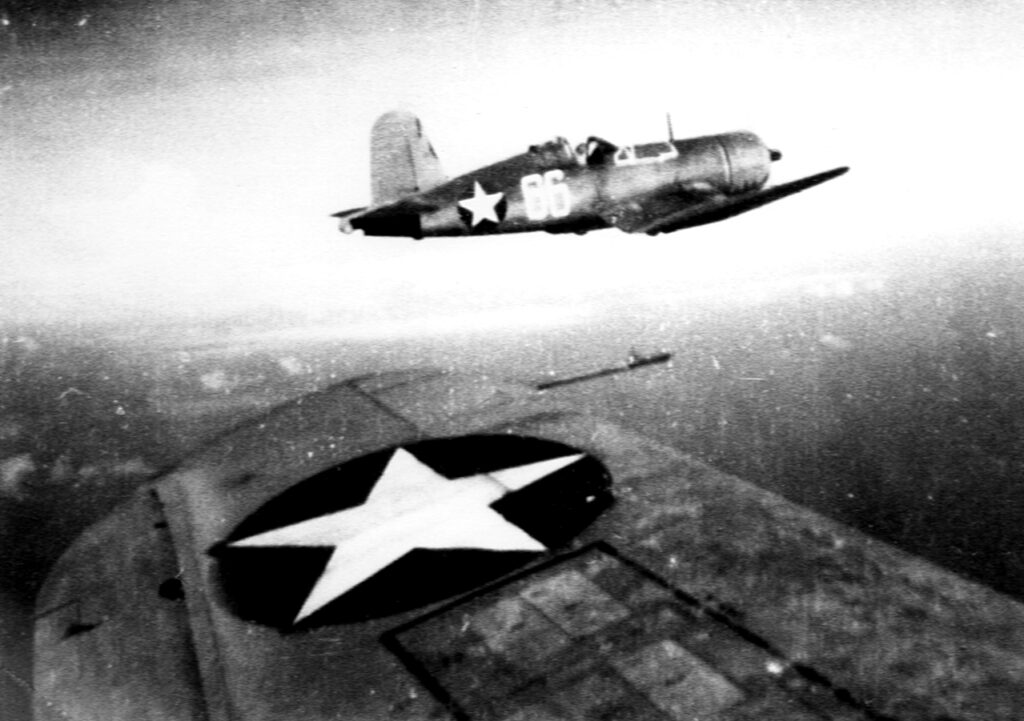
On February 13, 1943, VMF‑124 flew what historians recognize as the Corsair’s first combat mission in the South Pacific. Eleven Corsairs took off from Henderson Field to escort nine PB4Y‑1 Liberator bombers from VB‑101 on a mission against Japanese shipping and positions off southern Bougainville. This operation was part of a broader effort to weaken enemy supply routes and airfields by targeting shipping and support infrastructure.
The Corsairs and Liberators flew together over the water toward their target area. Over Bougainville, the formation was intercepted by Japanese fighters, including Mitsubishi A6M Zeros. A sharp and brief dogfight followed. Although the Americans hoped to disrupt Japanese air activity, both sides suffered losses. In this engagement, VMF‑124 lost aircraft and crew members, and several American bombers and fighters were shot down.
Early Air Combat Experience
The experience over Bougainville was difficult, but it taught Marine pilots valuable lessons about using the Corsair in actual combat. The aircraft, which had shown promise in performance tests, now had to prove itself against experienced enemy pilots and under the stress of real battle conditions. While losses occurred, the Corsair’s strengths in speed and firepower became clearer as pilots adapted their tactics.
This first engagement was followed by more missions in the coming weeks, including additional escort flights and ground‑attack operations. Despite the initial challenges, the Essex‑built Corsair would go on to become a mainstay of Marine and Navy fighter units in the Pacific. Its range and speed allowed it to cover large distances over ocean and island bases, and its firepower helped pilots challenge enemy fighters and protect bombers on long flights.
Building Combat Record and Squadron Legacy
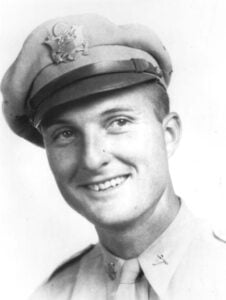
After these early missions, VMF‑124 continued to operate in the Solomons, flying strikes over Bougainville, Rabaul, and other nearby targets. Over time, the squadron developed tactics that took advantage of the Corsair’s performance, and pilots gained confidence in both themselves and their machines. Some pilots, such as 1st Lieutenant Kenneth A. Walsh, would become celebrated for their later combat achievements.
The Corsair’s first combat mission on February 13, 1943, marked a new phase in Marine Corps aviation in the South Pacific. It demonstrated that this new fighter could be deployed operationally from forward bases and contribute to larger campaigns against enemy forces. As the war progressed, more Marine and Navy squadrons would receive Corsairs, and the aircraft would help shape air combat across the vast Pacific theatre.