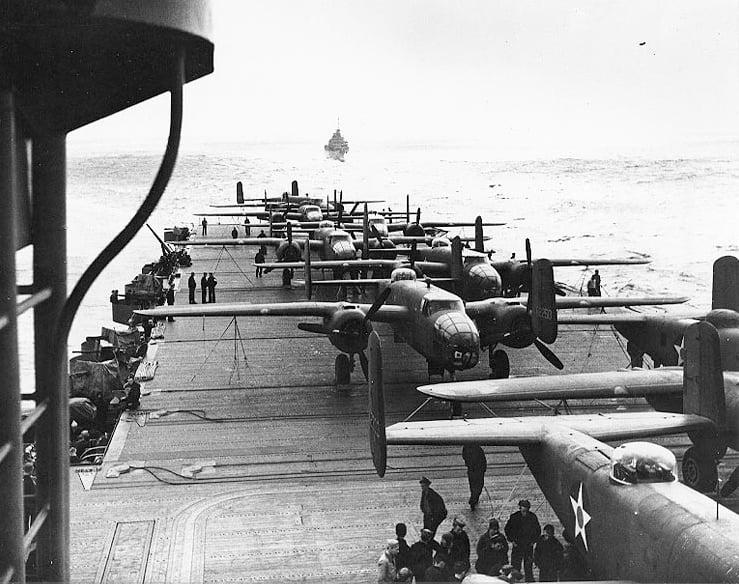
On This Day in WWII (1942): B-25 Mitchells Successfully Launched From USS Hornet Ahead of Doolittle Raid
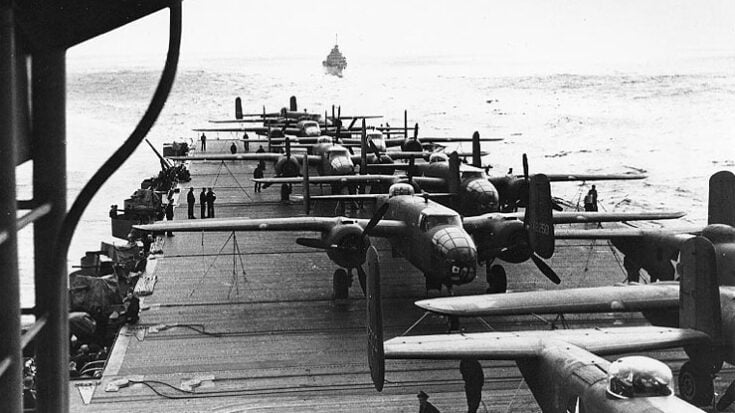
See page for author, Public domain, via Wikimedia Commons
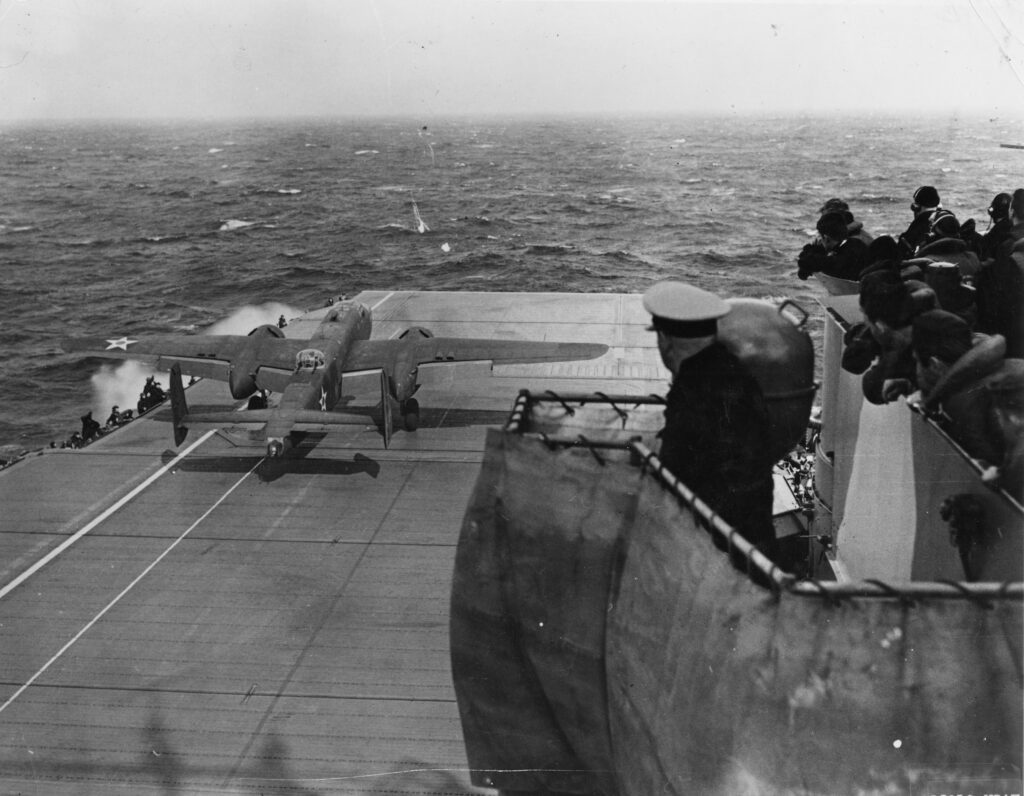
On February 3, 1942, a quiet but important test took place that would shape one of the most daring air operations of the war. Two North American B-25B Mitchell medium bombers were prepared to take off from the deck of the aircraft carrier USS Hornet. The idea seemed unusual, since these planes were designed for land bases, not ships. Yet American planners needed a way to strike Japan after the attack on Pearl Harbor, and this test would show whether such a mission was even possible.
The carrier was at Norfolk, Virginia, when the trials were carried out. The goal was simple but risky: prove that a twin-engine bomber could lift off safely from a carrier’s short flight deck. Success would mean that a surprise strike could be launched far from friendly airfields. Failure would end the plan before it truly began.
The Idea Behind the Plan
The concept grew from an observation made by Captain Francis S. Low of the U.S. Navy. He had seen medium bombers practicing approaches to a runway marked to look like a carrier deck. This sparked the thought that such aircraft might be able to take off from a carrier, even if they could not land back on it. The plan depended on launching the bombers close enough to enemy territory that they could fly on to friendly fields afterward.
Lieutenant Colonel James H. Doolittle of the U.S. Army Air Forces was chosen to lead the project. He was already known as a skilled pilot and organizer. Doolittle and his crews began special training to handle heavy aircraft at low speed and short takeoff distance. The crews also removed nonessential gear and added extra fuel tanks to stretch their range for the future mission.
Testing on the Carrier Deck
During the February test, the B-25s were carefully positioned on Hornet’s flight deck. Lieutenant Henry L. Miller, a Navy test pilot, handled the first takeoff. The bomber rolled forward into the wind as the carrier provided added speed by steaming ahead. With engines at full power, the aircraft lifted off well before reaching the bow.
The second plane followed with similar success. Observers noted that the takeoff run was shorter than expected, showing that the Mitchell could leave the deck with a useful bomb load. This result gave planners confidence that a larger force of bombers could be launched in the same way under combat conditions.
Preparing for the Real Mission
After the tests, the plan moved forward quickly. Crews trained in short takeoff techniques and navigation over long distances of open ocean. They practiced flying at low altitude to avoid detection and studied their targets in Japan. The carrier would carry sixteen B-25 bombers for the real strike, far more than the two used in testing.
The aircraft were modified to improve their chances of reaching safety after the attack. Additional fuel tanks were installed inside the bomb bays and other spaces. Defensive guns were adjusted, and some equipment was removed to reduce weight. Every change aimed to balance range, protection, and bombing ability.
From Test to Combat
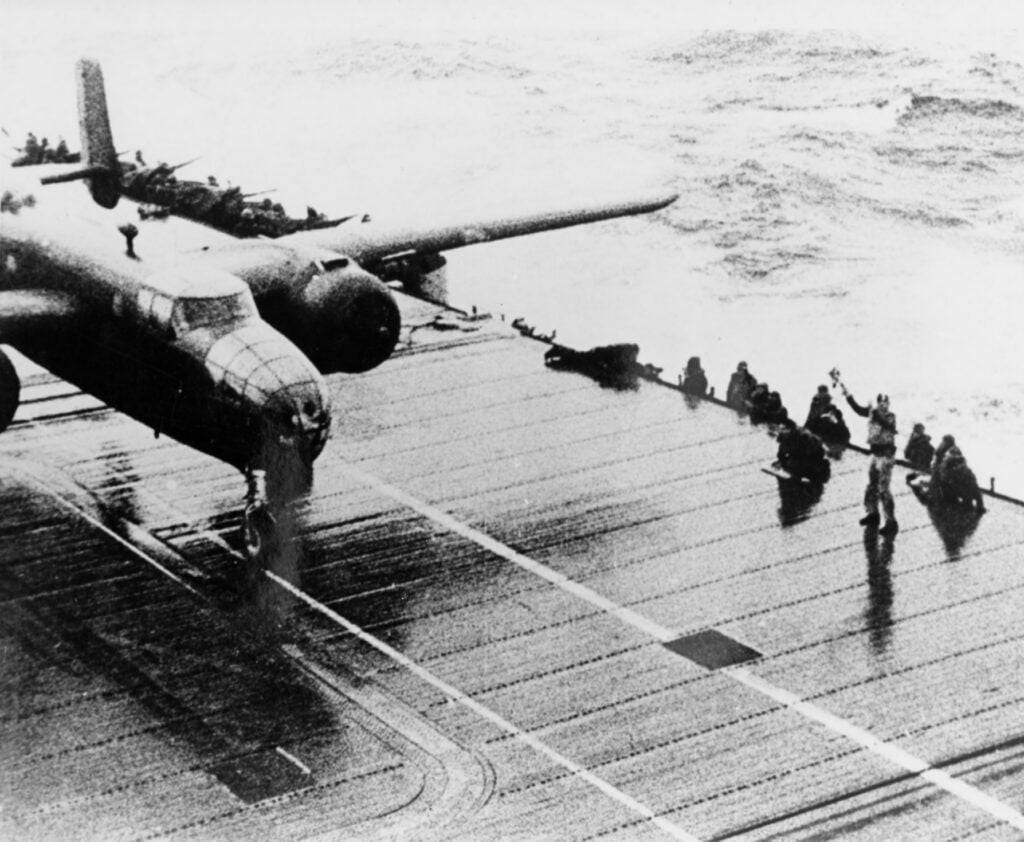
The lessons from February shaped the final operation. On April 18, 1942, the bombers launched from Hornet in the western Pacific, earlier than planned after the task force was sighted by enemy vessels. Despite the long distance, all aircraft managed to take off successfully, proving the value of the earlier trials.
The raid caused limited physical damage but had a strong psychological effect. It showed that Japan’s home islands were within reach of American air power. The February carrier launch test at Norfolk made that moment possible by proving that land-based bombers could operate from a ship, linking naval and air forces in a new way.