

On This Day in WWII (1945): The U.S. Navy’s Task Force 58 Launch Massive Airstrikes on Tokyo Ahead of Iwo Jima
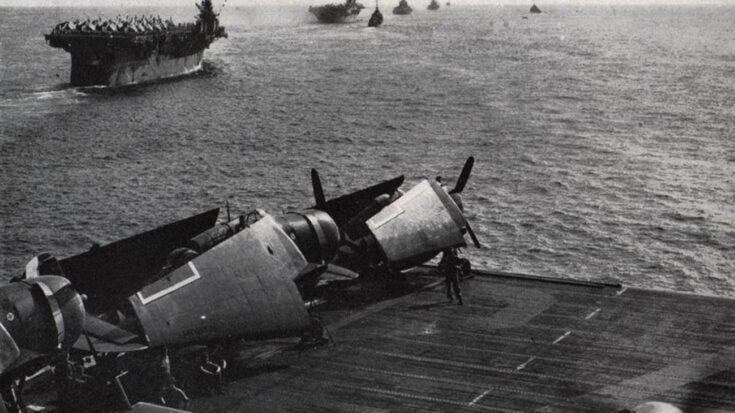
U.S. Navy, Public domain, via Wikimedia Commons
In February 1945, as U.S. forces prepared to capture the volcanic island of Iwo Jima, American naval commanders decided to strike deep near the Japanese capital. A powerful carrier force steamed close to Japan and struck airfields, factories, and other targets in the Tokyo region. These strikes on 16 and 17 February were the first large carrier air attacks on mainland Japan since the 1942 Doolittle raid. They were designed to weaken Japanese air strength and reduce the threat to the invasion forces soon to assault Iwo Jima.
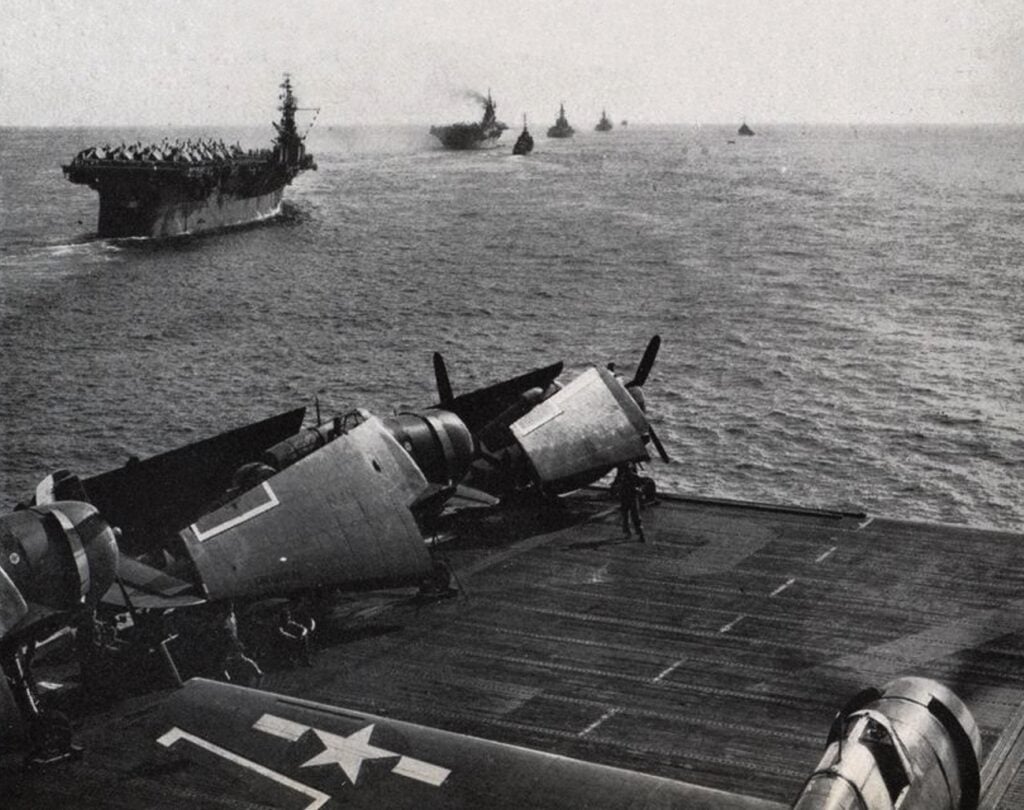
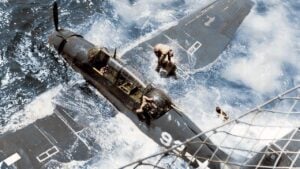
Two days before the air attacks, Task Force 58, a fast carrier group made up of eleven fleet carriers and five light carriers along with their escorts, sailed from the forward base at Ulithi towards the Japanese home islands. These carriers carried hundreds of aircraft including fighters, dive bombers, and torpedo bombers, all trained for naval air combat and strike missions. By approaching under poor weather conditions, the task force achieved tactical surprise.
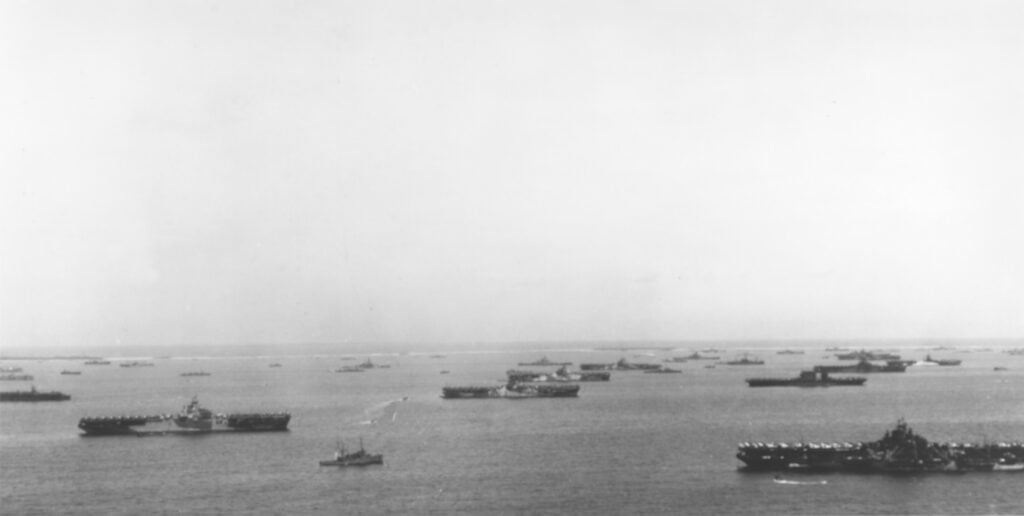
Strike Begins Over Tokyo Bay
On the morning of 16 February, American carrier aircraft took off at dawn to sweep the skies over airfields and military installations around Tokyo Bay. Fighter squadrons led the attacks, sweeping enemy airfields to clear the way for bomber units. This first phase focused on gaining air superiority by engaging Japanese fighter aircraft in the air and strafing those found on the ground. Reports from the day suggested that American pilots engaged in dogfights, claiming large numbers of Japanese fighters shot down while encountering less opposition than expected.
The bombing units then struck at industrial targets and airframe factories, attempting to disrupt Japan’s ability to produce new aircraft. Weather conditions were a serious challenge, making navigation difficult and forcing some missions to drop their bombs on alternate targets such as airfields instead of primary objectives. Aircraft also struck shipping in Tokyo Bay, although the sinking of larger enemy vessels was limited by the weather and heavy anti-aircraft fire.
Sorties, Losses, and Claims
Over the two days of strikes, carrier aircraft flew thousands of sorties. According to U.S. naval records, about 2,761 missions were flown from the carriers during this period. Pilots and aircrews claimed hundreds of Japanese aircraft destroyed in air combat and on the ground, a high number of which were engaged during these operations. At the same time, American air groups suffered losses from enemy fire and operational accidents, with about sixty aircraft lost in combat and additional planes lost to flying accidents during the intense operations.
The strikes also involved attacks against small ships and tankers in Tokyo Bay. Some coastal vessels were sunk or damaged, and merchant ships were hit during low-level attack runs. While the primary targets were the airfields and production facilities that supported Japanese air power, the efforts to disrupt naval shipping around the capital contributed to the broader aim of reducing all threats to the invasion of Iwo Jima.
Support for Iwo Jima Invasion Forces
These carrier operations were closely tied to the forthcoming landings on Iwo Jima, scheduled for 19 February. By striking airfields and weakening Japanese air defenses near the home islands, American commanders hoped to limit the ability of Japanese aircraft to interfere with the invasion force. Carrier aircraft from Task Force 58 continued to support the Iwo Jima assault by providing close air support, combat air patrols, and strikes on nearby islands after the initial Tokyo operations.
The invasion of Iwo Jima began just days after the strikes on Tokyo Bay. Marines landed on the beaches as carrier and battleship gunfire pounded defenders. Task Force 58 remained in the area for ongoing air support and bombardment missions. This combined naval and marine effort helped establish a foothold on the island, which would play a crucial role as a base for American long-range bombers in the continuing Pacific campaign.
During these operations, American pilots and aircrews faced not just enemy fire but hostile weather and the rigors of repeated missions from aircraft carriers operating far from friendly bases. Their efforts marked a shift toward sustained offensive air operations directly over the Japanese home islands. The experience gained by naval aviators and support crews during these strikes helped shape subsequent air operations as the Pacific War moved steadily closer to Japan’s main islands.
Aftermath and Historic Impact
After the strikes on Tokyo Bay, Task Force 58 continued to support the Pacific campaign with further raids and continued support of ground forces on Iwo Jima and other operations. The February air attacks represented not only a military effort to degrade Japanese air capabilities, but also a test of long-range naval air power, conducted far from friendly land bases and under challenging conditions.
These strikes stood as one of the largest uses of carrier-based air power in the Pacific at that stage of the war, drawing directly on the capabilities of a large fleet of carriers and the coordination of many types of aircraft. They demonstrated the growing reach and strength of U.S. naval aviation in the last months of the war, influencing future operations that pressed closer to Japan’s main islands and contributed to the eventual end of the conflict.
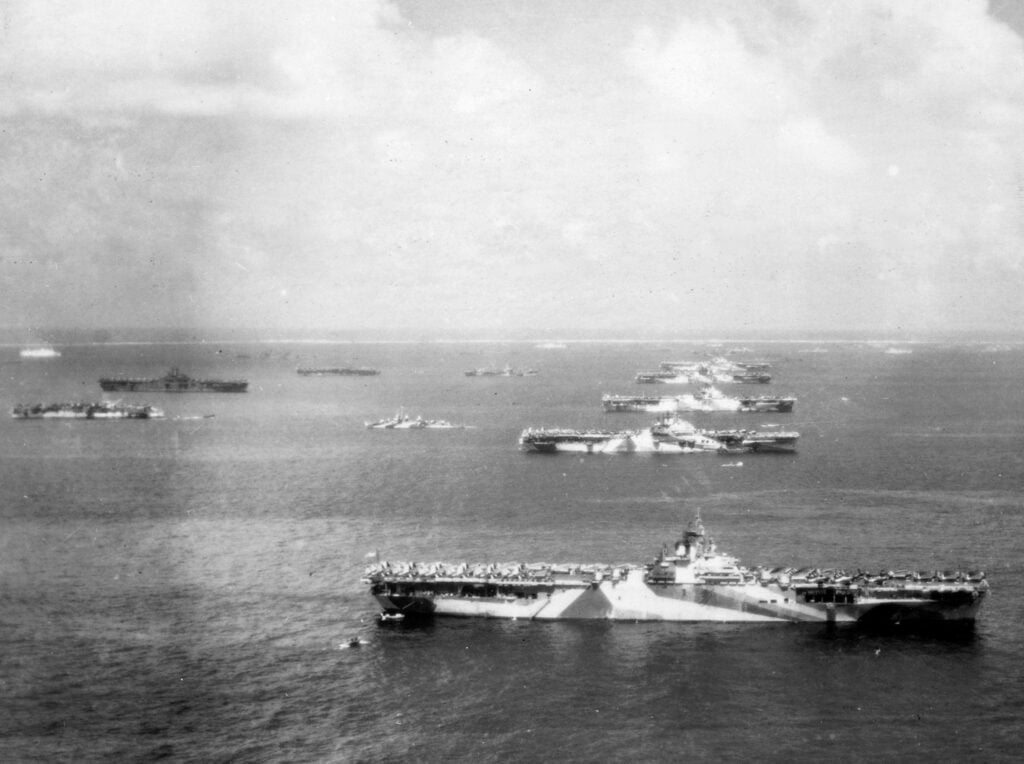
_underway_with_other_ships,_in_1945.jpg)

.jpg)