

How did the Allies overcome the Zero Fighter?
YouTube / Imperial War Museums
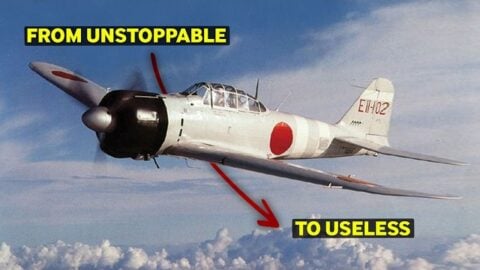
When the A6M Zero first appeared in combat, it seemed invincible. Japanese pilots flew it with near-perfect mastery, and its lightweight design gave it unparalleled agility. Reports from China in 1940 claimed the Zero achieved a staggering 12:1 kill ratio against Chinese aircraft.
American intelligence tracked these early victories, warning that the Pacific skies would face a fighter unlike any before. The Zero’s combination of speed, maneuverability, and range made it the ultimate air superiority weapon, at least at first.
Early Encounters and Allied Struggles
When the United States entered the war in 1941, pilots quickly discovered the Zero’s deadly reputation was well-earned. In dogfights, Allied aircraft often struggled to match the maneuverability of their opponents. Traditional tactics, turning engagements, and close-range combat, favored the Japanese fighter, resulting in heavy Allied losses. Aircraft like the F4F Wildcat, although sturdy, were outclassed in one-on-one combat, forcing pilots to devise strategies on the fly to survive.
Allied pilots soon realized they could not match the Zero on agility alone. Instead, they developed “energy fighting” tactics, using altitude and speed to their advantage. Planes like the F6F Hellcat and F4U Corsair relied on diving attacks, high-speed passes, and hit-and-run maneuvers. By refusing to engage in prolonged turning battles, pilots could exploit the Zero’s weak armor and lack of self-sealing fuel tanks. This shift in tactics gradually turned the tide of aerial engagements, allowing the Allies to inflict heavier losses on Japanese forces.
Technological Advancements
Aircraft engineering played a critical role in overcoming the Zero. The early dominance of the A6M exposed the need for faster, more resilient fighters. The F6F Hellcat, designed specifically to counter the Zero, combined powerful engines, robust construction, and heavy firepower.
Similarly, the F4U Corsair incorporated speed, armament, and range that gave Allied pilots an edge. Radar, better ammunition, and coordinated fighter tactics further reduced the Zero’s effectiveness as the war progressed.
Exploiting Weaknesses
Beyond technology and tactics, the Allies learned to exploit specific weaknesses in the Zero. Its lightweight construction made it extremely vulnerable to bullets, especially from above or behind. It also lacked armor for pilots and fuel tanks, meaning a few well-placed shots could destroy it.
By attacking from positions where the Zero could not respond effectively, Allied pilots maximized their chances of survival while minimizing risk.
Legacy of the Zero Fighter
Despite its eventual decline, the Zero left a lasting mark on aerial combat. It forced the Allies to rethink tactics, redesign fighters, and invest in pilot training. Its early successes shaped the Pacific Theater and accelerated innovation in aircraft design, ultimately contributing to the dominance of Allied air power by 1944–45. The Zero may have fallen from supremacy, but its influence endured, proving that even a defeated enemy can teach invaluable lessons.







