

Germany Suffered Big Losses at the Hands of the P-38
YouTube / Smithsonian Channel
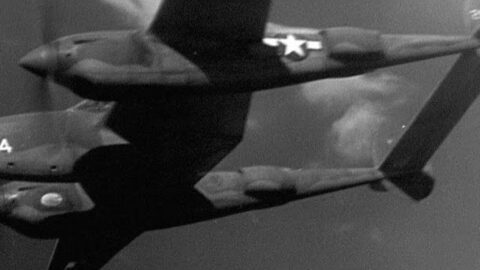
As soon as the P-38 Lightning entered the fight, the skies above North Africa changed. As German aircraft worked desperately to keep their armies supplied, Lightning pilots began cutting into those lifelines with growing success.
In one intense month, Allied losses remained low while German losses soared- over 400 aircraft destroyed compared to just 36 lost. The imbalance was impossible to ignore, showing that the P-38 had become a decisive factor in the struggle for air superiority.
A New Threat in the North African Skies
When the P-38 Lightning began appearing in force over North Africa in late 1942 and early 1943, German aircrews quickly realized they were facing something different. Unlike earlier Allied fighters, the P-38 combined long range, heavy firepower, and high-altitude performance. This is exactly what was needed to contest the vast distances and harsh conditions of the Mediterranean theater. For the Luftwaffe, already stretched thin, the Lightning became a serious and persistent problem.
Germany’s North African campaign depended heavily on air transport and escorted supply flights across the Mediterranean. The P-38 was uniquely suited to disrupt this system. Its long range allowed it to escort bombers deep into enemy territory and patrol critical air routes that German transports relied on. As a result, Ju 52 transports, escort fighters, and even seasoned German aces increasingly found themselves intercepted far from friendly bases, with little room to escape.
Why the P-38 Proved So Effective
The impact was swift and severe. During one intense month of fighting, Allied forces shot down more than 400 German aircraft while losing just 36 of their own. P-38 units played a central role in this imbalance. Flying daily missions against fighters, bombers, and transports alike, Lightning pilots steadily eroded the Luftwaffe’s strength. Losses mounted not only in aircraft, but also in experienced pilots- resources Germany could not easily replace.
Several factors contributed to the P-38’s success. Its twin engines provided reliability over long stretches of open water and desert, while its concentrated nose-mounted armament delivered devastating firepower in a single burst. German pilots accustomed to turning dogfights found themselves outmatched by a fighter that excelled in speed, climb, and high-altitude performance. When flown to its strengths, the P-38 was difficult to counter.
A Turning Point in the Air War
By the time Axis forces were pushed out of North Africa, the Luftwaffe had suffered losses it could ill afford. The P-38 did not win the campaign alone, but its contribution was undeniable. It helped break German air resistance, disrupted supply lines, and gave the Allies a decisive edge in the skies. In doing so, the Lightning earned a reputation as one of the most effective and feared fighters the Germans faced during the war.







