

The Real Reason the P-51 Outran the Bf 109
YouTube / Greg's Airplanes and Automobiles
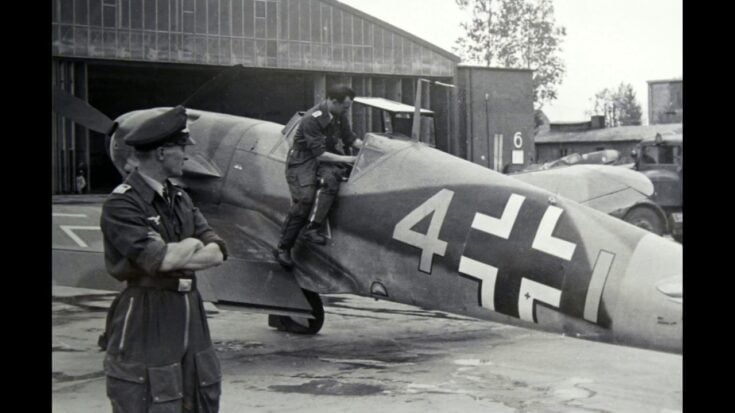
On paper, the Messerschmitt Bf 109G should have matched or beaten the P-51 Mustang in speed. It was smaller, lighter, and powered by a larger displacement engine. The Daimler-Benz DB 605 displaced 35.7 liters, compared to the Packard Merlin’s 27 liters in the Mustang. The German engine also used fuel injection and an advanced supercharger drive system. Yet in combat, the P-51D was typically 40 to 60 miles per hour faster.

The reason was not engine size. The real advantage came from horsepower, and horsepower was driven by fuel quality, boost pressure, and supporting engine technology.
Manifold Pressure and Fuel Quality
The single biggest factor was manifold pressure. The P-51D routinely operated at 67 to 75 inches of manifold pressure, while the Bf 109 G series was generally limited to around 42 inches. That difference alone translated into a massive horsepower advantage for the Mustang.

This was possible because of fuel. U.S. fighters in Europe used 130 octane and later 150 octane fuel. The Bf 109 G typically ran on 95 octane fuel. Higher octane allowed much higher boost without destructive detonation. Even with a larger engine and fuel injection, the DB 605 could not compensate for the nearly 80 percent boost advantage enjoyed by the Mustang.
Dual-Stage Supercharging and Aftercooling
The Merlin in the P-51 used a dual-stage supercharger, with one supercharger feeding another. This design dramatically improved high-altitude performance. The Mustang also used an aftercooler, which cooled the compressed air before it entered the engine. Cooler air increased charge density and reduced detonation risk, allowing even higher boost levels.

The Bf 109 did not have room for dual-stage supercharging or an aftercooler. Its single-stage system was highly advanced, but physically constrained by the aircraft’s compact design.
Altitude Optimization
The Mustang was optimized for high-altitude bomber escort. Merlin variants were geared to deliver peak power around 25,000 to 30,000 feet, where American bombers operated. The Bf 109 had to fight across a much wider altitude range, from low-level Eastern Front combat to high-altitude defense over Germany.

As a result, its supercharger gearing was a compromise. Above roughly 18,000 feet, the Bf 109 G began losing power rapidly.
The Result in Combat
At high altitude, the P-51D held a clear speed and power advantage. At lower altitudes, certain Bf 109 G variants could be competitive in climb and turning performance, depending on configuration and fuel load. Later German models used water-methanol injection and other boost systems to regain lost ground, but those improvements arrived too late and in limited numbers.

In the critical escort altitudes over Germany, the Mustang’s fuel, boost, and supercharging advantages made it the faster and more powerful fighter.







