How the P-400 Airacobra Shocked Japan in WWII
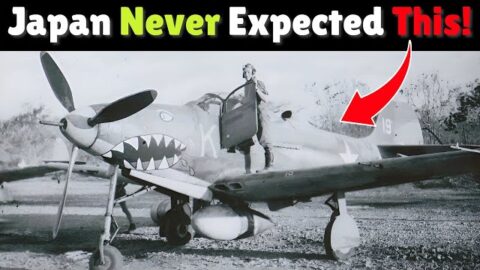
YouTube / World War Made Simple
When the Bell P-400 Airacobra arrived in the Pacific in 1942, few American pilots had much confidence in it. Designed without a turbo-supercharger, the aircraft struggled at high altitude and was easily outperformed there by Japan’s nimble Mitsubishi A6M Zero.
Many considered the P-400 a poor substitute for more capable fighters, and early combat assessments were not encouraging. Yet circumstances in the Solomon Islands would soon give the Airacobra an unexpected chance to prove its worth.
The Guadalcanal Crisis
The turning point came during the Guadalcanal Campaign, a brutal struggle that would decide control of the Pacific’s sea and air routes. The 67th Fighter Squadron deployed to the region with their P-400s, first assembling the aircraft under harsh conditions in New Caledonia before pushing forward to Henderson Field on Guadalcanal. Supplies were scarce, maintenance was improvised, and Japanese air and ground attacks were constant. Survival alone was a daily challenge.
Turning Weakness into Strength
What the P-400 lacked at altitude, it made up for at low level. Armed with a devastating 37 mm cannon firing through the propeller hub, along with multiple machine guns, the Airacobra was ideally suited for strafing and close air support.
Pilots quickly adapted their tactics, abandoning traditional dogfighting and instead flying low, fast attack runs against Japanese troops, artillery positions, and supply lines. These tactics caught Japanese forces off guard. Accustomed to American fighters operating higher and engaging in air-to-air combat, they now faced sudden, punishing attacks from aircraft skimming treetops and terrain.
A Defining Moment
The P-400’s most dramatic impact came during the Battle of Edson’s Ridge in September 1942. As Japanese forces launched fierce nighttime assaults against U.S. Marine positions near Henderson Field, Airacobras flew repeated low-altitude strikes at dawn.
Their cannon fire and strafing runs shattered enemy formations, disrupted reinforcements, and provided critical breathing room for exhausted Marines on the ground. These attacks did not merely support the defense; they helped save Henderson Field itself, the most strategically vital airstrip on the island.
Shocking the Enemy
Japan had not expected such effectiveness from an aircraft widely dismissed as obsolete. The Airacobra’s sudden success in ground attack roles forced Japanese commanders to adjust their tactics, dispersing troops and increasing camouflage efforts.
The psychological effect was just as powerful as the physical damage: the P-400 became a symbol of relentless American air pressure at low altitude. Though it never gained the fame of later fighters like the P-38 or P-51, the P-400 Airacobra earned its place in history over Guadalcanal. Its story is one of adaptation under fire, as pilots and ground crews transform an imperfect aircraft into a decisive weapon through ingenuity and courage. In shocking Japan, the P-400 did more than deliver firepower. It proved that in war, success often comes not from perfect machines, but from how effectively people learn to use what they have.