Pacific War, 1944: Hellcats Down 30 Fighters in Opening Minutes of Operation Hailstone
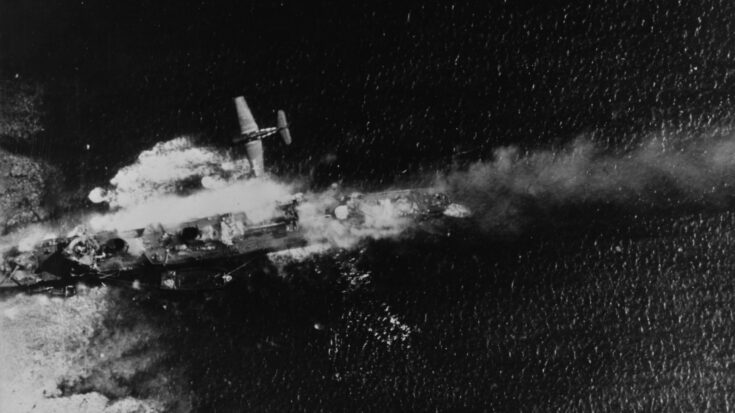
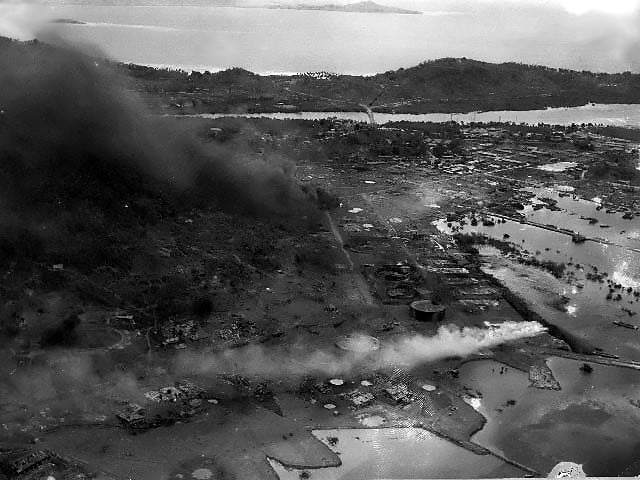
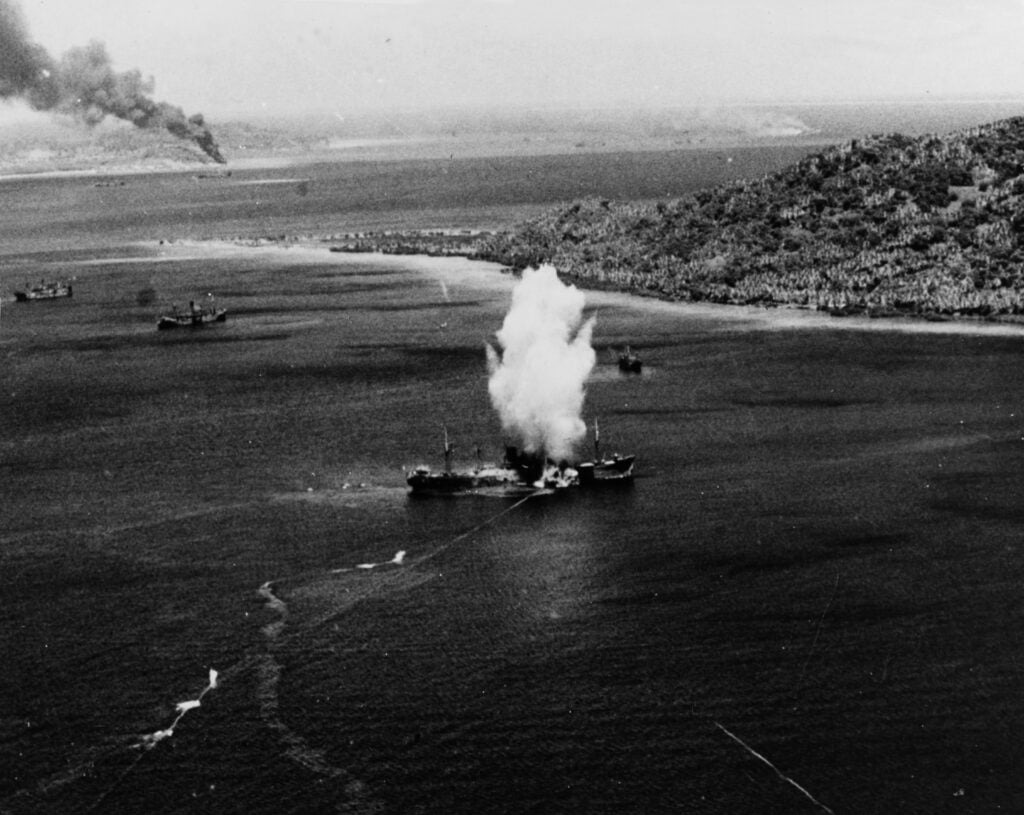
U.S. Navy (photographed from a USS Essex (CV-9) plane), Public domain, via Wikimedia Commons
In February 1944, the United States Navy struck one of Japan’s strongest bases in the central Pacific. The target was Truk Atoll, a large lagoon in the Caroline Islands that served as a key anchorage for Japanese warships and aircraft. American planners saw it as a serious threat to future operations as they advanced across the Pacific. On February 17, 1944, carrier aircraft from Task Force 58 launched a surprise attack that would change the balance of power in the region.
The opening phase of the operation began at dawn. Before bombers moved in against ships and airfields, American commanders ordered a fighter sweep to clear the skies. Seventy-two Grumman F6F Hellcats lifted off from the decks of fast carriers and headed toward Truk. Their mission was simple but dangerous: gain control of the air before the main strike arrived.
The Surprise Fighter Sweep
The Hellcats approached at first light, catching many Japanese pilots and ground crews unprepared. Radar warning was limited, and the sudden arrival of dozens of carrier fighters caused confusion at airfields around the lagoon. American pilots reported engaging enemy aircraft as they tried to take off, while others were attacked in the air over the base.
In the first minutes of combat, U.S. pilots claimed about 30 Japanese fighters shot down. They also strafed airfields, destroying roughly 45 aircraft on the ground before they could be launched. The Americans lost four planes in this opening action, a small number compared to the damage inflicted. Though later research suggests Japanese losses may have been lower than initial claims, there is no doubt that the sweep achieved air superiority early in the day.
Task Force 58 and the Main Assault
The fighter attack was only the beginning of a much larger operation. Task Force 58, commanded by Rear Admiral Marc Mitscher under the overall direction of Admiral Raymond Spruance, included several fleet carriers and light carriers supported by battleships, cruisers, and destroyers. From these ships came waves of dive bombers, torpedo bombers, and additional fighters throughout February 17 and 18.
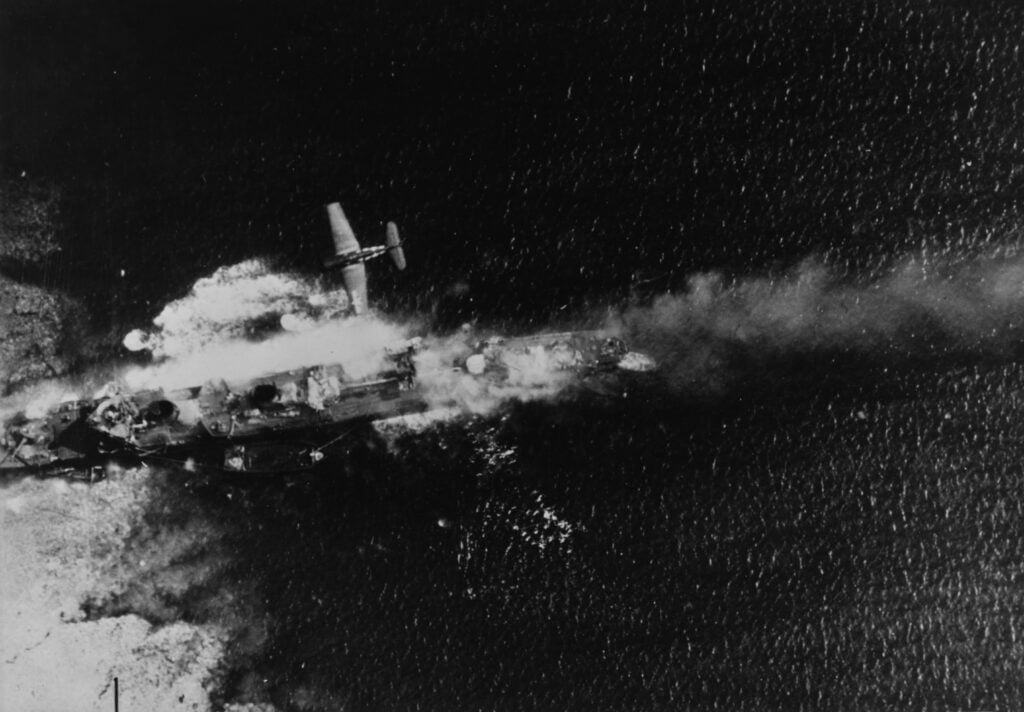
Once the skies were largely secured, American aircraft struck ships anchored inside the lagoon. Many Japanese vessels had remained at Truk, believing it to be a safe harbor. Dive bombers targeted cruisers and cargo ships, while torpedo planes attacked larger naval units. Fuel depots, repair facilities, and airfields were also hit, reducing the base’s ability to support further operations.
Destruction in the Lagoon
Over two days, American aircraft flew hundreds of sorties against Truk. More than 250 Japanese aircraft were destroyed in the air and on the ground during the raid. In the lagoon itself, over 40 ships were sunk or damaged, including auxiliary vessels, transports, and smaller warships. Several major combat ships had left Truk shortly before the attack, limiting even greater losses.
The raid was compared by some observers to a Pacific version of Pearl Harbor, though on a smaller scale. Unlike the 1941 attack on Hawaii, this strike faced organized resistance, including anti-aircraft fire and remaining fighters. American losses over the two days totaled around 25 aircraft, along with some aircrew casualties. Even so, the damage to Japanese naval strength in the central Pacific was severe.
Strategic Impact on the Pacific War
Operation Hailstone marked a turning point in the campaign across the Pacific islands. By neutralizing Truk as a forward base, the United States reduced the threat to its forces moving through the Marshall Islands and toward the Marianas. Japanese naval planners could no longer rely on Truk as a secure anchor point for major fleet operations.
In the months that followed, Truk remained isolated, bypassed by advancing American forces. The lagoon, once crowded with ships and aircraft, became known for the wrecks resting beneath its waters. The opening fighter sweep on February 17, 1944, set the tone for the entire operation, showing how carrier air power could overwhelm even a well-defended base when surprise and coordination were achieved.