

How 150-Grade “Purple” Fuel Supercharged WWII P-51 Mustangs to 490 MPH
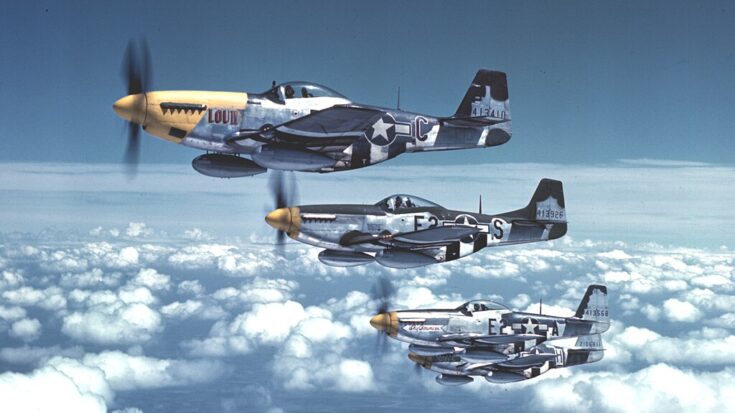
Photo by USAAF, photographed for a series of U.S. 8th Air Force publicity pictures for widespread distribution (photos were taken from B-17G bombers of the 91st Bomb Group), Public domain, via Wikimedia Commons.
In early 1944, the air war over Europe reached a breaking point. American daylight bombing was facing heavy resistance, and losses were rising at an alarming pace. Many young aircrews were flying deep into German territory with little protection, and the danger they faced was growing each week. While the P-51 Mustang had already become a major force in the skies, few at the time understood that its greatest strength would come not from its frame or its guns, but from a chemical breakthrough hidden inside its tanks.
The Crisis in Early 1944
Bomber crews flying over Europe described the experience as entering a world of smoke bursts, tracer fire, and determined defenders. Losses were beginning to threaten the entire daylight bombing strategy. A 6% loss rate meant that finishing a full combat tour of 25 missions was nearly impossible for many crews. Commanders needed a solution that could reduce these losses and give the fighters escorting the bombers a new advantage.
As the first half of 1944 unfolded, researchers behind the scenes were searching for a different kind of answer. Instead of designing new aircraft or new weapons, Allied chemists were working to create a fuel that engines could burn under far higher pressure. Their goal was simple: give existing engines an enormous increase in power without redesigning them.
The New Science Behind Super Fuel
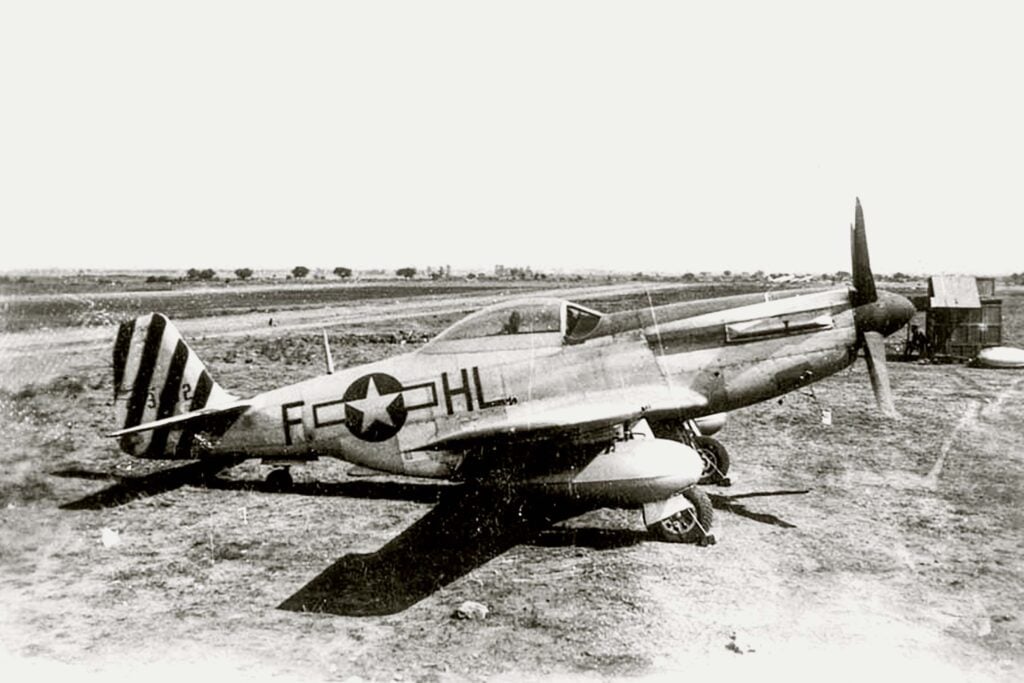
Engine knock—fuel igniting too early—limited how much power an engine could safely produce. Traditional 100-octane fuel resisted knock well, but by the early 1940s chemists were exploring mixtures that could withstand far greater pressure. This led to the development of a new measurement called the Performance Number.
Fuel rated at 150 on this scale could tolerate much more compression than 100-octane fuel, allowing engines to operate far beyond their normal limits. To prevent confusion with weaker blends, this new fuel was dyed purple. When it entered mass production in 1944, it became one of the most important hidden factors of the air war.
Why the Allies Held the Advantage
The Allies controlled large oil resources and could produce this purple fuel in huge quantities. German forces could not match this capability and relied heavily on synthetic fuel made from coal. These production limits meant their best fuel was only comparable to older Allied blends. As American and British units adopted the new 150-grade mixture, the performance gap between opposing fighters widened sharply.
What had once been a contest of maneuver and pilot skill increasingly became a fight defined by mechanical limits. In many cases, the aircraft facing the Mustangs simply could not accelerate or climb fast enough to compete.
Testing the Mustang with 150-Grade Fuel
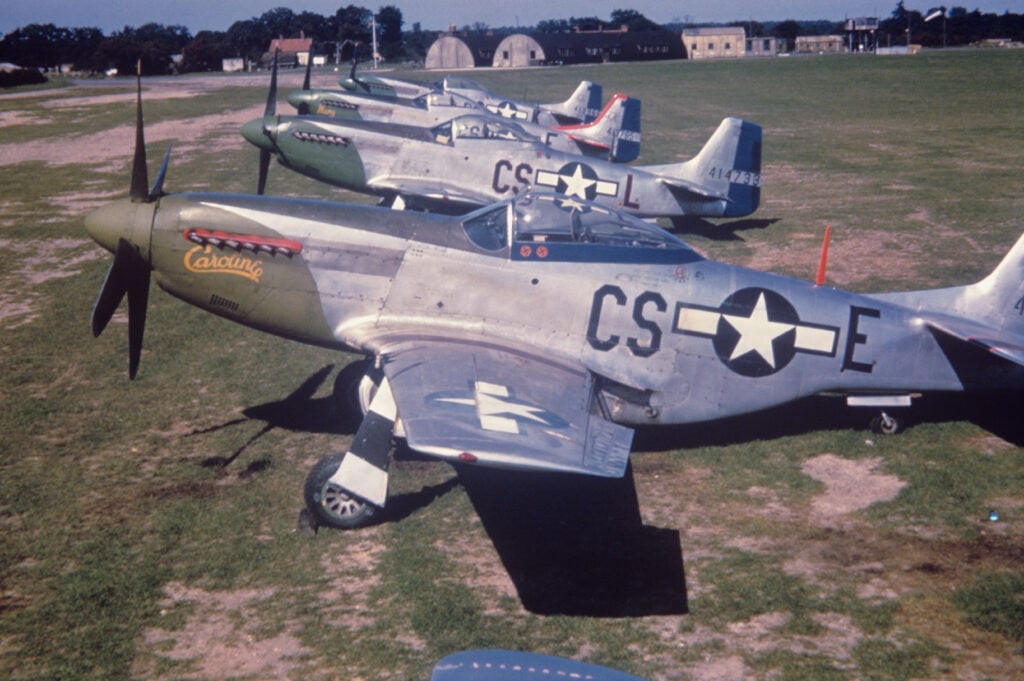
The real power of the purple fuel became clear during secret tests in Ohio. A standard P-51 equipped with a Merlin engine was pushed beyond its usual limits. Where the engine normally produced around 1,490 horsepower using 130-grade fuel, the purple blend boosted it to roughly 1,720 horsepower without altering the engine itself.
The increase in speed was important, but pilots noted that the more dramatic changes were in climb rate and acceleration. These improvements gave the Mustang the ability to close distances more quickly and control the pace of combat in ways the opponent could not match.
Combat Results Over Europe
By June 1944, large shipments of the new fuel were arriving in England. Pilots soon reported dramatic differences in how their aircraft performed. German intelligence began receiving accounts from its own pilots claiming that the Mustangs were showing levels of speed and climb they had not witnessed before.
Some reports were dismissed at the time as stress or exhaustion, but pilots continued to insist that the American fighters were operating on another level. Many described engagements where they were unable to escape or outmaneuver their opponents, even when using tactics that had served them well earlier in the war.
A Hidden Advantage with Wide Effects
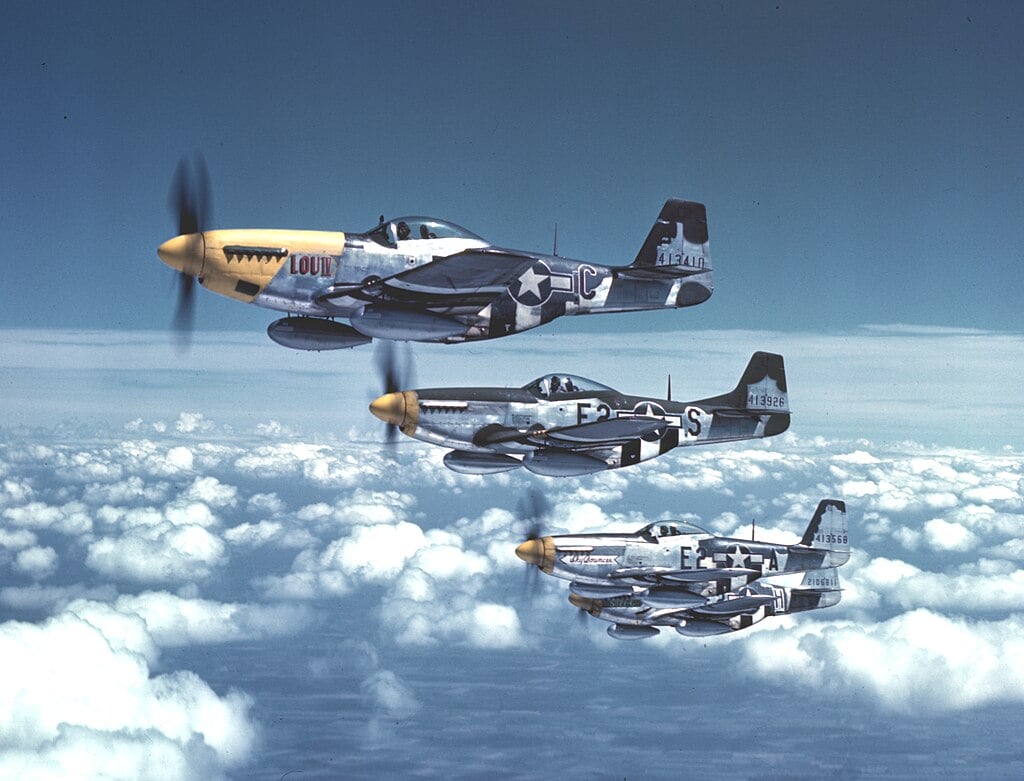
As more Mustangs received the purple fuel, the impact spread quickly. Bomber losses dropped sharply, and the German air defense network was gradually weakened. The increased reach and power of the Mustangs allowed them to engage enemy fighters earlier and more effectively, creating safer conditions for bomber formations.
Air control during the summer of 1944 helped secure the success of the Normandy landings by limiting the opposition’s ability to challenge the Allied invasion force from above.








