

Britain’s F-35B Draws First Blood Against Drones
YouTube / The Sun
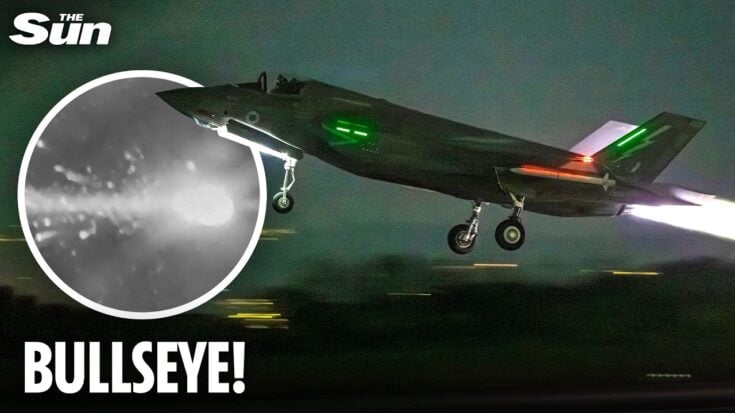
The Royal Air Force recorded its first confirmed combat kill with the F-35B Lightning II on March 3, 2026, when stealth jets operating over Jordan shot down multiple Iranian-designed drones threatening coalition forces in the region. The engagement marked the first time an RAF F-35 had destroyed a target during live operations, capping days of British air activity across the Middle East as Iran continued launching retaliatory missile and drone strikes against American, Israeli, and allied positions.

The Engagements
Six RAF F-35Bs had been deployed to RAF Akrotiri in Cyprus during February as regional tensions escalated. Operating from that base over Jordan, the jets detected, tracked, and destroyed the drones using the aircraft’s advanced sensor fusion, a system that combines radar and electro-optical data into a single tactical picture. That capability is specifically suited to countering low-flying drones that traditional air defense radars can struggle to discriminate in a crowded battlespace.

The F-35 engagement was not the only British action during this period. On March 1, an RAF Typhoon operating with the joint UK-Qatar 12 Squadron shot down an Iranian one-way attack drone headed toward Qatar using an air-to-air missile. Separately, a British counter-drone unit in Iraq neutralized drones in Iraqi airspace that were threatening coalition airbases.

What It Means
Britain’s F-35B engagements confirmed something the aircraft’s designers had always claimed but combat had not yet proven in RAF hands: the jet can find, track, and destroy small low-observable threats in a complex and active battlespace. The drone threat Iran has deployed across the region is exactly the scenario the F-35’s sensor fusion was built to handle.







