RARE: The World’s Only Airworthy Potez 63-11 WWII Aircraft Caught on Camera
A Rare Survivor From France’s Wartime Skies
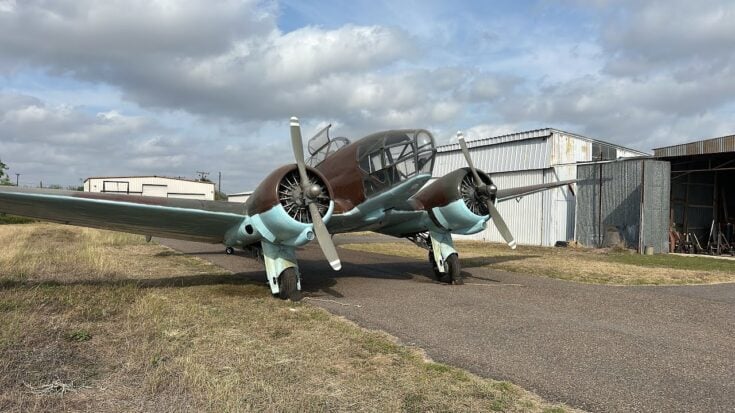
A recently shared video offers an unusually close look at the Potez 63-11, a French military aircraft from the Second World War that today survives as the world’s only airworthy example of its kind. The footage shows pilots and restorers carefully preparing the aircraft, discussing cockpit controls, hydraulic systems, and mechanical adjustments before engine startup.
Built by Potez in the late 1930s, the 63-11 served primarily as a reconnaissance aircraft for the French Air Force during the early stages of the war. Designed with extensive cockpit glazing to improve visibility, the aircraft allowed crews to observe enemy movements and photograph ground positions. After France’s defeat in 1940, surviving aircraft continued operating under different authorities, though many were eventually destroyed or scrapped, leaving very few intact examples.
Inside the Aircraft’s Simple but Practical Design
The video captures a hands-on explanation of the aircraft’s interior, revealing how basic wartime engineering relied more on mechanical skill than automation. Controls for engine power, propeller pitch, and fuel mixture sit within easy reach of the pilot. Flight instruments appear minimal compared with modern aircraft, reflecting technology available during the period.
One restorer points out dual-purpose handles once connected to both air brakes and defensive machine gun systems. The aircraft originally carried a rear gunner, whose seat remains visible behind the pilot’s position. Emergency systems, including a manual hydraulic pump used for landing gear operation, highlight how crews prepared for mechanical failure during missions. These features demonstrate how reliability depended heavily on pilot awareness rather than electronic monitoring.
Restoration Challenges and Limited Flight Time
Maintaining a flying aircraft of this age presents constant technical challenges. During the inspection shown in the footage, the operator explains issues involving hydraulic pressure affecting the flap system. A cylinder producing excessive force required modification to prevent structural strain. Adjustments like these are common in historic aircraft restoration, where replacement parts must often be custom-made.
The pilot notes that he has flown the aircraft only seven or eight hours, largely due to operating costs. Fuel consumption, insurance expenses, and the scarcity of spare components limit how often such aircraft can safely fly. Every flight therefore becomes a carefully planned event rather than a routine activity, balancing preservation with historical demonstration.

Preserving Aviation History in Motion
Engine startup procedures shown in the recording reveal another layer of historical authenticity. The crew primes the engines manually, monitors fuel flow, and checks ignition systems step by step before bringing the engines to life. Observers can hear discussions about alternators, navigation lights, and starter controls as the aircraft slowly prepares for operation.
Today, the surviving Potez 63-11 represents more than a museum artifact. Its continued airworthiness allows historians and aviation enthusiasts to experience the sound, motion, and mechanical character of a reconnaissance aircraft that once flew during one of the most difficult periods in European history, offering a living connection to early military aviation technology.