Watch: Rare Look at Dornier Do 217 Bomber Maintenance Up Close Real WWII Footage
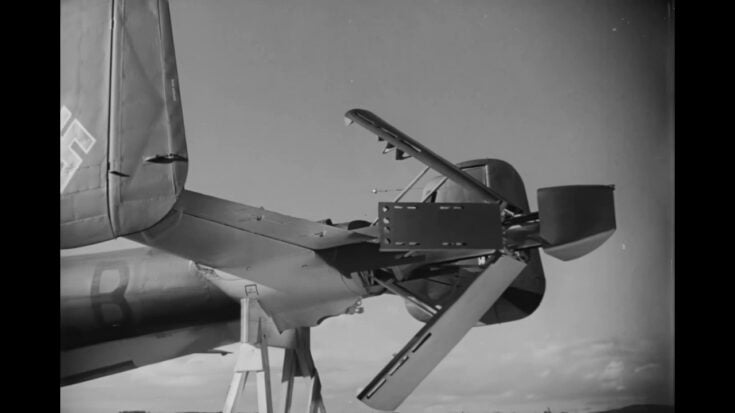
A Training Film Preserving Wartime Aircraft Practice
A restored instructional film offers a rare look at maintenance procedures for the Dornier Do 217, a German twin-engine bomber used during the Second World War. The footage, originally produced as a technical training guide, explains how ground crews prepared, serviced, and inspected the aircraft before flight operations. Rather than showing combat, the film focuses entirely on routine mechanical work required to keep the aircraft operational.
Introduced in the early 1940s, the Dornier Do 217 developed from the earlier Do 17 design but featured greater range, heavier payload capacity, and stronger engines. It served in several roles, including level bombing, night operations, reconnaissance, and maritime missions. Because the aircraft carried complex systems for its time, proper maintenance procedures were essential for safety and reliability.
Moving and Preparing the Aircraft
The film begins by demonstrating how crews moved the completed aircraft from a hangar using a towing cable attached to reinforced axle points on both main landing wheels. Instructions stress that towing with a single-sided connection was forbidden, as uneven force could damage the landing gear. Instead of a tail cart, a steering bar fitted directly into the tailwheel allowed workers to guide the aircraft safely across the ground.
Ground equipment formed an important part of daily preparation. Tools, control locks, protective covers, and anchoring ropes were stored in a large onboard equipment bag. Medical kits were placed both inside the fuselage and within external compartments. For long-distance flights over water, an inflatable rescue boat packed with an emergency transmitter could automatically deploy and inflate if activated from the crew station.
Lifting, Testing, and Mechanical Inspection
Maintenance crews next demonstrated how to raise the aircraft using lifting equipment and support stands. Wheel chocks were placed first, followed by lifting the tail section and positioning supports shaped to match the fuselage. Two adjustable stands were then aligned beneath the wings. Workers were warned never to lift one side alone, even when replacing a single wheel, because uneven pressure could twist the structure.
Once elevated, technicians performed landing gear tests using an external power source connected to preserve onboard electrical systems. The landing gear control, located above the cockpit, allowed crews to confirm proper retraction and extension. The film also shows testing of automated bombing systems, where bomb bay doors opened, release mechanisms activated, and dive brake functions responded in sequence to simulate operational conditions.

Engine Work and Routine Daily Checks
Removing a wheel required disconnecting brake couplings and unbolting axle supports before lowering the assembly. Engine replacement demanded even greater coordination. A crane mounted above the engine position attached to reinforced mounting points, allowing mechanics to lift the powerplant free. At least two workers were required, and technicians were reminded to disconnect electrical storage units before beginning the procedure.
Daily inspections focused heavily on tire pressure and suspension systems. Specific pressure values depended on aircraft weight, reflecting how payload affected landing stress. Mechanics also checked shock absorber pressure regularly. These inspections prevented failures during takeoff and landing, which were among the most dangerous phases of flight for heavy bombers of the era.