

Remembering Maj. Frederic Borsodi, Who Died This Day in 1945 Testing an Early American Jet Fighter
United States Air Force, Public domain, via Wikimedia Commons
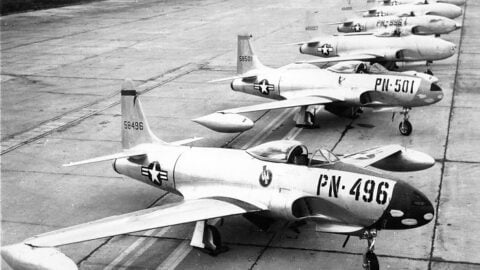
The ending months of World War II were not only a time of global conflict, but also a period of rapid change in aviation. Jet technology was moving from experimental labs into military service. One of the earliest American jet fighters was the Lockheed YP-80A Shooting Star. On January 28, 1945, that fighter claimed the life of one of its test pilots, Major Frederic Austin Borsodi, during an early evaluation flight in England. His story illustrates both the promise and the dangers of early jet flight.
The Lockheed YP-80A was among the first jet designs the United States Army Air Forces began to test as World War II neared its end. Built at Lockheed’s plant in Burbank, California, aircraft 44-83026 was accepted by the Army on December 4, 1944, and shortly after was disassembled and shipped as deck cargo to Burtonwood in England. It arrived on December 30 with its sister plane, 44-83027. Reassembly in the cold northwest English winter took about a month before flight testing could begin.
Arrival and Early Flights
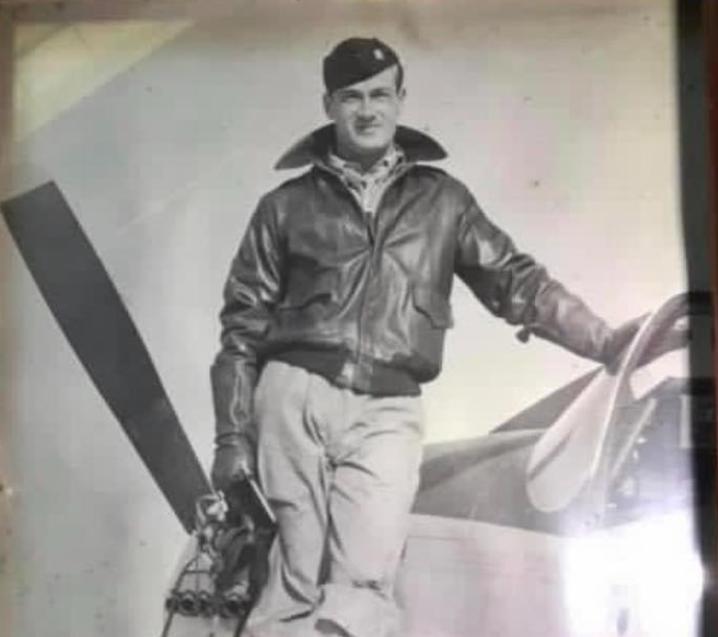
Major Borsodi and Colonel Marcus Cooper, assigned to the Air Technical Service Command headquartered at Wright Field in Ohio, arrived at Burtonwood in January 1945. On January 27, Cooper made the YP-80A’s first test flight in Europe, marking the entry of the Shooting Star into hands already familiar with piston-engine fighters but new to jet propulsion. The jet’s early flights were designed to give pilots and engineers a sense of how it handled at speed and in the thin air above the English countryside.
The next day, January 28, at 11:40 a.m., Major Borsodi taxied out on runway 27 for a second flight in the jet. He climbed out of the pattern smoothly and maintained an altitude between 8,000 and 10,000 feet. Witnesses on the ground saw him perform four or five rolls, indicating confidence in the aircraft’s performance. For about twenty minutes the flight continued normally at roughly 4,000 to 5,000 feet and about three miles west of the airfield.
Sudden Emergency
Then observers noticed black smoke and fire issuing from the aft section of the Shooting Star. Within moments, the rear empennage — the tail assembly including the vertical fin and horizontal surfaces — began to disintegrate. The jet lost control and descended toward farmland near Bold, close to Widnes. At 12:01 p.m., the aircraft struck the ground right-side up, skidded, and caught fire. Damage to the surrounding fences was slight, but the crash site drew immediate attention.
A P-47 Thunderbolt flying a routine test mission circled overhead and guided emergency crews to the scene. Witnesses on the ground described hearing an explosion and seeing pieces of the aircraft falling as far as Rainhill. The tail section was seen on fire before it separated, and locals reported the jet “falling like a leaf” and spinning before impact. Borsodi did not appear to attempt to exit the aircraft, and it was assumed that he had been killed or rendered unconscious by the time the plane hit the ground.
Investigation and Findings
An Aircraft Accident Committee began a detailed inquiry into the cause of the crash. Early observations showed that debris was scattered over a half-mile strip leading back toward the airfield. The first piece in the debris trail was the tail pipe, separated from the engine tail cone. Close examination revealed that a tail pipe flange had failed in tension, allowing exhaust gases to leak into the rear fuselage.
These leaking gases melted internal components and structural elements, including the lagging around the tail pipe, the root areas of the tail surfaces, and portions of the aft fuselage skin. The damage allowed the empennage to break away from the rest of the aircraft in flight. Further evidence showed “thrown turbine buckets,” fragments from the engine’s turbine that had detached and damaged systems in their path, including cables and hydraulic lines. These internal failures effectively caused the engine to explode, leading to loss of control.
Within an hour of the accident, German radio broadcasts had reported the shooting down of a jet and given personal details about the pilot, a rare and grim piece of propaganda in the final months of the war. Local responders and military personnel worked through the aftermath, collecting wreckage and confirming the identity of Major Borsodi.
Legacy of a Test Pilot
Major Frederic Austin Borsodi was 28 years old when he died. He served in a unit responsible for testing and evaluating new aircraft as they came into service. The job of a test pilot in 1945 was hazardous; aircraft like the YP-80A pushed boundaries of speed and design that earlier pilots had not confronted. His flight on January 28 illustrates both the rapid pace of aviation development at the end of World War II and the human cost that sometimes came with learning how to fly new machines.
The Lockheed Shooting Star would go on to enter operational service and influence future jet fighters. But for those early prototypes, each flight was a step into unknown territory. Histories of aviation often focus on combat missions, but the work of pilots like Borsodi, testing aircraft under real conditions, played a major role in shaping the aircraft that followed in the years after the war.






