

Why the UK can’t just send HMS Prince of Wales to the Gulf
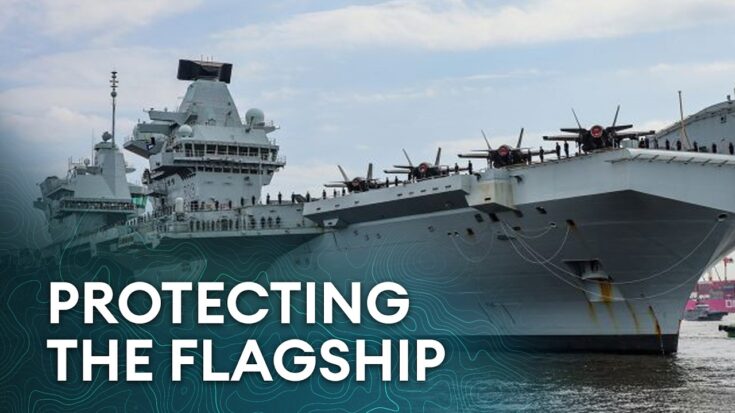
YouTube / BFBS Forces News
As Operation Epic Fury entered its second week, public pressure mounted on the British government to deploy its flagship carrier to the Middle East. HMS Prince of Wales had its readiness notice reduced from 14 days to five, prompting widespread speculation that the Royal Navy’s most powerful surface asset could sail toward the conflict.

The public frustration was understandable. HMS Prince of Wales displaces approximately 65,000 tons and is designed to operate up to 36 F-35B Lightning II fighters alongside a range of helicopters. On paper it represents exactly the kind of capability the situation demands. The problem is that an aircraft carrier doesn’t deploy alone, and assembling everything required to send one into a contested environment takes more than cutting the readiness notice to five days.

What a Carrier Actually Needs
A carrier deploying into a high-threat environment needs an assured air group mixing fixed-wing and rotary capabilities, escorts providing air defense and anti-submarine warfare, and a logistics train capable of sustaining operations indefinitely. The carrier’s strategic value, going where it wants, when it wants, in a time and place of its choosing, only exists if the battle group around it can keep it fueled, supplied, and protected.

The Escort Problem
Of the Royal Navy’s six destroyers in commission, not one was available to immediately deploy when the conflict began.

The UK had already deployed Typhoons, F-35 jets, air defense systems, and approximately 400 additional personnel to Cyprus, along with Wildcat helicopters armed with Martlet missiles. But deploying a carrier strike group into the Gulf or eastern Mediterranean requires a coordinated package of escorts, submarines, and logistics vessels that cannot be assembled overnight, regardless of how quickly the carrier itself can get underway.







