

Why US Warplanes Only Had 1 Roundel
YouTube / FlakAlley
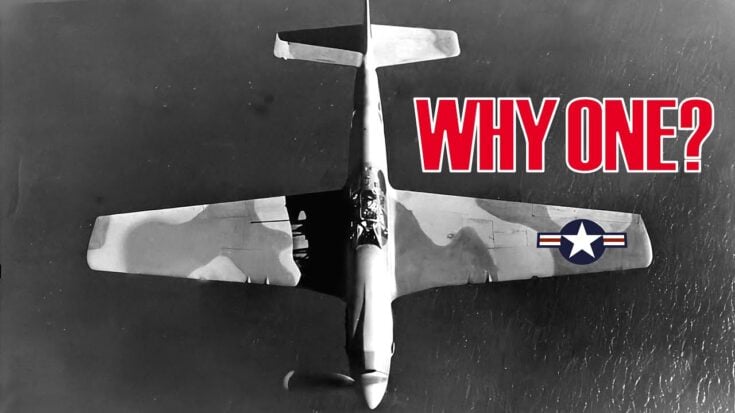
Look at a WWII American fighter from above and something appears slightly off. The national insignia sits on the top of the left wing only, with no matching marking on the right. From below, the opposite is true. The US Army Air Corps authorized this asymmetric arrangement on February 26, 1941, for two specific reasons: to help pilots distinguish friend from foe, and to eliminate what planners called a balanced target.
The second reason is where the psychology begins.
Two Stars Are Easier to Aim Between
As knowledge surrounding aerial dogfights developed, it became apparent that two brightly colored roundels on opposing wings provided an attacker with a highly visible central aiming point directly between them, pointing straight at the cockpit. In a pursuit engagement lasting only seconds, a pilot’s eyes instinctively centered between two symmetrical reference points. The cockpit sat directly between them. The result was predictable and lethal.

Throwing an enemy’s aim off for even a split second in a combat situation could literally make the difference between life and death. Removing one wing roundel disrupted that instinctive centering. An attacker diving on an American fighter now saw a marking on one side only, making the aircraft appear asymmetrical at the moment targeting decisions had to be made. Eyes were drawn to the visible marking rather than the space between two balanced ones. The brief confusion that produced was enough.
The Navy Resisted, Then Followed
The US Navy initially resisted the change and reverted to roundels on each wing early in the war, but eventually adopted the asymmetrical single wing insignia on February 1, 1943. The Army Air Forces had been flying with the asymmetric arrangement for nearly two years before the Navy aligned with the same standard.

The roundel itself continued evolving throughout the war for separate reasons. In May 1942 the central red dot was eliminated because it was thought it could be mistaken for a Japanese Hinomaru at distance. White bars were added to the sides of the star in June 1943 to further improve recognition, with the red outline replaced by blue in September of the same year after at least one operational unit refused to apply red markings over concerns about confusion in the field.
A Detail That Mattered
The asymmetric roundel arrangement never generated headlines. It required no new technology, no manufacturing changes, and no additional cost. It was a paint decision made in February 1941 by planners who understood that aerial gunnery depended on instinct and that instinct could be disrupted.

This strategic yet straightforward change wound up saving untold American lives. The pilots who benefited from it likely never knew the reasoning behind the marking on their wing. The enemy pilots whose aim it disrupted had no idea either. That was precisely the point.







