When Britain Launched Hawker Hurricanes Using Rockets
YouTube / IsonzoEnjoyer
During the early years of the Battle of the Atlantic, Allied merchant ships faced constant threat from long-range German bombers. Among the most dangerous was the Focke-Wulf Fw 200 Condor, which scouted convoys and directed U-boat attacks. Merchant vessels often had little or no air cover once they were far from land-based fighters. This created a dangerous gap in protection during some of the most critical supply routes of the war.
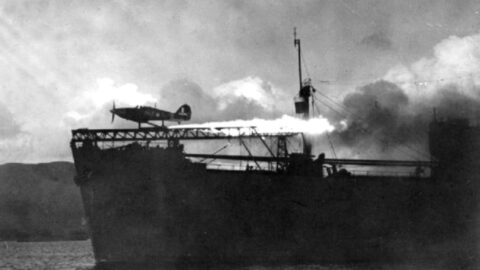
To address this problem, the Allies introduced an unusual solution known as the Catapult Aircraft Merchant ship, or CAM ship. These were standard cargo vessels modified with a rocket-propelled catapult mounted on the bow. The catapult was designed to launch a single fighter aircraft when a German bomber threatened the convoy.

The Catapult Launched Hurricane
The fighter assigned to these ships was a modified Hawker Hurricane, often referred to as the Sea Hurricane. These aircraft were fitted with naval radios, catapult attachment points, survival equipment, and reinforced structural components. The modifications slightly increased weight but allowed the aircraft to withstand the violent acceleration of a catapult launch.
When a Condor or other long-range bomber approached, the Hurricane would be launched directly from the merchant ship. The pilot had one mission: intercept the enemy aircraft and drive it away or destroy it. The launch itself was extremely risky, as the aircraft went from a standing start to flying speed in a very short distance.

A One Way Flight
CAM ship operations came with a major limitation. Most CAM ships had no flight deck and no recovery system. Once the mission was complete, the pilot could not land back on the ship.
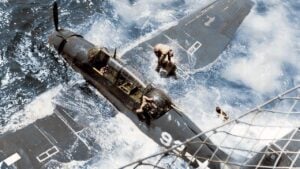
If friendly land bases were within range, the pilot would attempt to reach them. In most cases, however, the aircraft had to be ditched in the ocean near the convoy. The pilot relied on a life raft and quick rescue by escorting vessels. The Hurricane was lost after each launch, making every mission a one-shot operation.

Why CAM Ships Disappeared
By mid 1943, CAM ships became largely unnecessary. The rapid expansion of Allied escort carriers provided a more effective and sustainable form of air cover. These small carriers could launch and recover multiple aircraft, offering continuous protection for convoys.
As escort carriers took over the role, CAM ships were phased out. Despite their short service life, they played an important role during a critical period when no better option existed.