

On This Day in WWII (1945): B-24s and B-29s Begin Daily Bombing Raids on Iwo Jima Ahead of Allied Invasion
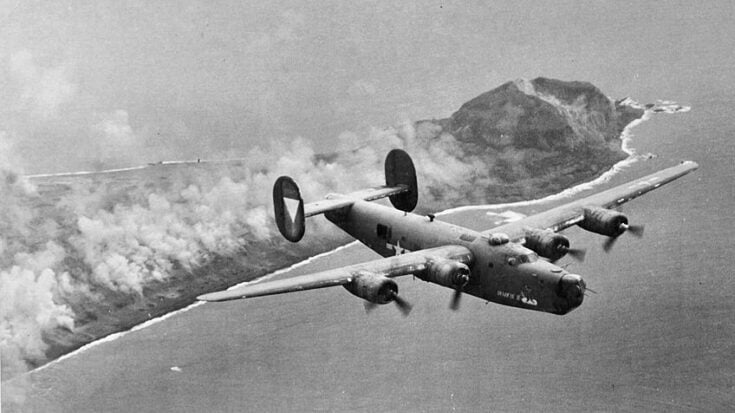
United States Army Air Forces, Public domain, via Wikimedia Commons
On February 6, 1945, U.S. Army Air Forces heavy bombers began a sustained aerial offensive on the island of Iwo Jima in the Pacific. For nearly two weeks, B-24 Liberators and B-29 Superfortresses released thousands of tons of explosives over the small volcanic island. This effort was part of the vast set of operations that set the stage for what would become one of the fiercest battles of the war. Ground forces, naval guns, and carrier aircraft would soon follow in one of the most costly campaigns in the Pacific theater.
The Strategic Importance of Iwo Jima
Iwo Jima lay about 750 miles south of Japan and was seen by American commanders as a key stepping stone for future operations against the Japanese home islands. The island had two airfields and was reinforced with a network of underground tunnels, guns, and defensive positions. Its capture was intended to help provide air cover and emergency landing strips for long-range bomber missions that would strike at Japan’s industrial heartland. Marines and soldiers knew they would face tough defenses once they moved ashore, and the aerial attacks aimed to weaken those positions beforehand.
Before the daily bombing began on February 6, American aircraft had already struck Iwo Jima intermittently for weeks to damage airfields and defensive sites. These early raids helped familiarize crews with the target and tested enemy responses. As the date for invasion drew closer, planners increased the scale and frequency of strikes by heavy bombers. The goal was to reduce enemy capabilities and protect landing forces that would arrive in just days.
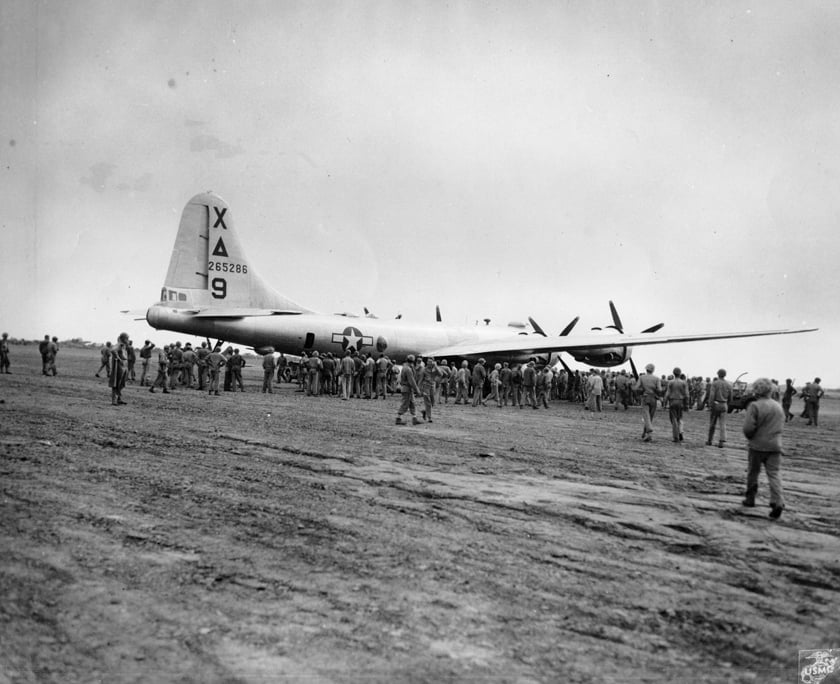
B-24s and B-29s Over Iwo Jima
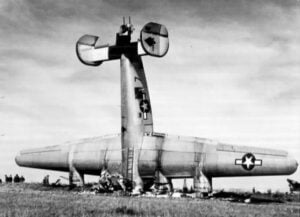
The first sustained period of bombing on February 6 involved a mix of U.S. Seventh Air Force B-24 Liberators and Twentieth Air Force B-29 Superfortresses. The B-24 was a four-engine bomber that had been used throughout the war in multiple theaters, while the B-29 was a newer long-range bomber designed for high-altitude missions over distant targets. Together, these aircraft brought considerable firepower to the skies over Iwo Jima.
During the next 15 days, these bombers dropped an average of about 450 tons of bombs per day on Iwo Jima, amounting to roughly 6,800 tons of explosives in total. The raids targeted airfields, defensive installations, and other positions thought to be useful to the defenders. Crews flying from bases in the Mariana Islands carried heavy loads of bombs across long stretches of ocean to reach the island.
The Limitations of the Bombing
Despite the intensity and scale of the bombing, the physical effects on enemy positions were limited in some respects. The island’s rocky terrain and deep defensive works meant that many shelters, tunnels, and artillery placements remained intact after repeated strikes. American planners soon realized that aerial bombardment alone could not dislodge the defenders or destroy the complex defenses built into the volcanic rock. This led commanders to rely on artillery, naval gunfire, and direct infantry assaults once the invasion began.
On February 19, 1945, just days after the sustained bombing began, U.S. Marines landed on the shores of Iwo Jima. The pre-landing bombardment, which included naval guns and carrier aircraft in addition to the heavy bombers, was among the longest and most intense of the Pacific War up to that point. Yet the defenders held many positions and made the initial landings costly in terms of casualties.
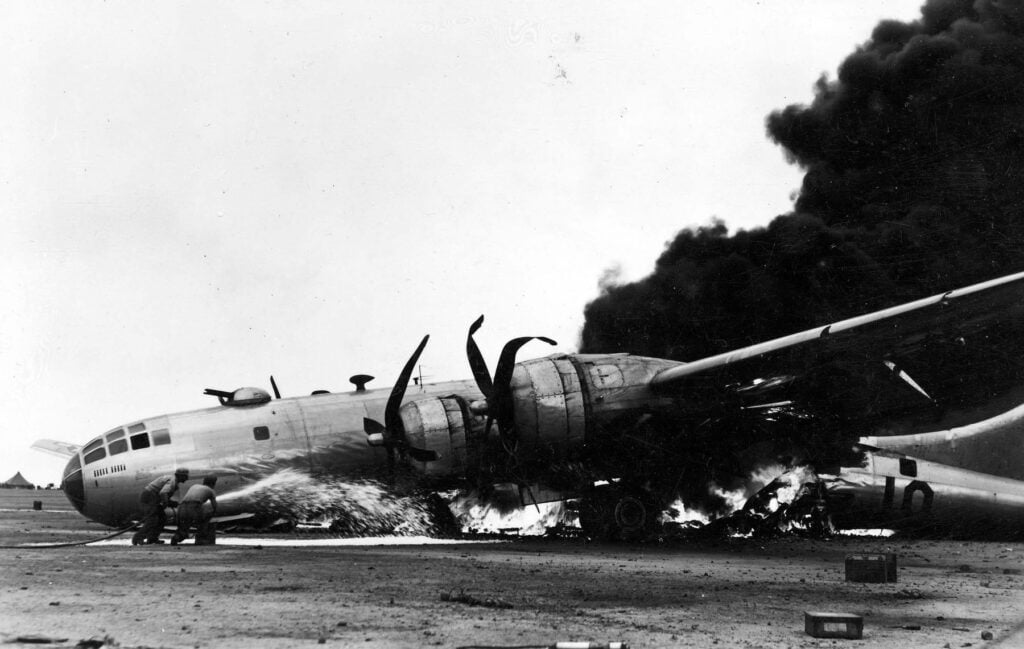
Aftermath and Ongoing Air Support
The fierce fighting on the island continued for weeks after the initial landings. Iwo Jima was not secured until March 26, 1945, and the battle resulted in heavy losses for both sides. Once under American control, the airfields on Iwo Jima became valuable assets. They provided bases for emergency landings by B-29s returning from raids over Japan, saving thousands of aircrew from being lost at sea. More than 2,000 bombers made forced landings there during the remainder of the war, offering a critical safety net for crews returning from long missions over hostile territory.
The airfields also enabled U.S. fighter aircraft to escort bombing missions deeper into Japanese airspace, extending the reach and effectiveness of the air campaign. Iwo Jima’s proximity to Japan allowed these fighters to provide protection for a longer portion of each mission, making attacks more efficient and reducing the risk to bomber formations.
Legacy of the Bombing Campaign
The bombing operations that began on February 6 helped shape the opening phase of the Iwo Jima battle. While they did not completely neutralize the defenders, they played a role in softening some targets and supporting the broader invasion effort. When combined with naval and ground operations, the bombardment was part of a larger plan to take a fortified position that would influence the closing months of the Pacific War. The island’s capture and subsequent use as an air base had effects that lasted through the final stages of the conflict.

.jpg)
