

Iconic Shark-Mouth A-10s Sent to the Middle East
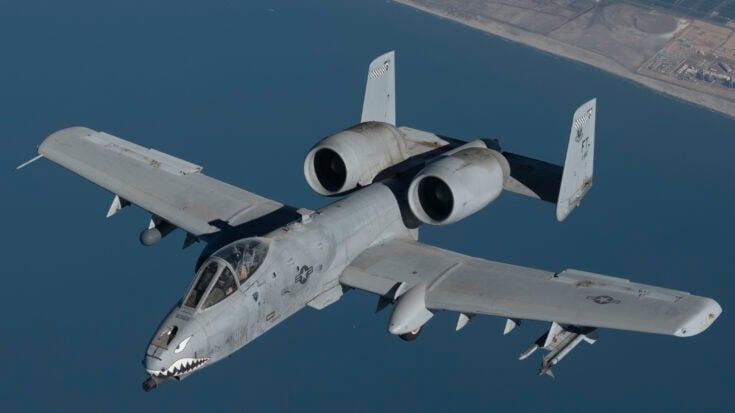
Staff Sgt. Emily Farnsworth, CC0, via Wikimedia Commons
In April 2026, two A-10 Thunderbolt II aircraft crossed the Atlantic, drawing attention not for their number, but for their markings and timing. These aircraft, assigned to the 74th Fighter Squadron, carried the distinctive shark mouth design linked to a long-standing tradition in American military aviation. Their movement suggested a continued American effort to reinforce air operations in the Middle East during a period of rising tension.
The aircraft made a stop at RAF Lakenheath on April 17 before continuing their journey several days later. They flew with tanker support, reflecting the logistical demands of long-distance deployments. Unlike earlier movements that often involved larger groups of aircraft, this transfer consisted of only two jets, raising questions about their specific purpose.
A Tradition Rooted in World War II
The shark mouth markings seen on these A-10s trace back to the American Volunteer Group, a group of American pilots who flew in China before the United States formally entered the Second World War. Their aircraft carried similar designs, which became a symbol of aggression and identity. Today, the 74th Fighter Squadron and its partner unit maintain that visual heritage.
These modern aircraft are part of the 23rd Fighter Group, which preserves the lineage of those earlier pilots. The continuation of such markings reflects how military units connect present operations to earlier conflicts. Even in modern deployments, these historical elements remain visible on operational aircraft.
A Smaller Deployment with Possible Reasons
The limited size of this deployment stands out when compared to earlier movements, which often included ten or more aircraft traveling together. One possible explanation lies in recent combat activity. Reports indicated that an A-10 had been lost during a rescue mission connected to a downed F-15E Strike Eagle over Iran.
That rescue effort involved several specialized aircraft, including recovery planes and helicopters, supported by A-10s providing protection. While no official statement confirmed the purpose of the two aircraft now heading east, it is possible they are intended to replace the lost jet or reinforce the existing force already operating in the region.
U.S. Air Force A-10 Thunderbolt II’s receive fuel in-flight while supporting Operation Epic Fury. The A-10 Thunderbolt II can loiter for hours, standing by and ready to execute a mission whenever needed. pic.twitter.com/VjESHLR32Y
— U.S. Central Command (@CENTCOM) March 15, 2026
Expanding Roles in a Modern Conflict
The A-10 has often been debated in recent years, with some arguing that it is outdated in highly contested airspace. However, recent operations have shown that the aircraft still fills a useful role. During missions linked to Operation Epic Fury, A-10s have been observed carrying a mix of weapons suited for different types of targets.
These included guided missiles, laser-assisted rockets, and short-range air-to-air weapons. Such a combination allows the aircraft to respond to both ground threats and airborne targets, including small drones. This flexibility has proven valuable in environments where threats can appear quickly and from multiple directions.
Countering Emerging Threats
Recent evidence suggests that A-10 pilots have engaged unmanned aerial systems in combat. Photographs taken after earlier deployments showed markings indicating successful interceptions of drone targets, including designs similar to the Shahed-136. Although official confirmation has been limited, these signs point to an expanded mission set.
By combining its heavy cannon, guided weapons, and long endurance, the A-10 continues to adapt to new challenges. Its presence in current operations highlights how older aircraft designs can remain relevant when used in roles suited to their strengths.



.jpg)