

The WWII 500mph Wooden Jet Held Together by Glue That Fell Apart Mid-Air
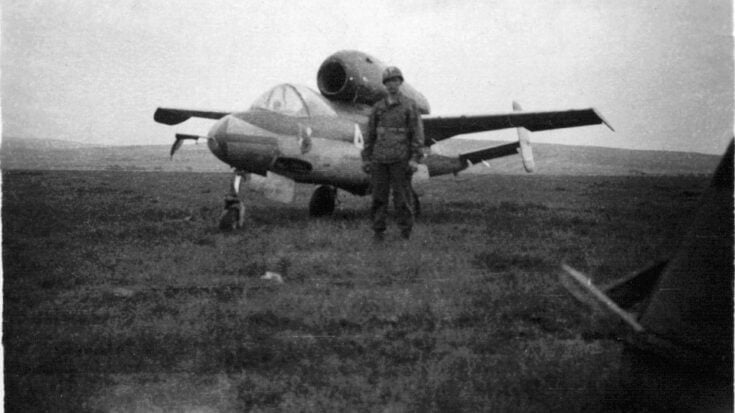
scan Ad Meskens/photo Jan B.H.A. Vervloedt, zie ook:vliegtuigen, CC BY-SA 4.0, via Wikimedia Commons
By early 1945, Germany faced overwhelming pressure in the air. Allied bombers moved freely across much of Europe, supported by long-range escort fighters. In response, German planners rushed forward a new type of aircraft, the Heinkel He 162, intended to be built quickly and flown by young pilots with limited experience. It was called the “people’s fighter,” a reflection of both urgency and shortage.
The aircraft relied on simple construction methods. While its fuselage used metal, much of the wing and tail structure consisted of wood bonded with specialized glue. This allowed faster production in factories that no longer had steady access to aluminum. However, the design brought risks. The materials, combined with the stress of jet propulsion, made the aircraft fragile under certain conditions.
A Fighter Built in Urgency
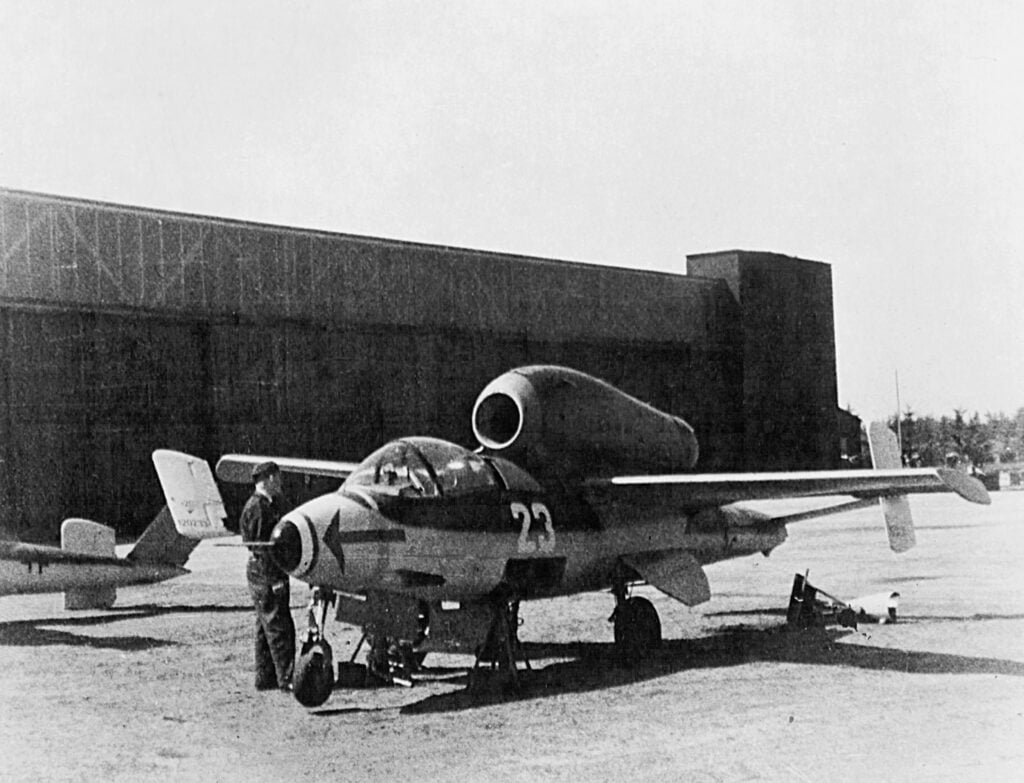
The He 162 was powered by a single BMW jet engine mounted above the fuselage. This unusual placement simplified construction but created handling challenges. The aircraft was fast for its size, capable of speeds exceeding many earlier fighters, yet it had a short operational range. Pilots often had only brief periods in the air before fuel limits forced them to return.
Many of those assigned to the aircraft were very young. Some came directly from glider training programs, with little experience in powered flight. The cockpit itself was small and exposed, offering wide visibility but little protection. Flying at high altitude brought cold temperatures and thin air, adding to the strain on inexperienced pilots.
Combat Over a Collapsing Front
During interception missions, these aircraft were sent against Allied fighters such as the American P-51 Mustang. The Mustang combined speed, range, and firepower, making it a difficult opponent. In such encounters, the He 162 relied on its quick acceleration and light weight to maneuver, but these same features could make it unstable.
Reports from the period describe problems with structural integrity. The adhesive used in wooden sections could weaken under heat, vibration, or exposure to fuel vapors. In some cases, pilots noted unusual smells or visible stress on the wings during flight. These issues added a constant layer of uncertainty during combat.
Risks Within the Aircraft
The jet engine consumed fuel rapidly, limiting both time and options in the air. Every maneuver required careful judgment. Pilots had to balance aggression in combat with the need to conserve fuel for landing. At the same time, the aircraft’s responsiveness meant that small control inputs could produce large reactions.
Damage from enemy fire made the situation worse. Even minor hits could affect control surfaces or weaken already stressed structures. If the engine failed, the aircraft became a glider with limited glide performance. Landing safely under such conditions was difficult, especially for pilots with little training.
Final Missions in 1945
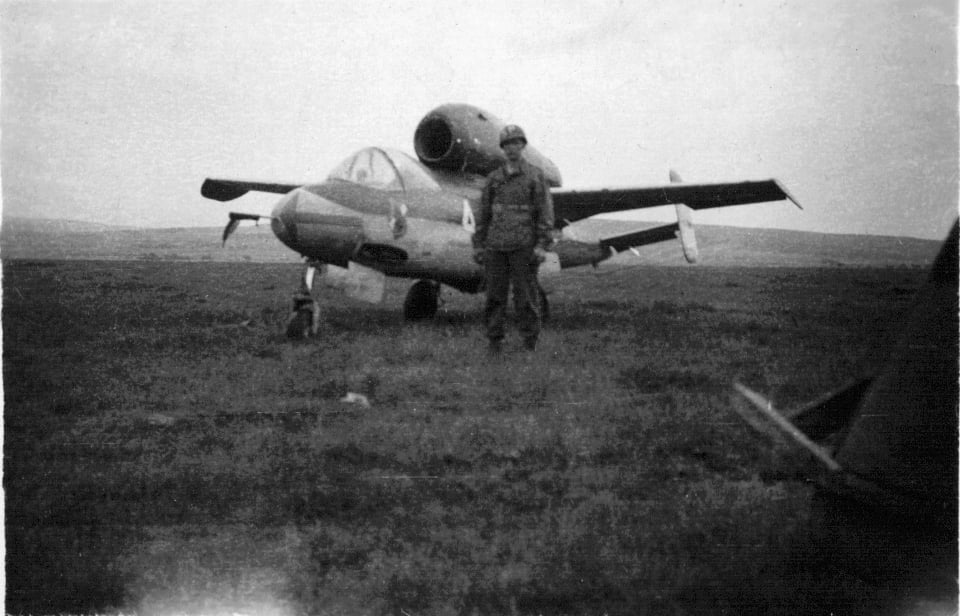
As the war neared its end, the He 162 entered service in small numbers. Units equipped with the aircraft carried out interceptions where possible, but shortages of fuel, trained personnel, and stable production limited its impact. The idea behind the design reflected the desperate situation rather than long-term planning.
Accounts from these final months show a pattern of short missions, mechanical concerns, and uneven results in combat. Some pilots achieved successes, while others faced failures caused as much by equipment as by enemy action. The aircraft itself became a symbol of late-war conditions, where speed of production took priority over reliability.



.jpg)